The Price Mechanism
Britain is heading for blackouts
The grid’s control room engineers are suffering ‘high levels of stress and concern’ about whether they can keep the system balanced

22 October 2026
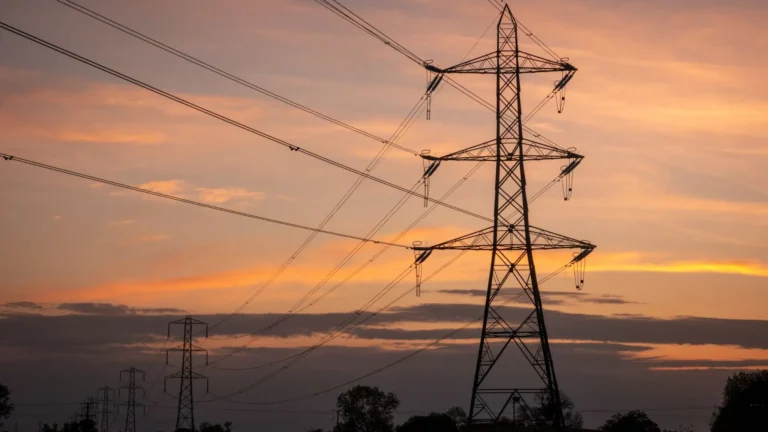
Anna Barclay/Getty Images
The grid’s control room engineers are suffering ‘high levels of stress and concern’ about whether they can keep the system balanced
A quick show of hands. How many of you have a working torch in the kitchen drawer, and not just on your phone? Candles, matches or a working pack of AA batteries? What about a week’s worth of tinned food, a camping stove, a full jerry can? A generator?
Most readers will have answered no to almost all of them, and until recently so would I. The closest I’d come to being a ‘prepper’ was when my dad had to justify his stash of Fray Bentos canned pies in the garage: ‘in case of the revolution, son’.
For over 20 minutes engineers ran the grid beyond its normal safety limits, the point at which one more breakdown can knock power stations offline one after another and black out the country
Psychologists call it normalcy bias: the assumption that because the lights have always come on, they always will. It is a comfortable instinct. And like Mulder and Scully, I want to believe. Unfortunately, the people who run Britain’s grid have just told us it is wrong.
This week, the law firm Eversheds Sutherland published its investigation into allegations of a cover-up at the National Energy System Operator (NESO), the state-owned body that balances the national grid. The report didn’t uphold all the claims made by whistleblowers, but it found control room engineers – the people who actually keep the lights on – suffering ‘high levels of stress and concern’ about whether they can keep the system balanced at all. They cited the net zero transition and a reliance on renewables that are less flexible than the power plants they replaced.
Consider June 23 this year for a real-world example. The cables under the Channel do not belong to Britain. Traders send electricity through them to whichever country is paying more at that moment. During that evening’s heatwave the French were sweltering too, their prices jumped, and with an hour’s notice the cable that usually brings us French power started sending ours to France instead.
With the wind dead and several gas plants out of action, Britain came within a whisker of not having enough power to go round. For over 20 minutes engineers ran the grid beyond its normal safety limits, the point at which one more breakdown can knock power stations offline one after another and black out the country. They pulled through only by begging France for emergency supplies.
This is a structural issue. ‘Firm’ generation is the power you can switch on whatever the weather: gas, nuclear and until recently coal. The Critic’s Chris Bayliss calculates that Britain had over 90 gigawatts of it in 2010, twice what we need on the coldest evening. By 2022 it had halved, and by 2035 it is projected to be just 25.5. Britain also holds about a week of gas in storage to run the plants that remain. Rough, an old North Sea gas field that holds half of ours, could close next April after ministers refused to back it.
Belatedly, people are starting to notice. The wonks at the Adam Smith Institute published their Global Energy Security Index this week. Britain ranks 41st in the world, behind Romania and Ukraine. Ukraine, a country Russia has spent years trying to plunge into darkness with perpetual attacks on its infrastructure.
Speaking of Russia. In April the Royal Navy tracked an attack submarine and two Russian deep-sea spy submarines over our cables and pipelines. The Director General of MI5, Ken McCallum, last week called Russia ‘aggressor number one’. A grid that needs French electricity on a warm June evening barely needs an aggressive foreign actor to destabilise it, but that is another challenge we face.
Into the gap steps Brussels. The EU’s proposed electricity agreement would plug Britain into its internal market in return for ‘dynamic alignment’ with EU rules and permanent payments into EU cohesion funds. It’s a costly way to shore up our rickety energy security, but one that will no doubt appeal to an arch-Rejoiner like Andy Burnham.
Regardless, I have heard that some MPs have started stocking up on food and buying their own generators ahead of brownouts.
None of this is inevitable. Backing Rough, reopening the North Sea, unbanning fracking, building nuclear or striking deals with the Americans and the Gulf states would provide actual energy security.
In dark times of yore, The Sun asked the last person to leave Britain to turn off the lights. I fear they might not even have to do that.

The Government has finally bowed to common sense and given the green light to the Jackdaw gas field in the North Sea. It’s the sensible move and a good start, although a decision on Rosebank is not yet forthcoming. Given the resistance both projects have faced, it’s worth setting out why Jackdaw’s approval is good […]
The lifeblood of the economy. The backbone of Britain. When it comes to small businesses, it’s easy to lapse into cliché. But that’s because they really, really matter. The overwhelming majority of businesses in Britain are small businesses. They employ more than 13 million people. And it’s almost impossible to exaggerate how tough things are […]
Britain was the cradle of the Industrial Revolution – where cheap, abundant coal fuelled the inventions that built the modern world. Those breakthroughs – railways, modern medicine and electricity – transformed humanity. But we often forget that it was energy, our ability to produce it and (crucially) to store it, that made all of this […]