Cambridge’s growth needn’t run dry
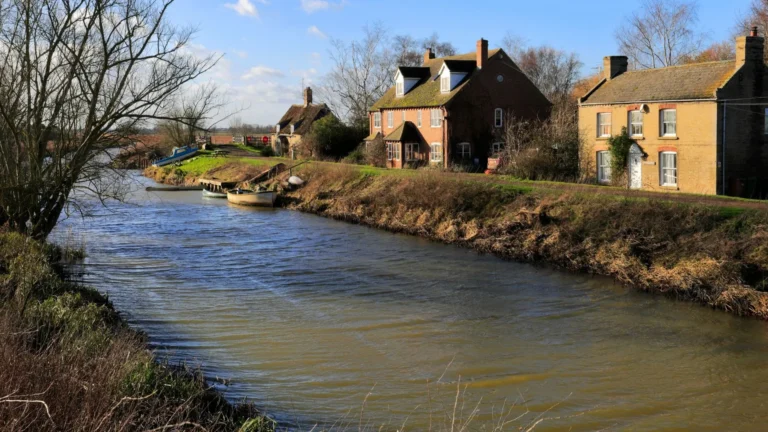
Welches Dam, Cambridgeshire – Getty Images
Ambitions to get our economy growing require an equal determination to address the barriers that hold it back. This summer, half of England was reported to be in serious drought for the second year running, and the Environment Agency warns of severe consequences for the economy, environment and wildlife if conditions do not improve.
There’s widespread agreement that something needs to be done on water, but not enough action.
In the Fens, we have land known to flood, and vast amounts of water are pumped away every year. As a country, we cannot afford to let that resource go unused
The Government wants more economic growth and more new homes, but it faces repeated criticism over water shortages and ageing infrastructure. In Cambridgeshire and Peterborough, I want to do something about it. Our ambitious Local Growth Plan has set out my aim to triple our £31 billion regional economy by 2050, but we cannot deliver the homes, jobs and investment we need without enough water.
But the issue isn’t so much the quantity of water we have, but our inability to store it.
Major reservoirs are clearly part of the answer, but this country hasn’t built a new one since 1992. The Fens Reservoir is planned for our county, but that’s not likely to come online for at least a decade. We can’t wait that long to deliver growth.
This is a landscape that regularly has too much water at the wrong time of year, putting land and crops at risk, and pumps working around the clock to push the surplus into the North Sea, at real cost to farmers and ratepayers. And a few miles south sits Greater Cambridge, one of the driest places in the country; its nationally important growth now challenged by a lack of water. We pump away in winter what we then ration in summer. No sensible country would design things this way.
We just need to be smarter about how we use this precious resource. Across the Fens, farmers have already built a network of agricultural reservoirs, storing winter water as insurance against drought. In East Cambridgeshire alone there are more than 80. A farm-scale reservoir can be built in under three years for a few million pounds, compared to the 12 years and billions needed for its larger cousin, the Fens Reservoir. Early feasibility work suggests that a wider network can supply water equivalent to a meaningful share of Cambridge’s daily demand, helping to remove one of the biggest barriers to our growth over the next decade. This is a national challenge, and the Fens can help address it.
My partners at East Cambridgeshire District Council are helping drive this work, with my Mayoral authority and with local farmers. Feasibility studies are underway now, supported by the Government.
The Fens could show Britain how to turn a water challenge into an economic, agricultural and environmental asset.
Here in Cambridgeshire and Peterborough, water concerns are consistent. Extracting more water from the chalk landscapes in southern Cambridgeshire is unsustainable. Our internationally important chalk streams are suffering. The Environment Agency already imposes restrictions because of over-extraction, and a hosepipe ban remains in place across many local postcodes.
But agricultural reservoirs present an opportunity to support nature and restore the unique landscape of this low-lying part of the country. Nearly half of the country’s best Grade 1 agricultural soil lies in the Fens, and it produces around a third of the UK’s vegetables. I don’t think the answer is taking this land out of production with re-wetting at scale, when we can protect both its productivity and our water security.
And this issue affects counties far beyond Cambridgeshire. Similar problems are already being felt in towns and cities across the South East, including Hampshire, Kent, Hertfordshire and Essex, where concerns over water supply have been raised and water companies have warned that there may not be enough water for a large proportion of the proposed new homes.
According to the Environment Agency, 36 areas could face water shortages by 2035, and more than a quarter of England is at risk of not having enough water to meet demand. It also warns that England could face a daily water shortfall of 5bn litres by 2055.
All of this shows that we need new solutions to how we capture and store water. In the Fens, we have land known to flood, and vast amounts of water are pumped away every year. As a country, we cannot afford to let that resource go unused.
This does not require radical change. Farmers have shown what is possible, East Cambridgeshire and our partners are advancing the work and studies are underway. The Government wants Mayors to drive regional growth, and removing barriers such as water shortages is part of that role. We have the water and the land to store it. Now we need commitment at every level. Devolving the Environment Agency’s powers would speed up local reservoir approvals and delivery, enabling the Fens to provide its own solution.


This week it seems that another Net Zero domino will fall. The Government is reported to be on the point of announcing that the Zero Emission Vehicle (ZEV) mandate, which lays down targets for the sale of new cars, will be watered down. This follows a consultation launched in August. At present, manufacturers are under […]
Ed Conway is a great economic commentator. Yet even the best of us err. In a long essay for the New Statesman, the Sky News economics and data editor recently argued that Britain runs on what he calls the ‘MoneySavingExpert model’. ‘The country’s guiding principle,’ Conway wrote, ‘from the Thatcher years to the Blair ones […]

This week, Nimby Watch is in Cardiff Bay, at the site of the Welsh Senedd Oooh…Wales. Why are we here? Surely you’re not about to kvetch about the Senedd building. They finished it 20 years ago! I’ll admit it’s not my favourite building from the outside – very generic glass-and-steel – but the inside is […]