Reform are no longer just a protest vote
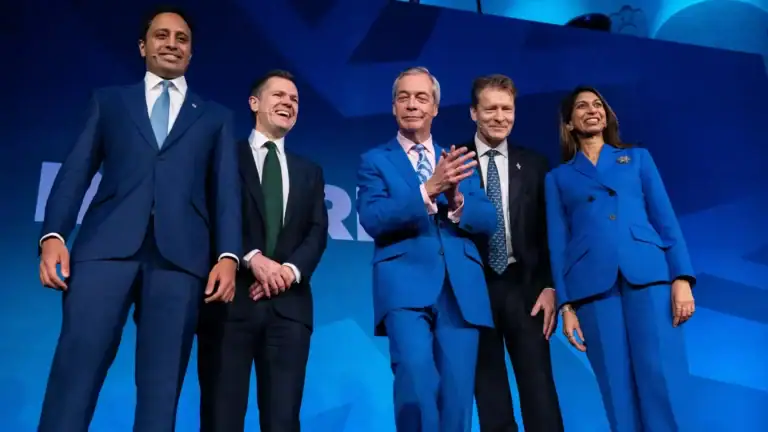
Photo: Thomas Krych/Anadolu via Getty Images
In a move intended to signal Reform UK’s maturation from insurgent force to serious contender, Nigel Farage has unveiled the beginnings of his shadow front bench.
At the heart of this announcement are three key figures: Farage himself as the guiding force, Robert Jenrick as Shadow Chancellor and Richard Tice retaining his dual role as Deputy Leader and spokesman for Business, Enterprise and Energy. With additional appointments like Suella Braverman to Education, Skills and Equalities, Zia Yusuf to the Home Office, Lee Anderson holding firm as Chief Whip and Social Welfare spokesman and Danny Kruger as Delivery Tsar, Reform are building depth. But it’s the economic trio that demands scrutiny, especially through the lens of CapX’s free-market ethos.
Farage has long been the clarion voice for a Britain unshackled from bureaucratic excess. His economic worldview, honed over decades, centres around lower taxes to make work pay, deregulation to unleash entrepreneurship and a rejection of the high-spending, high-tax model that has bloated the state. Yet as Reform’s leader, Farage has shown a more pragmatic streak that has drawn criticism from some on the Right.
In a recent speech, he dialled back on pledges for sweeping £90 billion tax cuts, acknowledging they aren’t ‘realistic at this current moment’ amid ballooning public debt. Instead, he advocates controlling spending first, then stimulating growth through targeted relief – raising tax thresholds, scrapping inheritance tax on family farms and fostering a ‘pro-entrepreneurship’ agenda. I’d argue that this is realism rather than retreat, echoing the Centre for Policy Studies’ (CapX’s parent organisation) calls for fiscal discipline before rewards.
Enter Jenrick, the former Conservative heavyweight whose defection to Reform last month sent shockwaves through Westminster. As Shadow Chancellor, Jenrick brings a track record of advocating for a smaller state, smarter regulation and lower taxes – positions that dovetail neatly with Farage’s vision. In his Tory days, Jenrick championed reducing the benefits bill to fund income tax cuts, estimating that curbing economic inactivity could save £12bn, equivalent to a 2p reduction in the basic rate. He has consistently argued for living within our means, slashing waste and incentivising work over welfare dependency. Does this gel with Farage? Absolutely. Both men prioritise growth through fiscal prudence, not profligacy. Jenrick’s pledge today to ‘restore stability to our economy, cut waste, bring down the benefits bill and lower taxes’ echoes longstanding Reform priorities. Where Farage provides the populist fire, Jenrick offers the technocratic rigour – a potent combination for a party eyeing Treasury keys.
Then there’s Richard Tice, the business-savvy deputy whose portfolio on Business, Enterprise and Energy positions him as the frontline warrior against economic drags. Tice’s credentials are impressive: a multi-millionaire from property development, he led firms like The Sunley Group and Quidnet Capital, navigating markets with a keen eye for opportunity. His disdain for Net Zero – which he dubs ‘net stupid zero’ – aligns with Reform’s wider critique of green policies as a ‘costly self-inflicted wound’, hamstringing industry. Tice argues that renewables subsidies inflate bills and kill jobs, advocating instead for scrapping targets, taxing the sector and unleashing domestic energy like North Sea oil and fracking. Critics point to his companies’ past embrace of green tech for cost savings, but this underscores his pragmatism: efficiency yes, ideological mandates no.
Of course, Reform isn’t a Thatcherite purist party, and nor should it be. The Iron Lady herself was no ideologue; she was a pragmatist who tackled the sclerotic economy of 1979 with bold reforms tailored to her time. Today, facing post-Covid debt, energy insecurity and a welfare state groaning under its own weight, Reform propose a blend of deregulation, targeted tax relief and rejection of green dogma. Farage’s team reflects this: not dogmatic cuts for cuts’ sake, but strategic interventions to make Britain competitive again.
This announcement caps a remarkable ascent. In under two years since Reform’s breakthrough in the 2024 election – securing five MPs and millions of votes – the party is challenging its critics’ talking points. Allegations of a one-man band? Shattered, as Farage defers to experts like Jenrick and Tice on policy details, as he made clear at the launch press conference. No experience of government? Jenrick’s ministerial CV, Braverman’s legal nous and Kruger’s delivery expertise beg to differ. And a lack of policies? This front bench heralds a fleshing out of Reform’s platform, from economic revival to welfare reform. As Farage steps back to let his team shine, Reform are proving they’re no longer just a protest vote.

Ron DeSantis chose his moment with care. The night before the US midterms, the outgoing Governor of Florida appeared on a sports podcast. On election eve, DeSantis admitted that the Iran war had been ‘a big, big drag’ on Republicans, that the party had been ‘gaslighting’ voters by blaming Joe Biden for the price of […]
I’ll declare an interest. I sit on Reform UK’s Board and I’ve known Nigel Farage for a quarter of a century. So when Kemi Badenoch tells the country that Reform are ‘another left-wing party’, that we and Labour are arguing for ‘the same things, nationalisation, the two-child benefit cap’, that Farage is Jeremy Corbyn wrapped […]
You could almost hear the revolutionary vitriol dripping onto the Labour benches during Monday night’s Lords debate on political donations, following the announcement of Reform’s £72 million bonanza from two crypto billionaires with UK voting rights but recent residence abroad. ‘An undermining of democracy and rampant Americanisation’, one peeress spat out. A case of ‘the […]


