Robert Jenrick and the Tory psychodrama
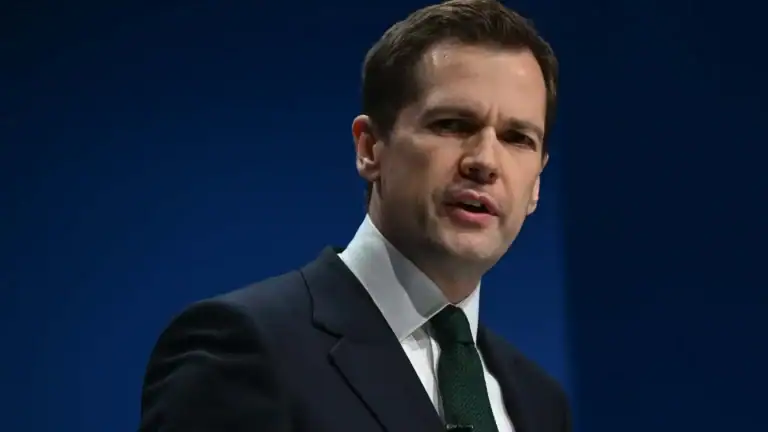
Photo: Rasid Necati Aslim/Anadolu via Getty Images
Kemi Badenoch took to X this morning to announce that she had sacked Robert Jenrick – the erstwhile shadow justice secretary – from the shadow cabinet, removed the whip and suspended his Conservative Party membership. The Conservative Party leader stated she was:
Presented with clear, irrefutable evidence that he was plotting in secret to defect in a way designed to be as damaging as possible to his Shadow Cabinet colleagues and the wider Conservative Party.
The evidence against Jenrick included a copy of a resignation letter ‘left lying around’ and meetings that took place between him and Nigel Farage.
As it turns out, they were correct. After a day of speculation, Jenrick joined Nigel Farage on stage at a Reform UK press conference and announced that he would by joining the Conservatives’ light-blue counterparts. Naming and shaming his former colleagues in the shadow cabinet, the man affectionately known as ‘Bobby J’ among his acolytes explained why he believes that Tory Party is no longer the best vessel for the British Right.
This is obviously less than ideal for the Conservatives. But still, firing Jenrick appears to have been Badenoch’s only tenable option. She both controlled the narrative and projected an image of decisiveness.
In her announcement, Badenoch cited Britons being ‘tired of political psychodrama’ as a reason for getting on top of the issue. She’s not wrong. A snap poll by the Daily Mail has 91% of respondents agreeing with the statement. After 14 years in government and what feels like almost as many prime ministers and chancellors, the last thing voters are looking for in a renewed Conservative Party is yet another turn on the merry-go-round of antagonistic internal briefing and regicide.
Yet getting rid of one of British conservatism’s more effective operators was a risky manoeuvre.
Nicknamed the ‘Duracell bunny’, Jenrick refused to take losing out to Badenoch in the Tory leadership election lying down. When Badenoch was polling particularly poorly and her shelf-life looked short-lived, he built up a devoted following with digital content focusing primarily on mass migration, street crime and the corrosive impact of politicised judges on our legal system. To some, it seemed likely that Jenrick would be leading the Conservatives into the May local elections.
Badenoch has since enjoyed a bounce in the polls following the Conservative Party conference and prior to his defection, Jenrick had remained conspicuously subdued. Now he has joined Farage’s ranks, there will also be questions about who might follow suit. For now, at least, Jenrick’s former party allies are saying they will stay put and the ‘contagion risk’ is thought to be low. But that could change.
While Farage wryly confirmed that he had indeed met with Jenrick, he initially insisted that a final defection agreement had not been reached. Patently, that all changed today. Yet it is uncertain whether accepting Jenrick was in Reform’s interest. Populating a party whose raison d’etre is to destroy the Conservatives with former Tory MPs – many of whom presided over policies which Reform now oppose – might not be a winning strategy. It took almost no time for X users to unearth posts in which Farage had criticised Jenrick’s record on asylum hotels, and it surely can’t be long before his statements supporting the controversial Afghan Resettlement and Assistance Programme re-emerge.
Ultimately, moments like this tend to have few clear winners but one obvious loser. Whether the loser is Badenoch or Jenrick remains to be seen and will be decided in the coming weeks. One potential outcome is that Jenrick’s mutiny inspires his followers both within and outside the party to join him. Alternatively, if the public expulsion pays off, Badenoch has an opportunity to lead the Conservative Party in her own way, free from the paranoia of having a leadership rival breathing down her neck.


Young Britons have stopped having sex. This is news to me, obviously, but according to a recent study in The Lancet, British people, particularly teens and young adults, are having less or no sex compared with past generations. Adults under 45 have sex an average of only twice a month, compared with once a week […]

When the Labour government took power in 2024 few might have imagined that two years later it would be able to boast about reducing net migration to 77,000, the lowest level in 29 years. On the face of it, Labour has not merely flattened the Boriswave (when net migration peaked at 944,000), it has reduced […]

It will surprise the majority of people that the most important port in the UK for the export and import of goods is Heathrow Airport. By trade value, Heathrow is gateway for a quarter of the nation’s goods trade, worth nearly £300 billion per annum. You would expect as a consequence, how an expanded airport might […]


