The Small State Initiative
Why Badenoch must scrap these two taxes

9 October 2026

Jacob King - WPA Pool/Getty Images
As the dust of party conferences settles and journalists try to read the runes of what they mean for the coming political year, two things are already clear.
The first is that Andy Burnham’s conference speech was a masterclass in tickling the tummies of his party faithful, with a heady mix of teary emotion and old-fashioned Tory-bashing. Whether the rest of the country will buy into his vision of going back to the 1970s which most people equate with dreadful clothes, endless strikes and – eeek – disco music is a much bigger question.
Stamp duty is our worst and most economically damaging levy, while inheritance tax is the most ambition-sapping and hated. Together they’re the ugly sisters of Britain’s tax code
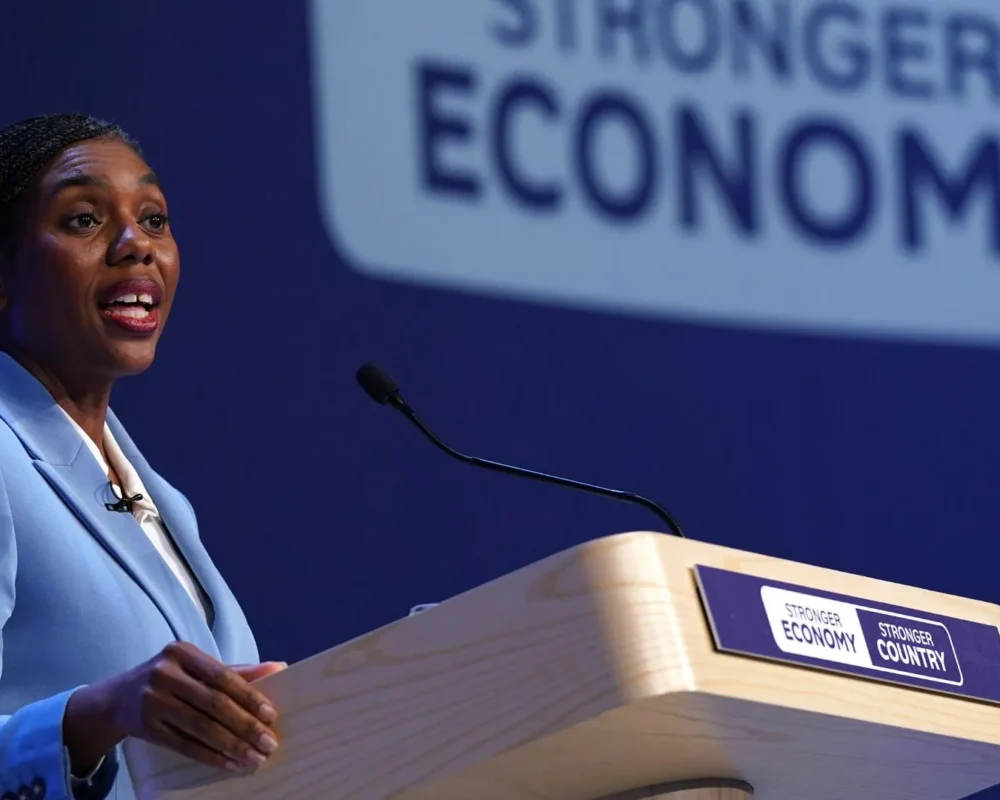
The second is that Kemi Badenoch’s promise to take a big bite out of inheritance tax slots in snugly alongside last year’s pledge to scrap stamp duty on family homes. Stamp duty is our worst and most economically damaging levy, while inheritance tax is the most ambition-sapping and hated. Together they’re the ugly sisters of Britain’s tax code, so taking aim at them paints an increasingly clear vision of a faster, more ambitious and swashbuckling, lower-tax, wealth-creating country in future.
Even better, Kemi has been clear she’d like to finish the job by axing both taxes completely. Turbocharging economic growth by taking family homes out of both stamp duty and inheritance tax is a valuable first step, but abolishing both levies for everything else as well would be even better. The trouble is that final step would be expensive, so how could we make it fair and affordable?
The answer is simpler, lower taxes. Britain’s tax code is one of the longest and most complicated in the world, riddled with expensive, investment-diverting and growth-strangling loopholes and special schemes. Closing them and ploughing the proceeds back into scrapping the ugly and unwanted remains of stamp duty and inheritance tax would help our economy flourish without pushing the government’s budget out of balance, so we’d grow faster and the Chancellor’s sums would still add up.
Where are all the special schemes and loopholes that need to be closed? There are three separate fields that are ripe and ready for harvest, each of them with a crop that’s big enough to pay for what we need on its own, and which together could fund plenty of other reforms as well.
The first is corporate taxes, where scores of loopholes and special schemes have been created over decades to stimulate business investment. But the last Conservative government introduced ‘full expensing’ which makes business investment fully tax deductible in the year it happens, turning many of the other schemes into expensive, redundant duplicates at a stroke. Closing them would release cash that could be used to scrap the rest of stamp duty and inheritance tax, or to cut corporation tax rates, or both.
Next comes our complicated jumble of different income tax rates, where we all pay different percentages depending on whether our income is earned from work or unearned from investments. But we charge lower rates on wealthy people’s unearned investment incomes and higher ones for less-well-off workers earning wages, which can’t be right because the ‘haves’ are being subsidised by the ‘have nots’. Treating earned and unearned income equally with a single, unified income tax threshold and set of percentage rates would be much fairer, and produce funds to wipe out the remains of stamp duty and inheritance tax, or to cut personal income tax rates, or both.
Last but not least should be reforming capital gains tax so anyone inheriting shares in a family firm, farm or anything else would pay no tax at all unless and until they sold whatever they’d been given. And if they reinvested the money into another company rather than taking it out to spend, then they’d postpone the tax bill further still.
These two changes to CGT would mean no one would be forced into selling a business or a farm unless it made sense for their personal circumstances, rather than because someone died. And they’d repair the damage to business investment from Rachel Reeves eroding Business Asset Disposal Relief, because entrepreneurs would be encouraged to reinvest again too. Most fundamentally of all, taxes would be fairer because children would still pay taxes on what they’d received, but only when they had cash from a sale to afford it. And the extra cash from these reforms could pay for axing the remaining bits of stamp duty and inheritance tax too.
Carving out family homes from both stamp duty and inheritance tax is a valuable first economic step, but Britain’s businesses, investment and jobs will grow even faster if the two ugly sisters of our tax system aren’t allowed into the ball at all. Kemi should tell the bouncers to shut them out.


Just as there is a battle on the Right in Britain, so too is there a battle inside the Conservative Party for what the party should focus on. There are those who are concerned about the threat of political Islam, the damage to the social fabric of the Boriswave and other elements of mass immigration, […]

I particularly enjoy a phrase that appears in Christopher Bullock’s ‘The Cobbler of Preston’: ‘Tis impossible to be sure of any thing but Death and Taxes.’ The sentiment was later popularised by Benjamin Franklin in his correspondence. In the world of government budgets, there’s another thing that is, sooner or later, unavoidable: fiscal consolidation. That […]
When William Buckley went on the front page of Time magazine, the title was simple: ‘Conservatism Can Be Fun’. That is what Kemi Badenoch has done at this conference. Conservatism can be fun, can be serious and can learn from its old mistakes. But most importantly, what makes it the world’s oldest party is its […]