We invented liberty – let’s reclaim it

Photo by Anna Moneymaker via Getty Images
With Donald Trump having once again visited Britain, it is worth asking if we might be able to learn something from America’s devotion to liberty. Say what you will about the 45th President, he has never been shy of wading into the ‘culture wars’, at the heart of which lies our right to freedom of speech.
Contrast that with Britain. Free speech remains an issue on UK campuses, but we’ve taken a different approach to those across the pond. Trump’s 2019 Executive Order on Free Inquiry, Transparency and Accountability made federal funding for universities contingent on protecting freedom of expression on campuses. This lies in stark contrast to the current state of the 2023 Higher Education Act. Initially designed to protect freedom of speech on British campuses, it is now quietly being clipped. Bridget Phillipson, the Education Secretary, announced plans earlier this year to strip individuals of their right to sue universities that censor speakers. It is clear that the Government no longer thinks that liberty is worth litigation.
And it is not just campuses where the US and UK diverge. The UK recently earned global headlines for passing the Online Safety Act, which has upset several members of the American Right. Preston Byrne, managing partner of the US law firm Byrne & Storm, is suing the UK regulator Ofcom to ‘protect all Americans from UK censorship’. Byrne argues the Act infringes upon the First Amendment, the right to free speech. Byrne’s persistence highlights the threat to individuals and firms in the UK. This is especially concerning at a time when US firms, including technology giants, have pledged £150 billion of investment in the UK. The Government’s overreach represents an obstacle that could threaten the growth of our technology sector.
Britain is fast becoming a land where people censor themselves long before the authorities arrive. Ask Graham Linehan, detained at the airport for the ‘crime’ of posting online. Or Sandie Peggie, forced to defend her gender-critical views before a tribunal. When ordinary people believe a poorly judged Tweet can result in social ostracism or career suicide, freedom becomes a theoretical right rather than a lived one. Meanwhile, this comes at a time when the very concept of ‘Non-Crime Hate Incidents’ is darkly comedic at best, and downright Orwellian at its worst.
And Byrne is not the only American who is concerned about our freedom in Britain. Senior Washington sources have told The Independent that free speech was at the top of the President’s agenda when he wrapped up his trip during talks with the Prime Minister on Thursday. This follows on from when another source told The Independent that the President ‘berated Keir Starmer over free speech’ during talks at Trump’s Turnberry golf resort this summer. It remains clear that free speech could remain a contentious topic between the two countries. Do we risk losing out on trade deals with the US or continue to treat our citizens like children?
Speech is not the only area which highlights Britain’s paternalism. Lifestyle choices are now under constant siege from the nanny state. Americans would be baffled by the blanket ban on smoking for anyone born after 2009. This means that a 24-year-old in 2033 will be trusted to vote, marry, and fight for their country, but not to light a Marlboro. In Britain, adulthood is increasingly conditional, recognised only when the government deems it convenient.
The US is famous for prohibition and 21-plus drinking laws but in the UK, under the guise of public health, licensing laws micromanage where and when we may drink. Ultimately pushing people into unregulated late-night markets or onto cheaper, riskier alternatives. Gambling is no different. Research by the Adam Smith Institute demonstrates that the heavy-handed regulations and taxes on Adult Gaming Centres (AGCs) are driving individuals online to unsafe, unregulated platforms. Another thing is clear: whenever the government insists it is acting in our interests, the outcome is rarely greater prosperity, but almost always a further erosion of our liberty.
The lesson for Britain is not that we should mimic America’s attitude wholesale. But it is important to remember where they inherited these ideas from. The principle that freedom is not the state’s to dispense, but the individual’s by default, is that of English Enlightenment thinkers. It is a principle worth recovering. Every new regulation, whether about what you can say on campus, what you can drink at midnight, or what you can smoke on your eighteenth birthday, chips away at that principle.
This is why Britain badly needs a new conversation about liberty, one that treats citizens as responsible adults rather than wayward pupils or thought criminals. There is hope yet however. Trump’s visit has reignited the dying embers of a free speech debate in the UK and the demand for change is not going away any time soon. Events like the ASI’s Rally for Liberty at the Conservative Party Conference highlight the need to intellectually and thoughtfully examine the state of illiberal Britain as it stands, in order to enact the best change to restore personal freedoms.
Perhaps the time has come at last for a country exhausted by a culture of regulation and red tape to demand personal liberty once more.
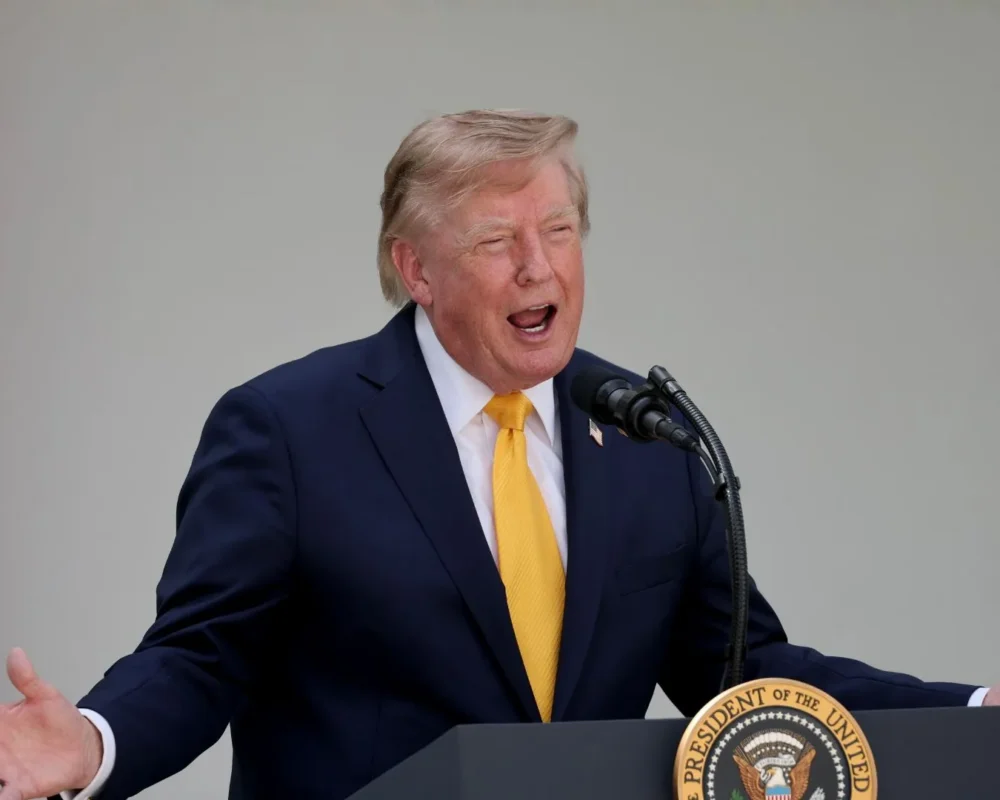
President Trump’s imposition of ‘economic D-Day’ against Iran – a series of sanctions against any nation dealing financially with Iran, as well as banks and businesses – has already been dismissed by the usual suspects whose knee jerk response is always to attack any new measures against the Tehran regime. When it comes to Iran, […]
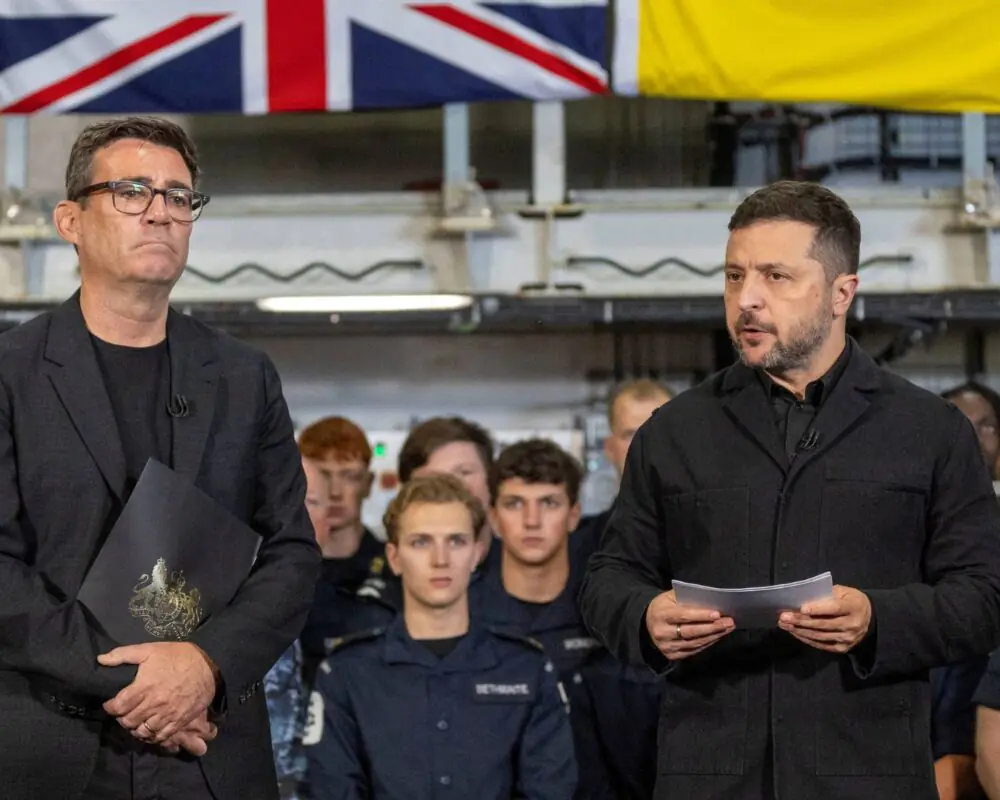
Britain and America have spent a decade arguing about Nimbyism as if it were a housing problem. It is much bigger than that: our inability to build, in a broad sense, has grown into a source of geopolitical weakness. The economic argument has been made already. Growth controls add anywhere from 17% to 38% to […]
‘A Waiter in Paris’ is the story of a young Englishman who graduated from a good university in London with a humanities degree, trained and educated for a world that no longer exists. ‘All while I applied for other, more “prestigious” jobs. Jobs that didn’t appear to exist anymore.’ That’s how Edward Chisholm puts it […]