Trump is poised to humiliate Labour over free speech

Photo: Demetrius Freeman/The Washington Post via Getty Images
‘These are totally unacceptable Tweets… I think it was proportionate to arrest him.’ This is what the newly elected leader of the Green Party, Zack Polanski, had to say on Newsnight yesterday in response to comedian Graham Linehan’s recent arrest at Heathrow airport. Linehan’s supposed crime? Posting gender critical content on X. For the uninitiated, to be gender critical is to hold the radical view that women do not have penises, and men do not have vaginas.
Linehan took to his Substack, ‘The Glinner Update’, to describe the ordeal. As soon as Linehan stepped off the plane at Heathrow, returning from Arizona, he was apparently set upon by five – yes, five – armed police officers. He was taken to a private area and informed that he was being arrested for three posts. One refers to the smell potentially emanating from a crowd of trans rights demonstrators; another describes said protestors as ‘misogynists and homophobes’; and the third, and most widely-circulated, is this:
If a trans-identified male is in a female-only space, he is committing a violent, abusive act. Make a scene, call the cops and if all else fails, punch him in the balls.
To the fair-minded, while robust, there is nothing that smacks of illegality about these posts. Linehan is a comedy writer – one of our best at that – and comedians push social boundaries. Father Ted, The IT Crowd, Black Books: his writing defined a golden era of British television. Judging by the reaction on social media, a number of Britons who read about his arrest found it to be an indictment of the justice system.
Regrettably, Linehan’s experience is not an isolated incident. Polanski’s view is clearly not just that of a lone, breast-hypnotising crank, it is also shared by the police, as a number of recent cases demonstrate.
Lucy Connolly has only just been released from prison after serving 40% of her 31-month sentence for an incendiary Tweet posted in the aftermath of the Southport riots. It should be added that Connolly did in fact plead guilty to distributing material with the intention of stirring up racial hatred.
It isn’t just those on the Right who have felt the sting of the speech crackdowns. After footage emerged of the republican Irish rap trio Kneecap appearing to fly a Hezbollah flag at a gig in 2024, the Met opened a case against band member Liam Óg Ó hAnnaidh on terror charges. A decision over whether Ó hAnnaidh will ultimately stand trial on terror charges will be made on September 26.
Those who have followed Britain’s confused relationship with free expression will also be familiar with Non-Crime Hate Incidents (NCHI). An NCHI is a record the police keep when someone has been accused of committing a ‘hate crime’, but there is insufficient evidence that an actual crime has taken place. Freedom of Information requests made by The Daily Telegraph found that 119,934 were lodged between 2014 and 2019. It has also been reported that police registered one against a nine-year-old girl who called a classmate a ‘retard’ and others against two secondary-school age girls who said a peer ‘smelt like fish’.
So in a world where even schoolgirls aren’t safe from the long arm of the thought police, what’s a high-profile figure like Linehan to do? Some have called on Donald Trump to step in.
One course of action is for The Donald to grant Linehan, and others who’ve been punished for exercising free speech, asylum in the United States. Mumford and Sons banjoist turned cultural commentator Winston Marshall attended a press briefing at the White House and put the question to Trump’s press secretary. She responded enthusiastically and said that she’d consult with the administration. Whether this is a realistic possibility remains to be seen, but as we saw from Trump’s expedited refugee scheme for South Africa’s white Afrikaner minority, the President does take an unconventional approach to asylum policy.
A measure that hasn’t received as much attention is for Trump to invoke the Global Magnitsky Human Rights Accountability Act. The Act allows the US to sanction foreign officials for gross violations of human rights or significant acts of corruption. Alexandre de Moraes, a rogue judge in Brazil’s supreme court, was recently sanctioned under the Act for using his position to suppress freedom of expression. US Treasury Secretary Scott Bessent described de Moraes as being ‘responsible for an oppressive campaign of censorship’. What would stop the Trump administration interpreting the Act to punish Britain’s censorious authorities on similar grounds? It should also be noted that using the legislation in this way is not unique to Trump – Joe Biden sanctioned Antal Rogán, the minister heading Viktor Orbán’s Cabinet Office, just before he left office.
It would be cripplingly humiliating for Labour if the Americans were to punish the British state into respecting free speech. But some may well question what alternative we have.
On Sky News, Wes Streeting was asked for his thoughts on Linehan’s arrest. He said that he would rather see ‘police on the streets rather than policing Tweets’, and added that ‘It’s the easiest thing in the world for people to criticise the police, but they are enforcing laws that parliament has passed and asked them to enforce’. Quite so, Health Secretary, your Government is in fact uniquely positioned to do something about it.
Although Keir Starmer has reportedly told the police to focus on serious crimes in the wake of the Linehan affair, his performance at Prime Minister’s Questions was lacklustre. Rather than commit to reviewing existing legislation and back the Conservatives’ proposal for a new law that would significantly curtail the police’s ability to gather personal information where a crime has not been committed, Keir Starmer had this to say:
We have a long history of free speech in this country. I’m very proud of that and I will always defend it.
You’ll remember that this isn’t the first time Starmer has deployed this line. When he was confronted by JD Vance earlier this year on the UK’s record on free speech, he used it too. No introspection, no solutions, just reflexive hot air. I highly doubt the Trump administration bought it then and I’m certain that after Linehan’s treatment, they won’t buy it now.
In the coming months and years, as Labour continue to negotiate more favourable tariff agreements with the US, one wonders if improved protections for free speech will be included as a condition. But whether it is via this, the Magnitsky Act, symbolically granting asylum to comedians or any other measure Trump might be capable of, Labour will ultimately have to confront this growing public grievance. Fundamentally, free speech is a defining feature of our democracy and history, and Britain should not have to be pushed into protecting it.
Last week, the Community Security Trust’s (CST) report covering incidents between January and June 2026 showed alarming results. The unprecedented wave of antisemitism that started on October 7, 2023, when Hamas massacred and kidnapped over 1,200 people in Israel, shows no sign of easing. On the contrary. The 1,926 incidents recorded represent a 21% rise […]

The way we as consumers engage with news, TV and online media is continually evolving. Traditional TV has been increasingly usurped by streaming services. Apps like YouTube are taking up a greater share of viewers’ time and are now successfully competing with the likes of Netflix. It is natural that in this environment competition is […]
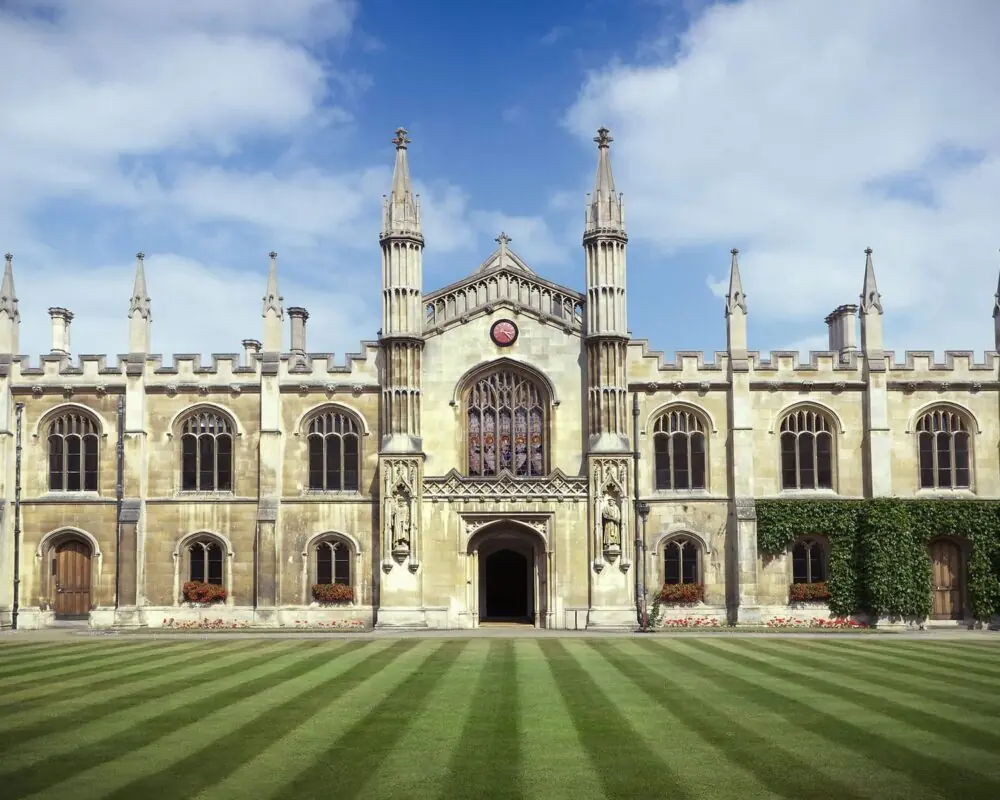
After 17 months of drift following the Government’s January 2025 reset of the Higher Education (Freedom of Speech) Act 2023, the free speech complaints scheme administered by the Office for Students (OfS) is at last going ahead. The Government has now signed the commencement regulations needed to bring the scheme into force. From 1 September […]