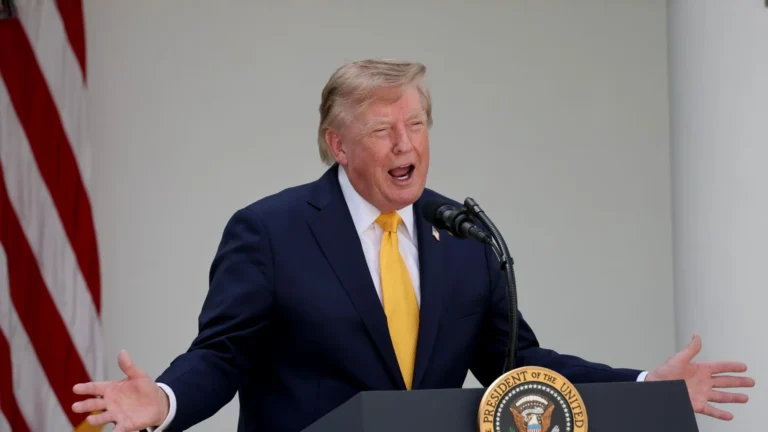
President Trump’s imposition of ‘economic D-Day’ against Iran – a series of sanctions against any nation dealing financially with Iran, as well as banks and businesses – has already been dismissed by the usual suspects whose knee jerk response is always to attack any new measures against the Tehran regime.
When it comes to Iran, ‘the usual suspects’ has a specific meaning: the various diplomats, advisers and political figures who negotiated and implemented the Joint Comprehensive Plan of Action (JCPOA) – known as the Iran Nuclear Deal – in 2015. Alan Eyre, for example, a former US diplomat who was on the nuclear negotiating team with Iran until the 2015 deal was signed, said yesterday that ‘there are no new sanctions that are effective’.
As we saw with the mass anti-regime protests in January, economic deprivation leads to civil unrest. Further sanctions could yet topple it
The question that is begged, of course, is what ‘effective’ means now. In the case of Iran, there are two main benchmarks. The biggest is the fall of the regime. That is the long-term goal of the US, of Israel and – often forgotten – of most of Iran’s Arab neighbours, all of whom understand the severity of the poison the Tehran regime injects into the region – and globally.
But there is another benchmark, too: the lesser but nonetheless vital aim of US policy under Trump, Israel and the Arab neighbours. That is to weaken Iran so it poses less of a threat outside its own borders. That was one aim of the military strikes earlier this year; it is also one of the aims of the new sanctions.
The issues around sanctions stem mainly from the 2015 JCPOA and its supporters, who have never accepted that their supposed diplomatic triumph in 2015 was in reality a disaster, and have continued to push for treating the Iranian regime not as an enemy which needs to be defeated but as a potential partner to be eased back to respectability.
But the facts are clear. Sanctions work as a means for – at the very least – reducing the Iranian threat. The most recent proof is that Iran’s economy grew when the sanctions imposed in Trump’s first term after he scrapped the 2015 deal were then eased by Biden – and shrank when they were reimposed by Trump in his second term.
IMF figures show that in the year after the 2015 JCPOA deal Iran’s economy grew 12.5% – and then shrank by 4.8% in 2018 and 9.5% in 2019 after Trump reimposed sanctions (as part of what was known as his ‘maximum pressure’ strategy following the scrapping of the deal). Had Trump not intervened, Iran was on the way to being a cash-rich terror funder with a nuclear weapons programme.
The key point is that the JCPOA was not a flawed deal that needed improving but a mistake in conception because it handed cash and diplomatic cover to a regime that had no intention of honouring it. It was an act of folly by President Obama to remove sanctions on the world’s leading funder of terror, which then gave its economy a 12.5% boost in the first year after the deal.
Trump was thus responding to the reality of a resurgent Iranian economy and thus threat when in his first term he scrapped the 2015 deal and reimposed sanctions in 2018.
These immediately put the squeeze on the Iranian economy. Tehran was being brought to its knees economically. There was still a long way to go to remove the threat it posed but the foundations were there for that to seem a realistic possibility. Biden then came to power in 2021, bringing back to office many of those behind the original misguided JCPOA deal. Having learned nothing in their years out of power, they immediately lifted the pressure on Iran by no longer enforcing Trump’s sanctions as part of their attempt to agree a new deal.
That not only gave a huge economic boost to Tehran; it sent a clear signal that the US was no longer serious about sanctions. Khamenei read that signal correctly, leading to bolder action by Iranian proxies such as Hamas – and the October 7 2023 massacre.
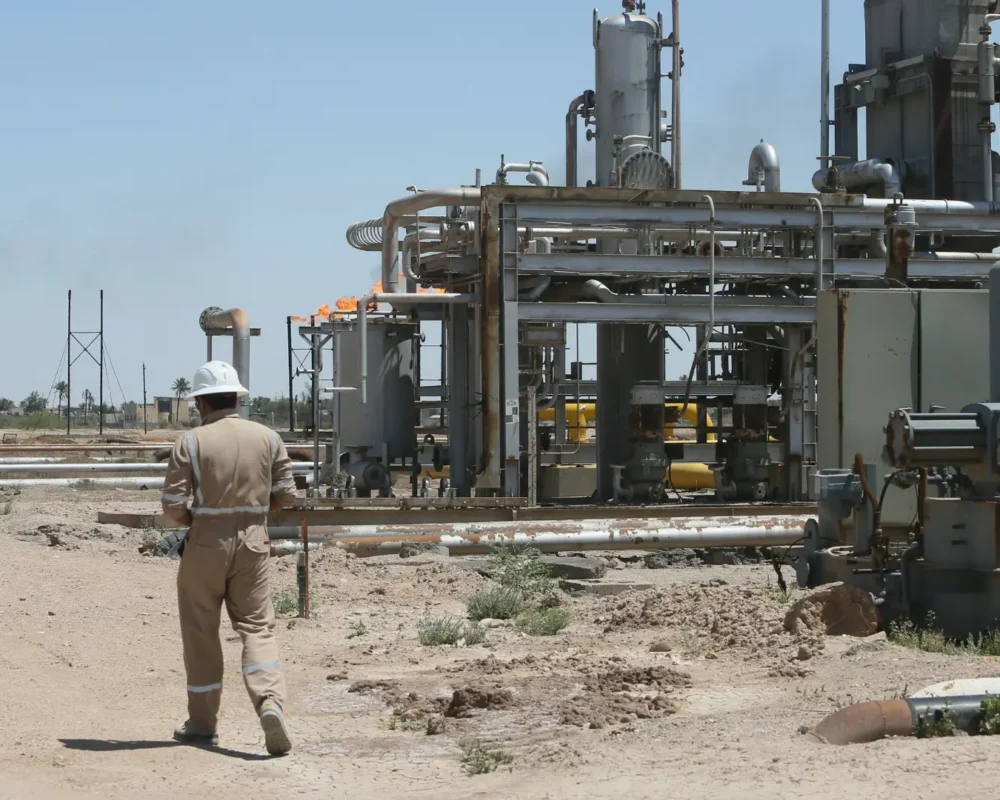
In the first quarter of 2022 Iran exported 870,000 barrels of oil a day (largely to China), 30% above the 2021 average of 668,000. By January 2024 this was 1.29 million barrels a day. Add to that a payment in August 2023 of $6 billion to the regime for the release of US hostages with the Americans insisting, pathetically, that the money could only be spent on humanitarian aid. Suddenly Iran was again flush with cash.
Stay informed with our free daily briefing.
This matters because Iran’s economy feeds directly into terror. In 1992 – when suicide bombings began – Iran gave Hamas $50m a year. By 2020 that was over $100m a year (US State Department figures), plus in 2023 a reported extra $70m for missile and defence systems in Gaza. Given Iran’s role both in the Middle East and beyond, you would think Western governments would do all they can to isolate the regime in Iran and starve it of the money it needs to fund terror. And yet as we have seen over recent years, quite the opposite has happened.
The need now is to build on the damage done to the Iranian economy by US and Israeli military action – to put a deeper economic squeeze on the regime. Its economy is already in dire straits and, as we saw with the mass anti-regime protests in January, economic deprivation leads to civil unrest. Further sanctions could yet topple it.
Last week, the Community Security Trust’s (CST) report covering incidents between January and June 2026 showed alarming results. The unprecedented wave of antisemitism that started on October 7, 2023, when Hamas massacred and kidnapped over 1,200 people in Israel, shows no sign of easing. On the contrary. The 1,926 incidents recorded represent a 21% rise […]
05 Aug 2026
Middle East
Juno Chowla-Song
Free markets are the Gulf’s best defence against Iran
The Iran war has created the largest supply disruption in the history of the oil market, beating the shocks of the 1970s and the war in Ukraine. Whatever happens with Donald Trump and the Strait of Hormuz, the Middle East oil industry cannot afford to be this exposed again. The Gulf has the money and […]
03 Jul 2026
Middle East
Damien Phillips
Trump’s Iran talks are trapped in Groundhog Day
Spare a thought for Jared Kushner and Steve Witkoff, heading the US negotiating team, as they met with Qatari Emir Al Thani this week to discuss the ‘progress of the negotiations’ between the US and the Iranian regime in the Qatari capital, Doha. While the venue for the talks has shifted from Pakistan to Switzerland […]
Manage Consent
To provide the best experiences, we use technologies like cookies to store and/or access device information. Consenting to these technologies will allow us to process data such as browsing behavior or unique IDs on this site. Not consenting or withdrawing consent, may adversely affect certain features and functions.
Functional Always active
The technical storage or access is strictly necessary for the legitimate purpose of enabling the use of a specific service explicitly requested by the subscriber or user, or for the sole purpose of carrying out the transmission of a communication over an electronic communications network.
Preferences
The technical storage or access is necessary for the legitimate purpose of storing preferences that are not requested by the subscriber or user.
Statistics
The technical storage or access that is used exclusively for statistical purposes.The technical storage or access that is used exclusively for anonymous statistical purposes. Without a subpoena, voluntary compliance on the part of your Internet Service Provider, or additional records from a third party, information stored or retrieved for this purpose alone cannot usually be used to identify you.
Marketing
The technical storage or access is required to create user profiles to send advertising, or to track the user on a website or across several websites for similar marketing purposes.
To provide the best experiences, we use technologies like cookies to store and/or access device information. Consenting to these technologies will allow us to process data such as browsing behavior or unique IDs on this site. Not consenting or withdrawing consent, may adversely affect certain features and functions.
Functional Always active
The technical storage or access is strictly necessary for the legitimate purpose of enabling the use of a specific service explicitly requested by the subscriber or user, or for the sole purpose of carrying out the transmission of a communication over an electronic communications network.
Preferences
The technical storage or access is necessary for the legitimate purpose of storing preferences that are not requested by the subscriber or user.
Statistics
The technical storage or access that is used exclusively for statistical purposes.The technical storage or access that is used exclusively for anonymous statistical purposes. Without a subpoena, voluntary compliance on the part of your Internet Service Provider, or additional records from a third party, information stored or retrieved for this purpose alone cannot usually be used to identify you.
Marketing
The technical storage or access is required to create user profiles to send advertising, or to track the user on a website or across several websites for similar marketing purposes.