Trump’s Iran talks are trapped in Groundhog Day
Win McNamee/Getty Images
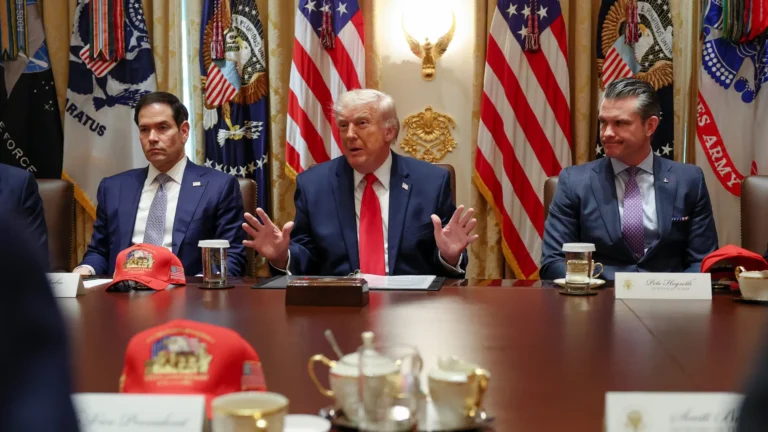
Spare a thought for Jared Kushner and Steve Witkoff, heading the US negotiating team, as they met with Qatari Emir Al Thani this week to discuss the ‘progress of the negotiations’ between the US and the Iranian regime in the Qatari capital, Doha. While the venue for the talks has shifted from Pakistan to Switzerland and now Qatar, Kushner and Witkoff are still trapped in the diplomatic doom loop the US has been stuck in since President Trump announced a ceasefire in the Iran War.
Like Bill Murray’s initially contemptible weatherman, Phil Connors, in the 1993 comedy classic ‘Groundhog Day’, US envoys trying to make progress in their discussions with the Islamic Republic are cursed to relive the same day over and over again. Just when they think they’ve got somewhere and moved the discussions on to substantive issues like Iran’s nuclear programme, its ballistic missile arsenal or its support for terrorist proxies, the talks are reset back to the beginning. Matters they thought already settled, particularly the reopening of the Strait of Hormuz, are suddenly put back in contention by the Iranian regime and the whole process starts over.
This goes beyond the usual stalling tactics, moving goalposts and petty powerplays that the regime seems to pride itself on, although there’s been plenty of that so far. Direct US-Iran talks were originally scheduled for last weekend at the Bürgenstock Resort in the Swiss Alps but were cancelled by the regime. After Washington briefed that Kushner and Witkoff were heading to Doha on Tuesday for rescheduled talks with their Iranian counterparts, the regime publicly downgraded the whole affair claiming there would be no meeting ‘at any level’ with the Americans, only indirect discussions through Qatari mediators.
US envoys trying to make progress in their discussions with the Islamic Republic are cursed to relive the same day over and over again
No amount of skilful mediation from either the Pakistanis or the Qataris will be able to overcome the eternal frustration of the Iranian reset strategy though. When it signed the Memorandum of Understanding (MOU) with the US on June 17, the regime agreed to reestablish the free flow of commercial shipping through the Strait of Hormuz, under the explicit condition that it be toll-free for the following 60 days. And yet it continues to use the Persian Gulf Strait Authority (PGSA), created by the Iranian Revolutionary Guard Corps (IRGC), to exert control over the Strait.
The Authority demands commercial shipping register their details with it and buy its insurance package to ensure safe passage, using language strongly reminiscent of Mafia protection rackets. Everything the Authority requires insurance for are calamities that the regime itself is inflicting on commercial shipping, mainly drone, missile and mine attacks. This is effectively a shakedown – pay us or we’ll blow you out of the water.
Because the IRGC is sanctioned, proscribed and designated a terrorist organisation by most of the free world, shipping companies are reluctant to register with the PGSA for fear of falling foul of anti-terror laws or ending up on a US national security watchlist.
Instead, they have been escaping the Strait via the Omani side – Oman oversees the other half of the Strait and created a UN-backed safe corridor for commercial shipping which avoided mined areas. It refused Iranian proposals to charge mandatory tolls on any ships passing through it, citing a commitment to the UN Convention on the Law of the Sea.
Clearly enraged that its extortion scheme was being circumvented, the regime first rejected the UN-Omani evacuation route, then warned ships to only use Iranian-approved routes through the Strait lest they face a ‘forceful response’ and finally escalated to launching drone strikes against two cargo ships travelling through the Omani route and using what’s left of the IRGC’s fleet of fast attack craft to halt other vessels also trying to use the Omani corridor. This prompted retaliatory airstrikes on Iranian targets by the US Navy, led the UN to suspend its support for the safe route and has created major uncertainty amongst shipping companies as to whether it’s safe to transit the Strait or not.
Naturally, the regime has thrown out any alternatives to this arrangement, already rejecting a recent Omani proposal that Hormuz could be governed like the Malacca Strait where states dependent on the world’s most important trade artery make voluntary lump-sum payments to maintain lighthouses, ensure safe passage and reduce the risk of collisions.
In this way, the Iranians are able to claim publicly that Hormuz is open and vessels may move freely, while insisting on the use of their own coercive management system of the Strait that forces vessels to accept Iranian routes, Iranian coordination and pay the regime a protection fee for the privilege.
This is a red line for the US and the unimpeded reopening of the Strait is a political imperative for the Trump administration, fearful of the effect on US gas prices ahead of the midterm elections in November. By dismissing any attempt at a compromise and maintaining their leverage through disruption on the ground, the Iranian regime is ensuring the issue keeps returning to the top of the agenda at the next set of talks and the whole process goes back to where it began.
Given that the US has lifted its blockade of Iranian shipping, Iran’s regime has no trouble in getting its own oil out to fund its repressive government, so it could keep this charade going indefinitely. President Trump has claimed that the talks are going very well and only this week he declined a resumption of all-out war with Iran to force compliance, believing it would derail diplomacy and hurt Washington’s chances of dismantling the regime’s nuclear programme, so Tehran is feeling no pressure to stop the merry-go-round.
When Phil Connors finally escaped Groundhog Day, he did so by learning important lessons and making a profound change. The question remains how long President Trump will take to undergo the same redemption arc so that the US can finally be released from this endless cycle of fruitless talks, realise that the Iranian regime isn’t a rational actor that can be trusted to keep its word, and allow the US military to finish the job it started back in February.
Hormuz has been front-page news for a month. The oil price has been reported, the tanker attacks recorded and the reserve releases announced. What has not been explained is why none of those responses have moved much oil. Oil does not simply flow through Hormuz, as it relies on a surprisingly large and complex web […]
Iran’s strike on Ras Laffan this week was not just an attack on Qatar, but on one of the most important energy hubs on the planet. In this extract from his book ‘Material World’, Ed Conway explains why this vast LNG complex matters so much – and why damage there could reverberate through gas markets, […]
The war in Iran continues, and Donald Trump is trying to avoid an enduring oil shock by assembling an international alliance to protect the Strait of Hormuz. But as the realities on the ground play out, so too does the war of narratives. Vali Nasr, a professor at Johns Hopkins University who frequently appears on […]