There’s one rule for Starmer, and another for everyone else
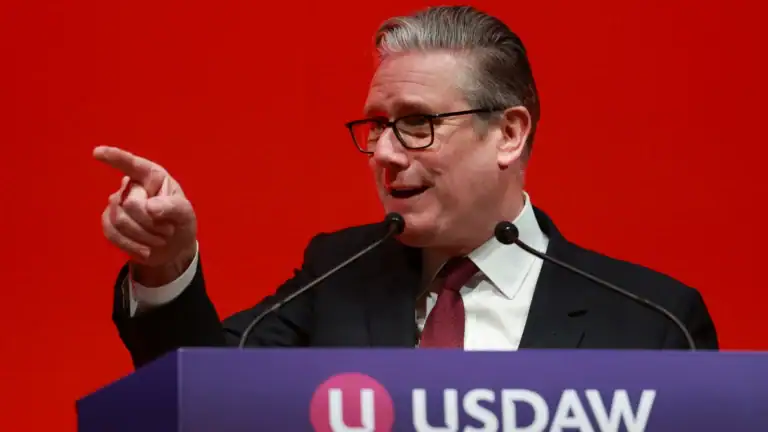
Photo: Temilade Adelaja - WPA Pool/Getty Images
This is going to be unpopular, but here goes. I believe Keir Starmer. I don’t think he would be so foolish, or so careless, as to lie to Parliament.
He is an ultra-cautious man, a creature of procedure. When he says that he did not discover until this month that Peter Mandelson had been denied security clearance as a potential ambassador, I think he is telling the truth.
But here’s the thing. He never allowed the slightest leeway to others in similar circumstances. As leader of the Opposition, he always assumed the worst, always levelled accusations of lying, always demanded resignations.
Having set those standards for every other MP, he can hardly now expect an opt out himself. The fact that he thinks he can infuriates the people around him, including Labour MPs. Never has there been a wider gap between how a prime minister demands that everyone else behave and how he himself behaves.
Later today, MPs are expected to vote on whether to refer Starmer to the House of Commons Privileges Committee for having fibbed to the House. Unlike Boris Johnson, Starmer is whipping his MPs against the referral.
Opposition MPs say that the PM knowingly made false statements when he claimed that ‘due process’ was followed in Mandelon’s appointment, and that ‘no pressure whatsoever’ had been applied.
Kemi Badenoch, Nigel Farage and Ed Davey all argue that these statements were lies. They may be right; but I am unconvinced. The essence of security vetting is that it is private. The people being vetted must know that the information they disclose will be treated as confidential, or they will not talk freely.
More to the point, I struggle to believe that Starmer would risk throwing away his career over a needless untruth at the Despatch Box. The man may be a dullard, a moral coward, a political bed-blocker; but he understands the minutiae of procedure.
My guess is that he was telling the truth as he understood it at the time. There are a hundred reasons why he should resign; but telling deliberate lies to Parliament is not one of them.
Did he make a point of not inquiring too closely into those procedures? Very possibly. But that is not the same thing as standing at the Despatch Box with plumes of smoke billowing from your pants.
Incidentally, it is worth reminding ourselves that the Mandelson vetting was not about Jeffrey Epstein. His links to the disgraced sex-trafficker, however sordid, are not the business of our security services. The black mark came, rather, from his financial interests in some unfriendly autocracies, including China.
The problem for Starmer has to do with shiftiness rather than mendacity. He has run his government on the principle of plausible deniability. He dislikes taking positions, and seeks to evade responsibility by deferring to process.
To put it another way, he is a lawyer first and a politician second. As he told his biographer, Tom Baldwin, ‘There is no version of my life that does not largely revolve around me being a human rights lawyer.’
Hence his exaggerated deference to courts, especially international courts. Another PM would have responded to the International Court of Justice’s non-binding opinion that the Chagos Islands should be given to Mauritius – an opinion reached by, among others, a Russian and a Chinese judge – by shrugging it off. But Starmer, even now, is falling over himself trying to hand the islands away.
It is hard to avoid the suspicion that Starmer sees the job of Prime Minister as almost ceremonial, giving automatic effect to the conclusions of reviews and royal commissions, implementing the recommendations of statutory bodies and, above all, rushing to obey the whims of any judge.
For such a man to be caught up in, of all things, procedure, is exceptionally damaging; all the parties in Parliament can see it.
There is another aspect to Starmer’s lawyerliness, one that has so far been unexplored. He made his name as a human-rights and criminal-defence barrister, often acting for deeply unpopular causes and claimants against the state.
All criminal barristers know that there are things they must not know. If a client admits to the crime, the barrister is obliged to disclose that fact. Rumpole of the Bailey fans will remember that a good lawyer understands when to tell his client to stop talking. After a while, that instinct becomes ingrained, and Starmer appears to have elevated it as the ruling principle of his administration.
The trouble is, it doesn’t wash. What Starmer doubtless tells himself is a proper concern for Chinese walls looks to the rest of the world like what it is: cowardice.
The most damning revelation in Olly Robbins’s testimony to Parliament was that Starmer had asked him to find an ambassadorship for his aide, Matthew Doyle. Doyle ended up instead becoming a Labour peer, only to be suspended from the party a month later over his links to Sean Morton, who had been charged with possessing indecent images of children.
Now there is, in my book, nothing wrong with making outside appointments to embassies. Almost every other country in the world does it and, as a rule, their political appointees are a great success. Then again, we all know how Starmer would have reacted had Boris Johnson appointed one of his mates to a key embassy. As always, there is one rule for Starmer, one for everyone else.
Worse, though, is that Robbins revealed he had been instructed by Number 10 not to let the then Foreign Secretary, David Lammy, know about Doyle’s proposed ambassadorship. This is where it gets tricky for Starmer. He was ordering officials to keep relevant information from the Foreign Secretary; yet, at the same time, his defence is that those officials should have been telling him stuff.
That, in the end, is what will do for Starmer. Not that he told a direct lie at the Despatch Box, but his general habit of hypocrisy and double standards.
I realise that a lot of people define ‘corruption’ as ‘holds views with which I disagree’. And I am well aware that voters are generally disposed to disbelieve anything that politicians say. But politicians very rarely tell outright lies. Not because they are unusually virtuous, but because the consequences of being caught out are more serious for them than for other people.
Indeed, what annoys people about politicians is the lengths they will go to not lie: answering different questions to the one that was put, being evasive, saying things that are technically accurate but misleading.
On balance, I think Starmer was telling the truth as he understood it when he told MPs that all the proper procedures had been followed. Then again, precisely the same might be said of Boris Johnson when he told MPs that he had been ‘assured that no Covid rules were broken’. He plainly understood the word ‘party’ to mean a festive congregation of invited guests, not a break for tea among key workers who had been together all day.
The only party in Number 10 was organised by officials while Boris was 40 miles away. Yet Starmer insisted that this was ‘industrial-scale law-breaking’, that Boris’s apology had been ‘mealy-mouthed and half-hearted’, and that the PM must ‘do the decent thing and resign’.
A man who sets such standards now has no business remaining in office. Starmer should follow his own advice: ‘do the decent thing and resign’.
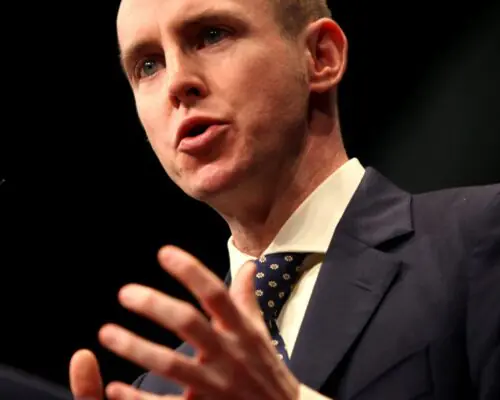

The Government has finally bowed to common sense and given the green light to the Jackdaw gas field in the North Sea. It’s the sensible move and a good start, although a decision on Rosebank is not yet forthcoming. Given the resistance both projects have faced, it’s worth setting out why Jackdaw’s approval is good […]
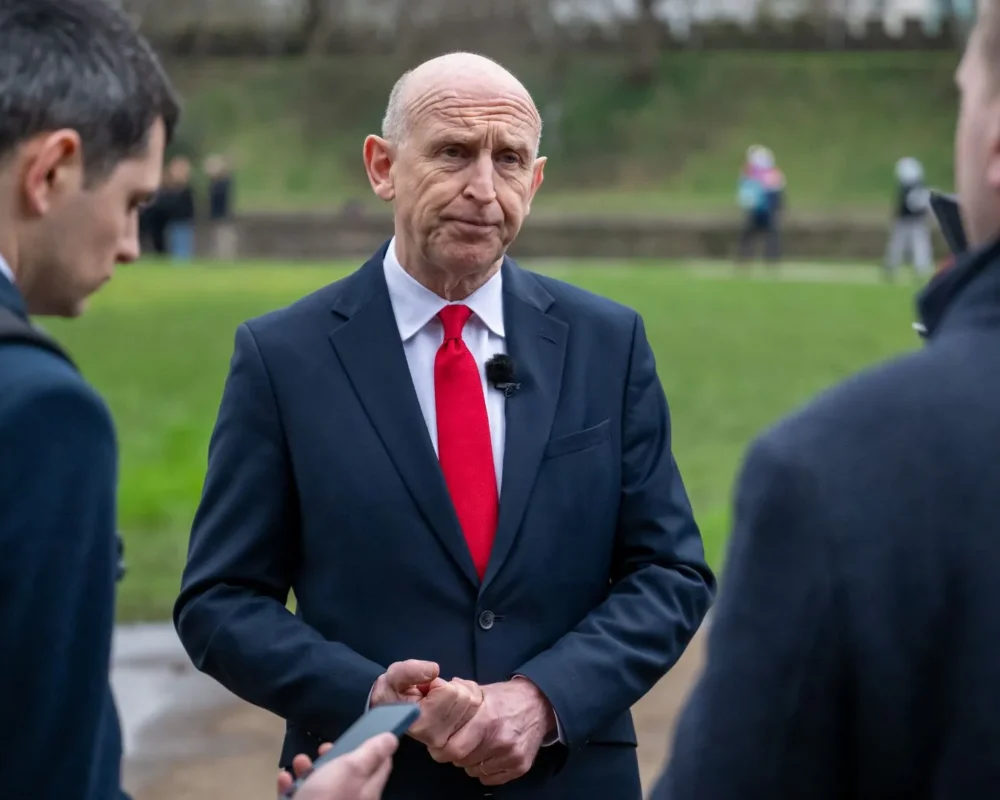
When John Healey sits down next Wednesday, the press gallery will focus hard on his headroom against the fiscal rules. In March the OBR put this at £23.6 billion against the main rule, which requires day-to-day spending to be covered by revenue by 2029/30. A recent Reuters poll of economists suggests it has since shrunk […]
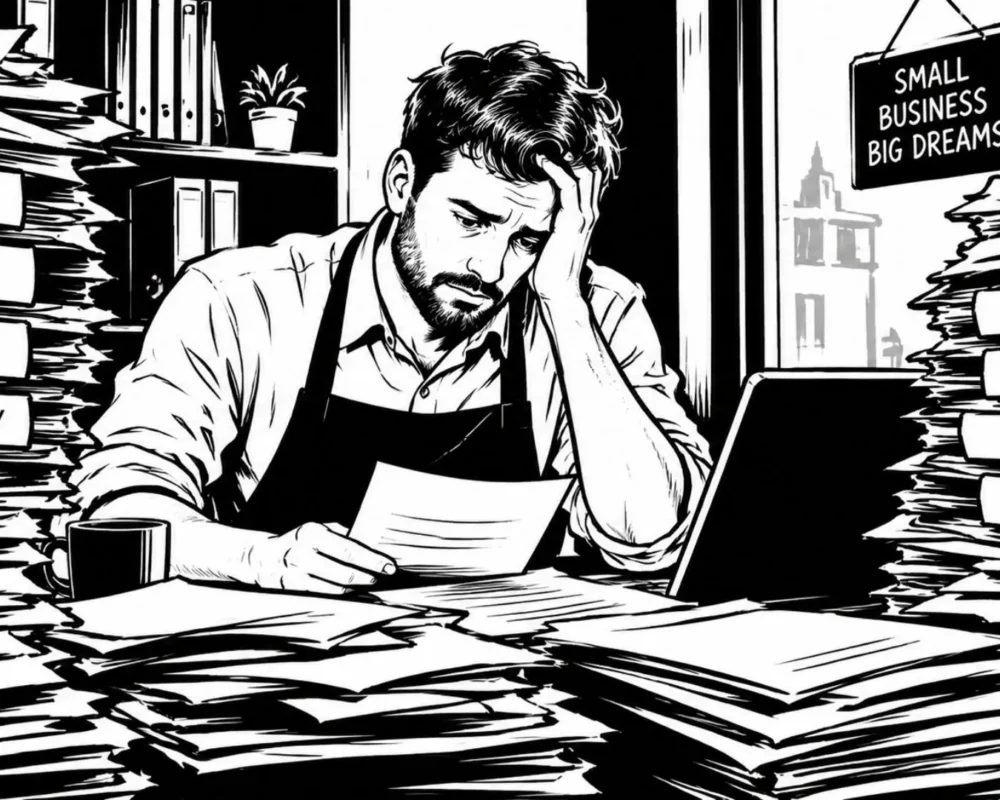
The lifeblood of the economy. The backbone of Britain. When it comes to small businesses, it’s easy to lapse into cliché. But that’s because they really, really matter. The overwhelming majority of businesses in Britain are small businesses. They employ more than 13 million people. And it’s almost impossible to exaggerate how tough things are […]