The lifeblood of the economy. The backbone of Britain. When it comes to small businesses, it’s easy to lapse into cliché. But that’s because they really, really matter.
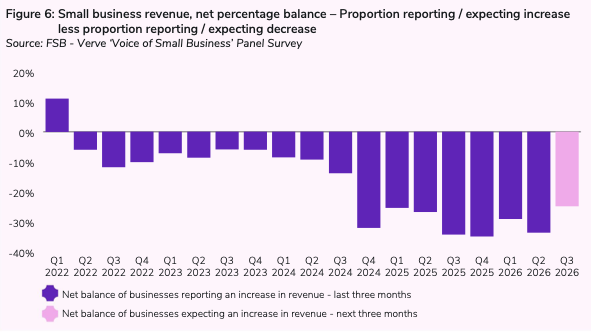
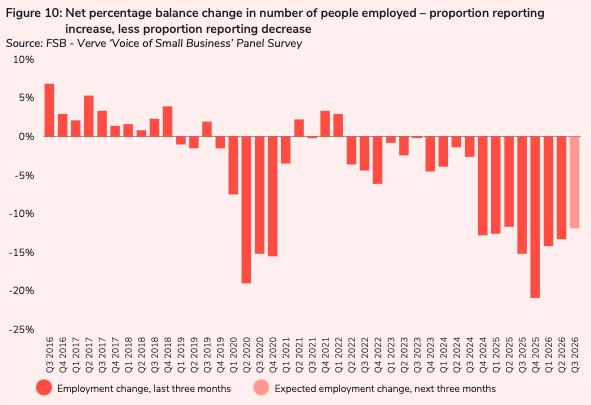
The overwhelming majority of businesses in Britain are small businesses. They employ more than 13 million people. And it’s almost impossible to exaggerate how tough things are for them at the moment. Surveys from the Federation of Small Businesses (FSB) show that for 18 quarters in a row, more small businesses have said they are shrinking rather than growing, and firing rather than hiring. That’s almost five years in which the engine of our economy has been running on empty.
There was a wider concern about the gradual, creeping spread of taxation and regulation – the fact that it seems to get more and more difficult to run a company every single year, in almost every single way
That’s why I’m leading a new project at the Centre for Policy Studies think tank on small business and entrepreneurship. The aim is to come up with policies and ideas to help people who want to start, run and grow companies in every part of the country.
So, with the Budget looming, we wanted to find out what those running Britain’s small businesses are thinking – to get an idea of their most pressing concerns. And with the help of the pollsters Opinium, that’s exactly what we did, surveying 500 senior managers at SMEs across the country.
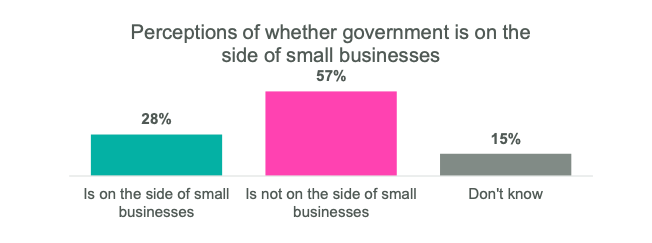
The most obvious finding? Small business owners are – completely understandably – fed up with Westminster. By a two to one majority, 57% to 28%, they felt that the Government was not on their side.
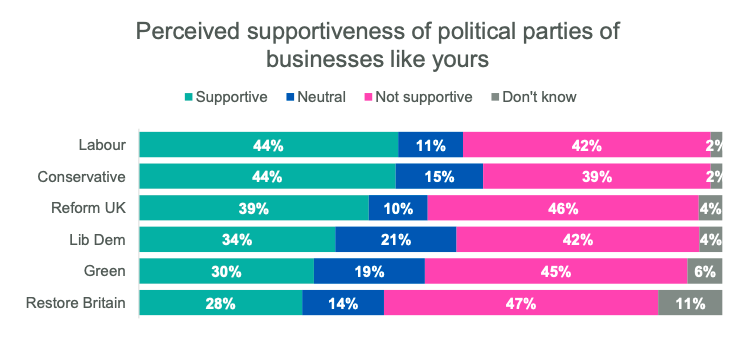
In fact, they seemed pretty fed up with politicians of all parties. By a very narrow margin, voters felt that the Tories and Labour were supportive of ‘businesses like yours’. But they didn’t seem to feel that any of them really get it. (There was also an interesting breakdown by business size: sole traders were markedly more pessimistic about whether all three of the main parties really understood their situation.)
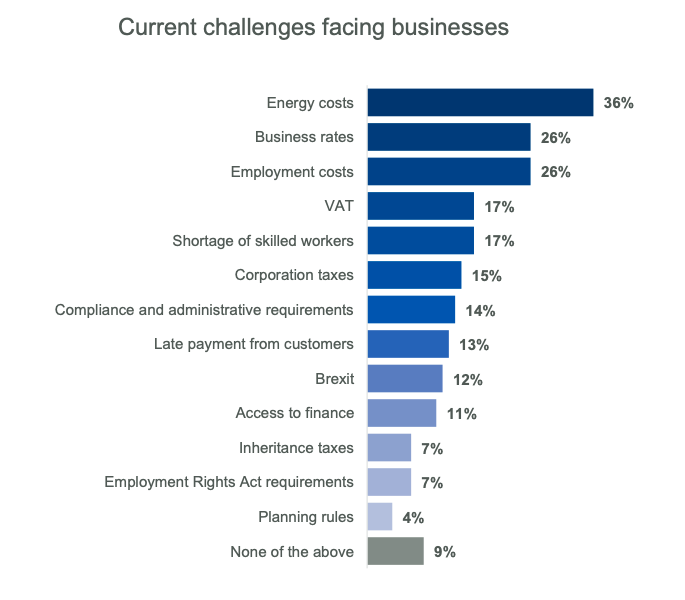
So what are businesses’ main concerns? The most obvious problem, as per our polling, was cost. When asked to name the main challenges facing their business, from a list of options we put together, all but one of the top six answers were about cost – and all of the top four.
Given the headlines, it will be completely unsurprising that energy costs topped the list, with business rates and employment costs as the runners-up – but it’s a useful reminder that Britain’s sky-high energy bills aren’t just a problem for big industrial companies making steel or ceramics, but firms of every size, up and down the land.
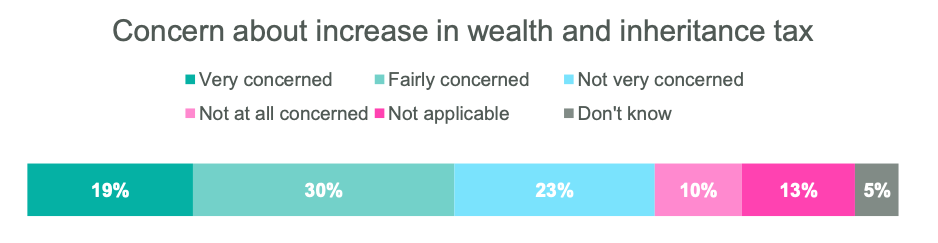
And while it didn’t show up as an immediate problem with businesses’ day-to-day operations, there was also significant concern about the Government’s changes to wealth and inheritance taxes – and the prospect that ministers come back for more. Some 49% of businesses said they were very concerned or fairly concerned about increases in those taxes, compared with just 26% who weren’t. And as Opinium noted in their commentary, this concern rose with the size and complexity of the business, from 26% of sole traders to just under 60% of small and medium-sized firms.
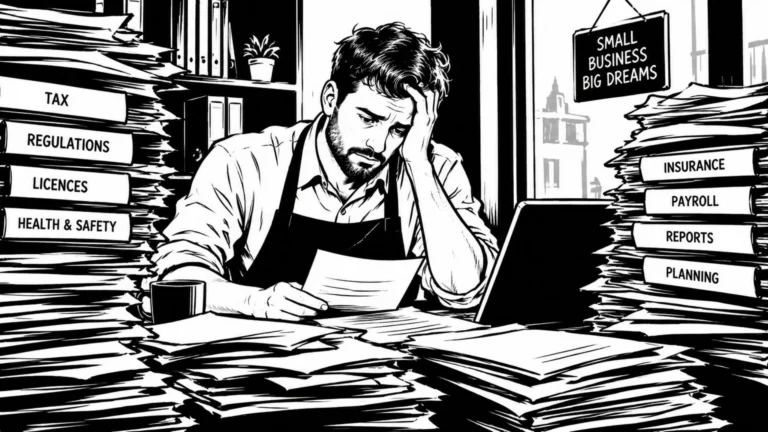
More than this, there was a wider concern about the gradual, creeping spread of taxation and regulation – the fact that it seems to get more and more difficult to run a company every single year, in almost every single way. Indeed, I’ve been working on business policy for almost a decade, and it’s a theme that comes up again and again: it’s never just one tax or just one policy that’s making life difficult, it’s the sheer nightmarish accumulation not just of cost, but of compliance and administration.
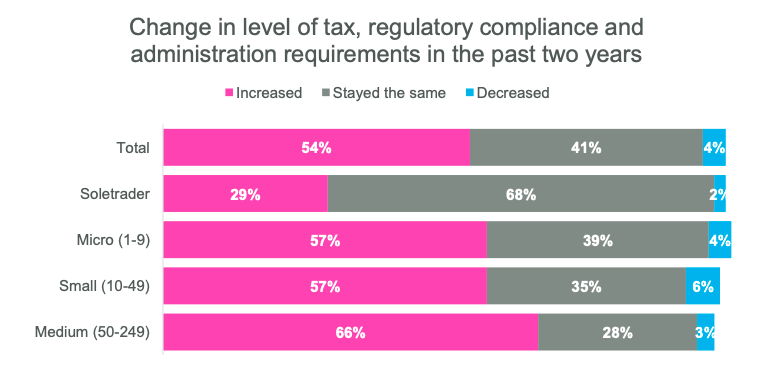
Here, for example, was our headline question about the burdens companies face. By an absolutely overwhelming margin, they said things had been getting worse in the two years since Labour came to power, with barely a handful saying they’d been getting better.
Strikingly, the proportion of bosses who were upset grew as the companies’ size grew – which may explain why Britain finds that its firms grow much more slowly than elsewhere.
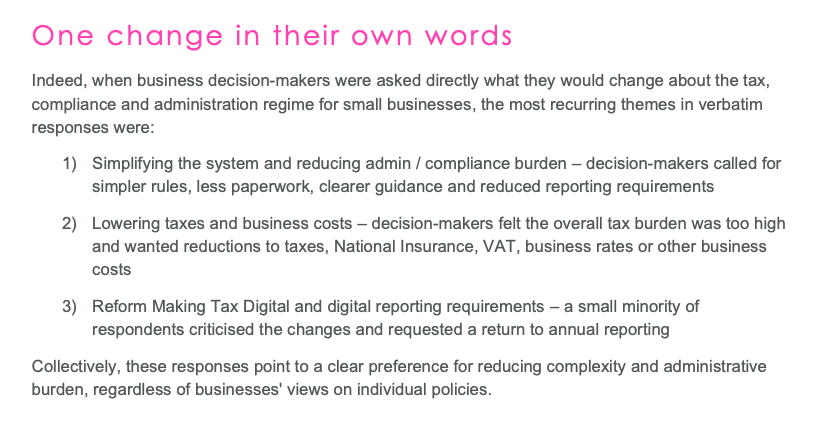
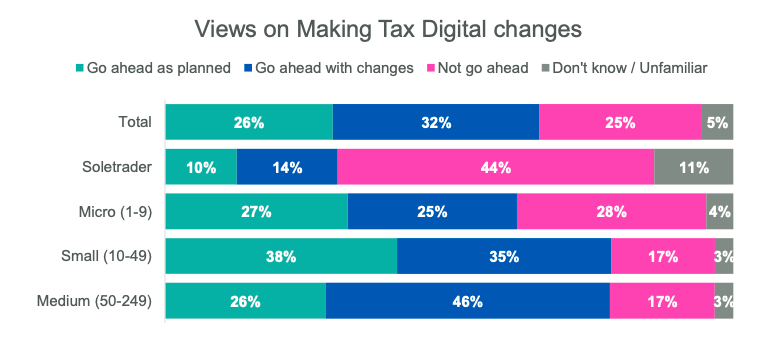
In fact, when we asked an open question about this, three key themes emerged. First, the need for lower taxes and lower costs. Second, the need to simplify the system and reduce the burdens. And third, for a vocal minority, the need to axe the expansion of Making Tax Digital, which has seen many firms dragged into reporting to the Revenue on a quarterly basis, with many more to follow as the thresholds fall.
In fact, our polling showed particular hatred towards Making Tax Digital among sole traders, who really seemed to loathe it – and for understandable reasons.
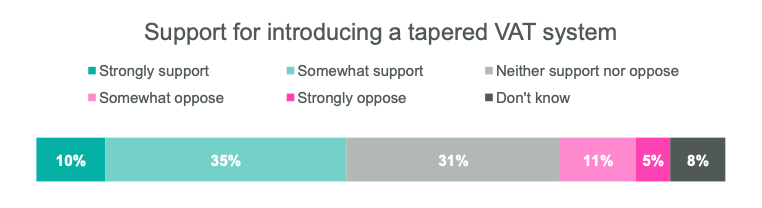
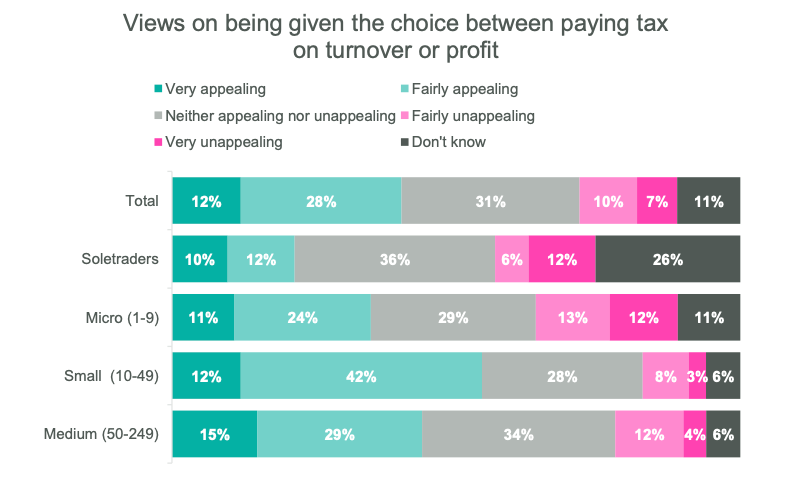
Of course, we didn’t want to be entirely negative. So we tested a couple of positive proposals in our polling as well. First, a tapered VAT threshold. Second, the Centre for Policy Studies’ longstanding proposal to let small companies be taxed on their turnover rather than their profits – a system that is not just a huge money-saver for many firms in places like Poland, but an enormous time-saver too, since the money is taken automatically from their bank account.
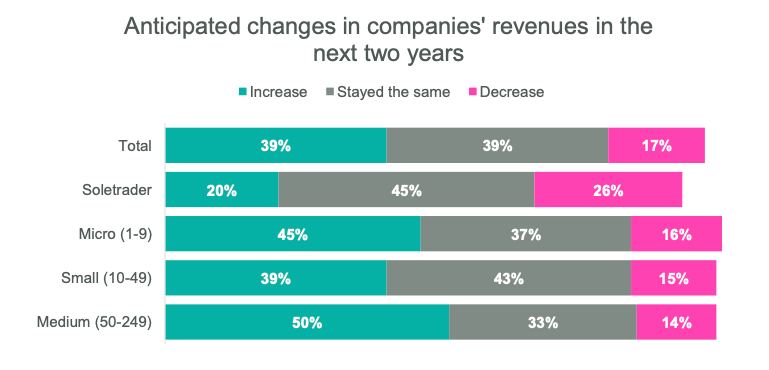
Our survey, in other words, didn’t show that small businesses are in despair. On the contrary: despite all they’ve been through, they are still optimistic about their prospects for growth, with that optimism rising as the firm grows.
Stay informed with our free daily briefing.
But as our work with Opinium shows, they need government to give them reasons for that optimism – to make sure Britain becomes an ever better place to start, build and run a company, rather than an increasingly hostile one.
That’s what our programme at the Centre for Policy Studies is all about – and why I’ve also agreed to advise the Conservative Party on reducing and simplifying tax, compliance and reporting obligations for small businesses and the self-employed.
Ultimately, if we don’t do more to help small business, it’s not just our pubs, clubs, bars and shops we’ll lose – it’s the very heart of the economy.
Robert Colvile is Head of Small Business and Entrepreneurship at the Centre for Policy Studies.
More Growth
19 Oct 2026
Energy & Environment
Sebastian Charleton
Britain was an energy superpower. What went wrong?
Britain was the cradle of the Industrial Revolution – where cheap, abundant coal fuelled the inventions that built the modern world. Those breakthroughs – railways, modern medicine and electricity – transformed humanity. But we often forget that it was energy, our ability to produce it and (crucially) to store it, that made all of this […]
19 Oct 2026
Taxation
Daniel Herring
Labour’s tax rises are damaging the economy
Today the Tax Foundation updates its annual International Tax Competitiveness Index. It’s not great reading for the UK, which comes 30th out of 38 countries. This is one place better than last year but two places worse than 2014, the first year of the Index. The Index aims to measure how well a tax system […]
16 Oct 2026
Growth
Alys Denby
Blocking Heathrow’s expansion is making Britain poorer
There wasn’t much to like about the previous iteration of this Labour Government but airport expansion was one of them. Rachel Reeves committed early on to expanding City airport, opening the baffling spare runway at Gatwick, expanding Luton and Stansted and building a third runway at Heathrow. It was an aviation extravaganza for London aimed […]
Manage Consent
To provide the best experiences, we use technologies like cookies to store and/or access device information. Consenting to these technologies will allow us to process data such as browsing behavior or unique IDs on this site. Not consenting or withdrawing consent, may adversely affect certain features and functions.
Functional Always active
The technical storage or access is strictly necessary for the legitimate purpose of enabling the use of a specific service explicitly requested by the subscriber or user, or for the sole purpose of carrying out the transmission of a communication over an electronic communications network.
Preferences
The technical storage or access is necessary for the legitimate purpose of storing preferences that are not requested by the subscriber or user.
Statistics
The technical storage or access that is used exclusively for statistical purposes.The technical storage or access that is used exclusively for anonymous statistical purposes. Without a subpoena, voluntary compliance on the part of your Internet Service Provider, or additional records from a third party, information stored or retrieved for this purpose alone cannot usually be used to identify you.
Marketing
The technical storage or access is required to create user profiles to send advertising, or to track the user on a website or across several websites for similar marketing purposes.