Healey’s Budget will be built on sand

21 October 2026
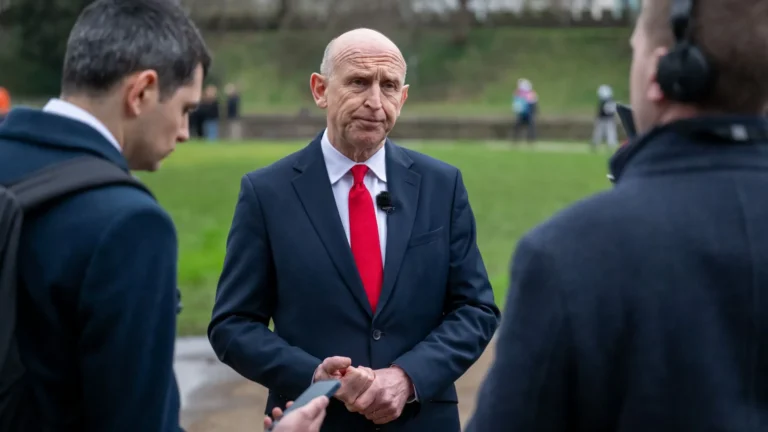
Matthew Horwood/Getty Images
When John Healey sits down next Wednesday, the press gallery will focus hard on his headroom against the fiscal rules. In March the OBR put this at £23.6 billion against the main rule, which requires day-to-day spending to be covered by revenue by 2029/30. A recent Reuters poll of economists suggests it has since shrunk to just £10bn to £12bn, with some estimates as low as £5bn. My instinct is it may be up around £15bn, with lower estimates in part reflecting Treasury briefings ‘testing the market’. We will find out shortly.
In fairness, of course, high oil and gas prices are part of the reason for headroom pressure. But much of the damage was also undeniably inherited from Rachel Reeves. First came £40bn of tax rises in October 2024, led by a £25bn increase in employers’ National Insurance, alongside higher capital gains tax, inheritance tax on family farms and businesses and VAT on private school fees. A further £26bn followed last year, including a three-year extension to the freeze on income tax thresholds, National Insurance on pension salary sacrifice, higher taxes on dividends, savings and property income as well as a property value tax. You can add to that high welfare spending, an extra quarter of a trillion pounds of borrowing across the parliament compared with the plans Labour inherited and a collapse in business confidence. The result? Lower growth, higher inflation, higher interest rates and heavier debt servicing costs. The Chancellor will blame global shocks alone, as his predecessor did. But he cannot disown the damage done by Labour’s own policies.
The best course would be to grip spending, not least on welfare, and use the savings to cut the deficit and taxes on business, that essential engine of growth
So what is the right level of headroom? In a world of ever more frequent shocks, ideally rather higher than £24bn. Since the OBR was created in 2010, chancellors have on average left themselves around 1.4% of GDP, about £40bn in today’s terms. The £15bn or so economists expect Healey to aim for would be just 0.5%. He will probably set it at the lowest level he thinks markets will bear, and may get away with it for now, not least because bond market stress is focused as much elsewhere as on the UK. France has proven a helpful distraction. But slender headroom carries longer-term consequences, including fragility in the face of external shocks, a vulnerability to uncertainty around inflation and interest rates and potentially an ongoing cost of borrowing premium.
Markets will also judge whether the Government can stick to its plans. The OBR must take some inputs as given, even if it privately considers them unrealistic. One is the assumption that significant departmental spending restraint will kick in during the run-up to a possible General Election in 2029. The pressure on a Labour government that has already shown it cannot control spending will be exquisite, not least because of the sticky inflation it has helped to create. Departmental budgets are fixed in cash terms, so nothing tops them up when inflation overshoots. The IFS estimates that restoring their real value to March levels could cost around £15bn in 2029/30. And while inflation boosts the tax take through fiscal drag, it also keeps interest rates higher for longer, pushing up debt interest costs that already exceed £100bn a year.
The forecasts will also omit the cost of taking defence spending to 3% of GDP by 2030. Healey resigned as Defence Secretary over this, yet the Treasury has confirmed his Budget will not set a date for it. If health spending grows by 2.7% a year in real terms, matching its last settlement, and defence reaches 3%, everything else faces real-terms cuts averaging 2% a year. The IFS reckons avoiding those cuts would need around £20bn in 2030/31, rising to £35bn once realistic pay and productivity pressures are included. These are the numbers to set against whatever level of headroom he builds up.
The best course would be to grip spending, not least on welfare, and use the savings to cut the deficit and taxes on business, that essential engine of growth. But he won’t. Welfare reform awaits the Timms review of disability benefits and Alan Milburn’s review of young people out of work, with Milburn’s final report delayed until after the Budget. That speaks to Labour’s difficulty with tough decisions.
To reassure markets, he must at least signal that significant welfare savings are coming. He must give businesses hope by showing how spending control can cut their taxes, and soon. He should scrap most of the Employment Rights Act, drive further planning reform and slash red tape, from ESG reporting to onerous building regulations. He should tell business he will get government off its back. But the Chancellor won’t. He will sit down to cheers from the benches behind him, no doubt having rebuilt some of that headroom. But all of us, markets included, will know that his plans remain incomplete and ultimately, in time, undeliverable.

The lifeblood of the economy. The backbone of Britain. When it comes to small businesses, it’s easy to lapse into cliché. But that’s because they really, really matter. The overwhelming majority of businesses in Britain are small businesses. They employ more than 13 million people. And it’s almost impossible to exaggerate how tough things are […]

Let’s go fly a kite? There has been rather less briefing about proposals to be announced in next week’s Budget than in recent years. The Chancellor of the Exchequer, John Healey, has been far less forthcoming than his predecessors, Rachel Reeves and Jeremy Hunt, whose plans were dribbled out weeks in advance. Some have suggested […]
Britain was the cradle of the Industrial Revolution – where cheap, abundant coal fuelled the inventions that built the modern world. Those breakthroughs – railways, modern medicine and electricity – transformed humanity. But we often forget that it was energy, our ability to produce it and (crucially) to store it, that made all of this […]