The Price Mechanism: The cost of Chinese capitulation
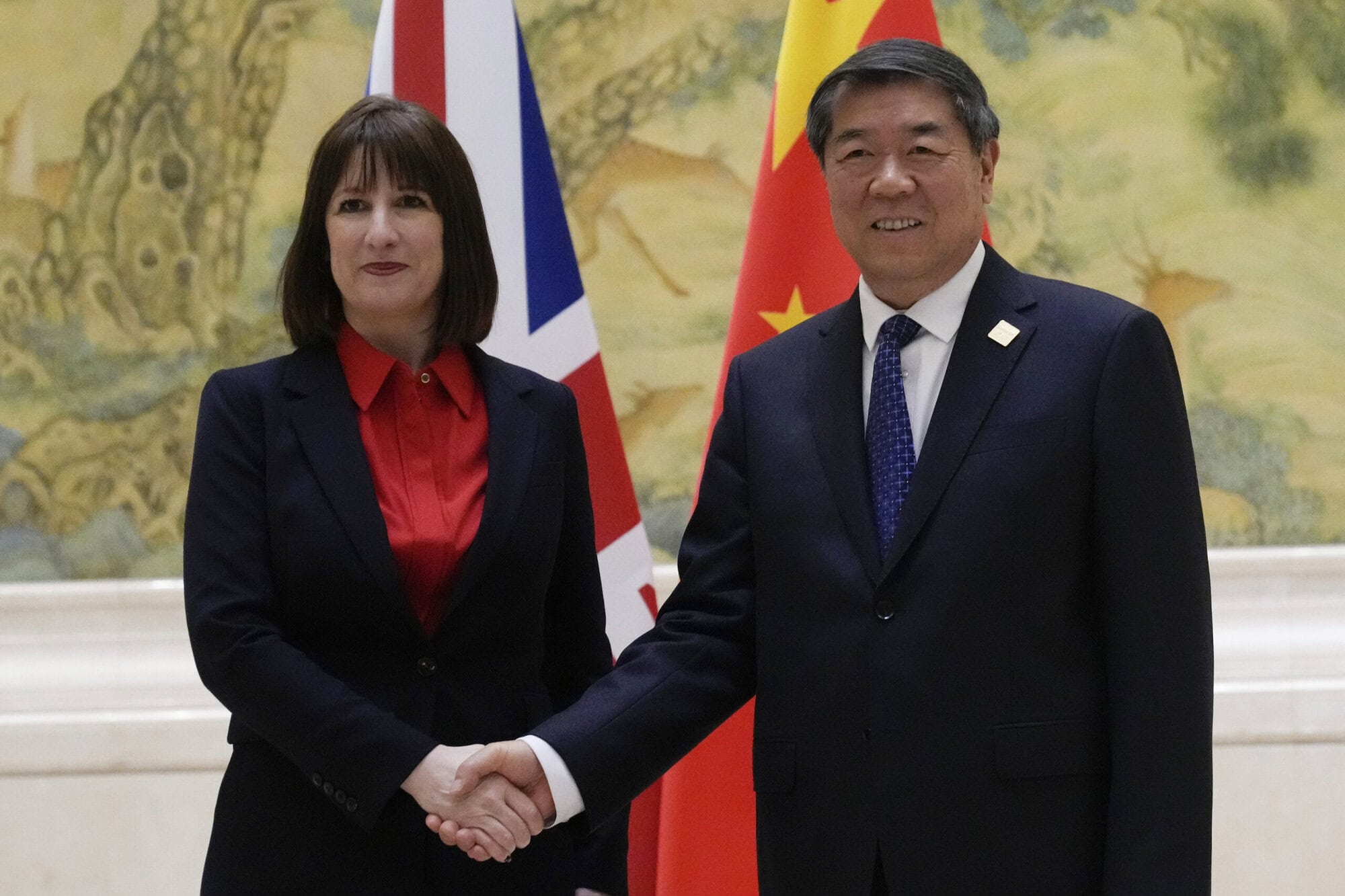
Photo: Aaron Favila - Pool/Getty Images
At the crushing denouement of ‘A Man For All Seasons’, Thomas More issues the devastating line to the scoundrel Richard Rich, who has perjured himself for a Welsh sinecure, ‘Why, Richard, it profits a man nothing to give his soul for the whole world… But for Wales!’ In a similar vein, I find it extraordinary that the Labour Government has so utterly debased itself, trashed Britain’s reputation with our intelligence partners and admitted weakness… for China?
We have been constantly told that China is an incredibly important economic partner. This was a major thrust of the Cameron-era ‘golden age’, and plenty of businessmen, academic institutions and other groups that have grown individually rich off the Middle Kingdom still line up to agree.
But is China really that important an economic partner for Britain? Important enough to compromise our national security, allow them to build a ‘spy dungeon’ beneath their new embassy and get away with spying on our Parliament?
Rachel Reeves went to Beijing to bend the knee earlier this year. She came back with a pledge for £600 million in investment, which accounts for 30 hours of NHS spending. This is the sort of paltry sum that we could have probably saved just by preventing Chinese corporate and industrial espionage in a given year.
Think about it like this – the United Arab Emirates was not allowed to buy a UK newspaper, despite the obvious market forces that would have operated to keep the Daily Telegraph honest in reporting on the UAE. And yet China was able to buy a data hub that, according to Tim Shipman at the Spectator, was ‘used by Whitehall departments to exchange information (including on highly classified projects), enabling Beijing to steal a goldmine of secret information’ without anyone noticing.
Indeed, the former diplomat Charles Parton, now an associate fellow at the Council on Geostrategy, has demonstrated that Chinese funds make up a mere 0.2% of the UK’s total foreign investment stock, and even at its peak, it only created around 3,000 jobs annually. Similarly, our goods exports to China hover at just 5.46% of the global total and services at a paltry 2.5%, figures so modest that even if retaliatory cuts came, they’d barely dent the economy. Besides, history shows goods simply reroute to more reliable markets like the EU and US.
Parton, incidentally, insists he is NOT a China hawk, but a China drongo, a bird that vociferously defends its nest from external foes, the stance Parton advocates Britain adopting. Before hearing this, I’d thought that a ‘drongo’ was just a pejorative my mother invented with which to scold me…
Mercifully, the West is finally starting to wake up. Businesses are ‘friendshoring’ or ‘derisking’ – all euphemisms that hide that stark truth that China is not going to remain a stable place in which to do business for long.
And some governments are getting commercially serious, too. China’s impressive cornering of the rare earths market is at last being challenged by the Pentagon, with a spending spree reported by the Financial Times to be worth $7.5 billion thanks to the Big Beautiful Bill. Former Foreign Secretary Dominic Raab, now at Appian, has appeared in the news and at conferences highlighting how critical these minerals are for defence companies and other projects. Admittedly, an unfortunate side effect of America’s intervention seems to be the mothballing of a plan to build a rare earths refinery near Hull in favour of a US operation that can benefit from government price guarantees. But at least the new production facility will remain in the hands of an ally.
The current spying scandal continues to unfold at the time of writing. I do not claim to know how it will end, and couldn’t keep the CapX editor sweating any longer before filing this piece and waiting to hear what happens next. But the political capital that Labour have expended on this issue, all to prevent having to call China an ‘enemy’ is neither worth the pitiful amount of trade we do, nor the deep costs of engaging with a nation that spies on us, steals our technology and sanctions our politicians. That is what an enemy does. And we should continue to decouple until events force this certainty upon us at a time not of our choosing.
But what about that sweet, sweet Chinese money, I hear you cry? Labour need only turn to CapX to read what they could do domestically to generate much more for the economy than China would ever give them. Ditch the damn employment rights bill, fix the planning system and get a sane energy system back. With the threat of China now in the open, these are not just nice policies to have – they are becoming existential to our survival.

If you want to feel really gloomy, think back to the beginning of the 1990s. The West had won the Cold War. The Gorbachev era seemed to suggest that Russia was embarking on a path of stability and democracy. There were indications that the Chinese leadership was interested in cautious moves towards international legality. Other […]
So, never-here-Keir is on, by my counting, his 38th overseas trip since entering Downing Street. This time, it is to Communist China, in what must feel like something of a homecoming for Starmer. The Prime Minister has declared that this trip will make Britain richer, which is a surprising goal given he is doing seemingly […]
Keir Starmer will be packing his suitcases and selecting his travel outfit for his visit to Beijing later this week, the first for a British premier since Theresa May in January/February 2018. Like his predecessor, the Prime Minister will be accompanied by a substantial delegation of business and trade leaders, as well as the Chancellor […]