The pension power grab must be stopped
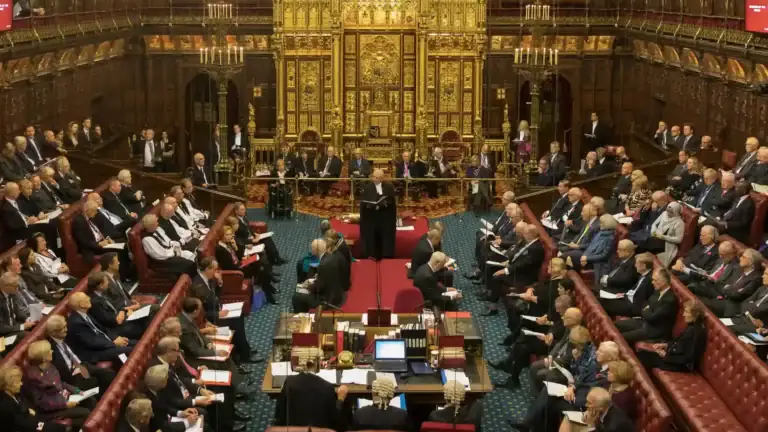
Dan Kitwood - WPA Pool / Getty Images
The House of Lords is trying to help the Government recognise the dangers of the mandation powers it wishes to include in the wide-ranging Pension Schemes Bill. It has asked the Commons to reconsider three times. How did we reach this impasse?
Ministers believe investing in private assets will enhance workers’ long-term returns. Most large auto-enrolment pension providers signed the Mansion House Accord under which they voluntarily agree to invest 10% of their main default funds in such assets by 2030, with at least half in the UK.
Soon after this agreement, the Government introduced previously unannounced legislation, without consultation, that would force pension funds to invest unlimited proportions of their funds in yet-to-be specified assets.
This went way beyond the voluntary Mansion House Accord, which was also predicated on Government itself fulfilling certain obligations, such as making suitable assets available for pension funds to buy and ending the industry focus on low-cost, in favour of higher-cost larger-scale funds that should offer better value for members.
The industry immediately expressed alarm. This was echoed in the House of Lords Committee on the Bill, which demonstrated deep disquiet about empowering future Ministers (who knows what party might be in power by 2030?) to force pension funds to invest in any assets Ministers will dictate. A favoured pet project (perhaps like HS2?). Crypto? Private Credit? Start-up speculative stocks? Who knows?
Such mandation powers would potentially override the trustees’ Common Law duty to invest in the best interests of members.
Initially, Ministers kept insisting there was no need to worry.
They claimed the powers were entirely based on the Mansion House Accord and, in any case, Government had no intention of actually using them. They were merely there to coerce all providers (including any that hadn’t signed the voluntary Accord) to invest in line with future Government instructions. This was apparently vital to prevent some providers avoiding investing in the alternative assets and then undercutting the compliant competitors with lower costs. A rather strange argument in itself, but this was the Government’s line.
The Bill’s original wording had so many drawbacks. For example, the power was not limited to the 10% or 5% in private assets specified by the Mansion House accord – it was unlimited. It could mandate investments in any assets. The original wording only enshrined industry obligations in law, the Government commitments were more aspirational. And, most dangerously, the power could override pension trustees’ fiduciary duties to act in members’ best interests. Pension funds which did not invest in line with prescribed asset requirements by 2030, would be banned from auto enrolment.
Ministers tried to reassure Parliamentarians that the Bill had included a ‘Savers’ interest test’ that would allow schemes not to invest in prescribed assets, by persuading Regulators they would materially damage returns. Proving ‘material’ financial detriment is almost impossible, so this high bar was scant comfort.
Peers kept pointing out that forcing all large schemes to buy the same assets by the same date could create dangerous asset bubbles. Indeed, there could be good reasons for pension funds not investing as dictated by 2030. But they will have to anyway.
Yet, workers’ money is not protected if they lose out as a result of being forced to invest as Ministers require.
Not only this, but the Bill specifically bars pension funds from using potentially the best investment option for holding private or illiquid long-term assets.
Investment trusts with expertly-managed diversified portfolios of assets specified by the regulations cannot qualify. Excluding these listed closed-ended funds leaves pension schemes with few other investment options. They could use open-ended Long-Term Asset Funds, which could lock investors’ money into underperforming assets in difficult markets, or certain hedge funds, or invest directly in qualifying companies or projects. All these options could be higher-risk than closed-ended diversified portfolios.
Many pension funds have no expertise in identifying or managing these alternative investments. Australian and Canadian pension funds have taken decades to build in-house investment teams to do this.
The Lords rejected these initial proposals, but Government amendments have not yet addressed all the dangers.
The Government limited mandation to the 5%/10% Mansion House limits and required specifying more than one asset. It softened the ‘Savers Interest Test’ so pension managers could justify not investing in the Government-required assets if they were ‘likely to’ pose material financial detriment rather than proving it.
But the underlying concerns about Ministers overriding fiduciary duty remained unaddressed. The legislation could still coerce trustees into investments against their better judgment.
This – and ruling out use of appropriate portfolios if held by investment trusts – are the major sticking points.
Surely fiduciary duty must remain the ultimate test of investment choice, and pension funds should decide their favoured investment structure. The imminent prorogation of Parliament imposes particular time pressure and we hope this will allow a compromise, so the stand-off can end.
Losing the Bill because Ministers insist on giving powers to a future government, which they say they never intend to use, would be a travesty.


Alan Milburn revealed the truth about one of Britain’s most fraudulent small taxes. His NEETS report says we should be ‘honest about what the Apprenticeship Levy is, which is a payroll tax. It is not a hypothecated tax and it is not ringfenced for apprenticeships. Government sets an apprenticeship budget, which is generally lower than […]

A year in the making, the Milburn review is finally here. Months of debate and speculation gave way to great fanfare as the former Blair cabinet member unveiled his findings. We can certainly expect its ideas and recommendations to be argued over for months or even years to come. One thing’s for sure, though: it’s […]

Your bank account tells a bigger story about you than almost anything else you own. What you earn, what you spend, whether you settle up on time. For most of the history of British banking only one firm could read that story and act on it, and that was the bank that held your account. […]


