The old politics is dead. The old parties aren’t

Leon Neal/Getty Images
In leisure centres and town halls across the country, the cheers of the victors can be heard alongside the half-hearted claps of the vanquished. Democracy at its most local – and for the people involved, most personal – is being played out in over 130 English councils, including every borough in London. Few beyond the immediate area will long recall what happens in individual councils. But what will linger is the big picture painted by the results – as well as the consequences for the parties and their leaders.
Local elections are often bad for governments. On only five occasions since 1979 has an incumbent government gained seats in mid-term local elections, and usually as a formerly strong third party begins to lose support (the now Lib Dems 1988 and 1989, and again in 2011) or when the government is popular (Boris Johnson’s Tories amidst the vaccine rollout in 2021). Neither situation applies today. So nobody should be surprised – nor is anybody – that Labour are losing seats all over the country.
Labour’s performance is so far dreadful by historical standards but respectable compared to recent expectations. If the results worsen, Keir Starmer might be left feeling like Harold Wilson (who he once described as his political hero) in 1968. Almost six decades ago, Labour lost every ward in cities like Birmingham and Leicester and ended up controlling just three of London’s 32 boroughs. Wilson was widely expected to be deposed in the aftermath of the poll, with the owner of the Daily Mirror using its front page to call for him to go.
While Labour have lost all they were defending in some parts of the country – like Halton and Hartlepool – they are already guaranteed to surpass Wilson’s London performance, with at least three boroughs already secured. So Labour’s position may be gloomy, but the results are far from unprecedentedly bad. And just as the Cabinet coup failed to materialise against Wilson in 1968, Starmer will think his party workers have turned out enough votes for him to do likewise – even if he won’t get Wilson’s further eight years of leadership, four of them as prime minister.
If the leadership pressure on the Prime Minister does grow in the weeks ahead, Starmer may find himself with a newfound affinity for John Major. In 1995, voters foreshadowed the Tory’s shellacking in the 1997 general election by inflicting over 2,000 losses on the Conservatives in the local elections – with the bulk of the spoils going to Labour and its new leader, Tony Blair. The issue of Major’s leadership soon came to a head.
In unprecedented scenes Major resigned, and stood again for the Tory leadership. Then, as now, there was no shortage of people who thought they would do a better job or who desperately wanted to take over the leasehold of No. 10. But only one Cabinet member, John Redwood, was brave enough to stand against the prime minister and he was routed, 218 votes to 89, among his fellow MPs. Like Wilson, Major remained to fight another day – and the next election.
How have the Conservatives performed this time around? Going into the elections, the Tories were all but guaranteed to do as few principal opposition parties have done in recent decades and lose council seats mid-term. The combination of seats elected in 2021 (one of those rare occasions when an incumbent government, then Tory, gained seats) and 2022, in the days before Reform UK posed any serious threat, meant that a net loss of seats was expected – and is unfolding.
Yet as the first results were declared, echoes of Kenneth Baker, the Conservative Party Chairman in 1990, could be heard. Just months before Margaret Thatcher was deposed, strong Conservative performances in ‘flagship’ councils like Westminster and Wandsworth helped mask what was a more disappointing night for the Tories nationally. The Conservatives have now re-gained Westminster off Labour and won more seats than them in Wandsworth, too. On a highly volatile political map, some of the sources of political comfort remain constant.
In the case of the Conservatives, looking further back into history isn’t especially illuminating when judging their performance. Instead, it’s worth focusing on the more recent past than even our ephemeral news is currently considering. In 2025, the Conservatives won 319 and lost 674 of their council seats – in net terms, losing two-thirds of what they were defending. Yet in 2026, so far at least, the Tories are holding more seats than they are losing.
Compared to the pre-Reform days, the Conservative position continues to look weak – but compared to 2025, the first year of Kemi Badenoch’s leadership, the party that many people thought was moribund seems to be in the early stages of recovery. In a few remarkable examples, like Harlow, the Conservatives will finish this cycle of local elections stronger than they began it. And in comparable county councils to Kent and Staffordshire, where few Tories were left standing last year, the early signs are of a more robust Conservative vote.
These local elections are painting a highly fragmented and wildly divergent political map. Gone are the days of two-party politics and the uniform national swing. The drama of five-party politics is very much with us. But the ultimate drama forecast by many – the death of Britain’s two old parties – appears to have been averted.

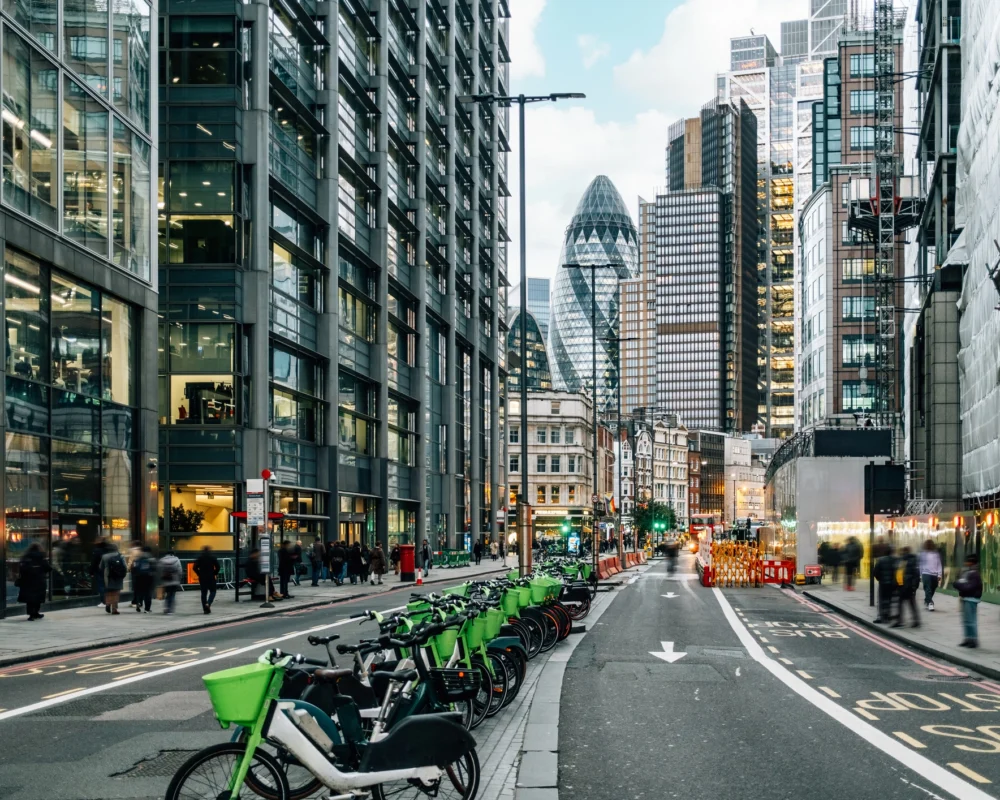
Dockless e-bikes are getting Londoners cycling at no cost to the taxpayer. So why is the Government planning to cap them? Cycling is the fastest-growing major mode of transport in London, up by 43% since 2019. This is good news for the Mayor’s Transport Strategy, which set a target for 80% of all trips in […]
Alan Milburn revealed the truth about one of Britain’s most fraudulent small taxes. His NEETS report says we should be ‘honest about what the Apprenticeship Levy is, which is a payroll tax. It is not a hypothecated tax and it is not ringfenced for apprenticeships. Government sets an apprenticeship budget, which is generally lower than […]
Your bank account tells a bigger story about you than almost anything else you own. What you earn, what you spend, whether you settle up on time. For most of the history of British banking only one firm could read that story and act on it, and that was the bank that held your account. […]


