The £1,000 rule killing Britain’s cake sheds

Getty Images
In the leafy district of Bassetlaw, council officers want to get tough. Although not in the way you might expect. Last Wednesday night, local politicians weren’t discussing bins, planning or district improvement projects. Instead, they busied themselves going after the humble ‘cake shed’.
In recent months, a baked-goods revolution has swept the nation. Stalls have been set up, and home bakers have thrown open their garden gates to commerce. Given Britain’s dire economic outlook, I find this ingenuity laudable. Unfortunately, the local authority seems to disagree.
The number of ‘cake sheds’ is rising sharply. At least 550 are scattered across the UK. They vary in size from small-scale ‘side projects’ bringing in hundreds or a few thousand pounds per year, to much larger operations with turnovers that rise well into the tens of thousands of pounds. Clearly there are fundamental differences in how they operate. Crucially, there should be differences in how they are regulated. Yet at the moment, there are not.
Home bakers are being told that they must purchase a street trading licence or shut up shop
In Bassetlaw, owners have spent recent months being harangued by council officers. Out of the blue, and in some cases in contrast with previous advice, home bakers are being told that they must purchase a street trading licence or shut up shop. The cost: £1,000. For those who operate part-time or at the smallest scale, that is quite clearly prohibitive.
Last week, councillors had the chance to end this nonsense. Instead they split the vote and sent it back. Though tellingly, the £1,000 fee is now itself up for review, with a final ruling due in July. In the meantime, shed owners are to be offered a ‘stay of execution’. No fines will be imposed, and no operations will be forced to close. However, uncertainties remain. The threat of closure could be just months away.
For those not partial to a Victoria Sponge or a slice of banana bread, it might be tempting to be indifferent to what has unfolded in Bassetlaw. To do so would be foolish.
Under the present regulations, a part-time cake shed is no different from a stall on the high street. If that principle stands, it stretches far beyond baked goods. Anyone selling anything from their own land: eggs at the gate, plants on the driveway, or jam on a trestle table, becomes fair game. Street trading laws were written for entirely different, and much larger, operations. To apply it to these ‘cottage industries’ becomes less about enforcement, and more about intervention. To be clear: it is overreach.
Then there are the financials. Ministers constantly talk about the cost of living, the growing welfare bill and the need to back small businesses. Yet when it appears in miniature, local government bureaucracy pounces to shut it down. These businesses are not run by millionaires; they are far too labour-intensive. Instead, they’re run by ordinary folk who want to work hard and increase their means. That is something we should applaud and enable, not look to punish.
Finally, there’s the educational aspect. Many childhoods involve running a ‘little business’ outside the front of the house. Mine certainly did. Aside from earning a few pounds more a week to spend at the local sweet shop, it teaches important skills. How to budget, how to price, advertising, signage, and customer relations amongst many more. Some of these ‘cake sheds’ may well be this: microbusinesses started by enterprising children. While the old adage of ‘business looks to grow, government regulates and says no’ may be painfully true, it’s hardly the most uplifting narrative to peddle to the next generation of young entrepreneurs.
Margaret Thatcher embraced the assertion that Britain was a nation of shopkeepers. Half a century later, small businesses still face a raft of red tape. None of this is an attack on sensible rules. Protecting consumers from foodborne illness or unlabelled allergens is vital, and even the smallest outfits should play by basic safety standards. Of course, a ‘cake shed’ operation, run as a full-time business, that turns over £90,000 per year is a commercial entity and should be treated as such. Yet when the same regulations are applied to a £200-per-week side project, it’s clear that the ingredient of common sense was omitted from the policy-design process.

Viewers of ‘Clarkson’s Farm’ – now back for another season – will be familiar with Jeremy Clarkson’s long-running battle with the bureaucrats of West Oxfordshire District Council. When his Diddly Squat farm shop boomed, the council dragged their feet over planning permission for a car park extension, bizarrely decreed he could only sell goods from […]
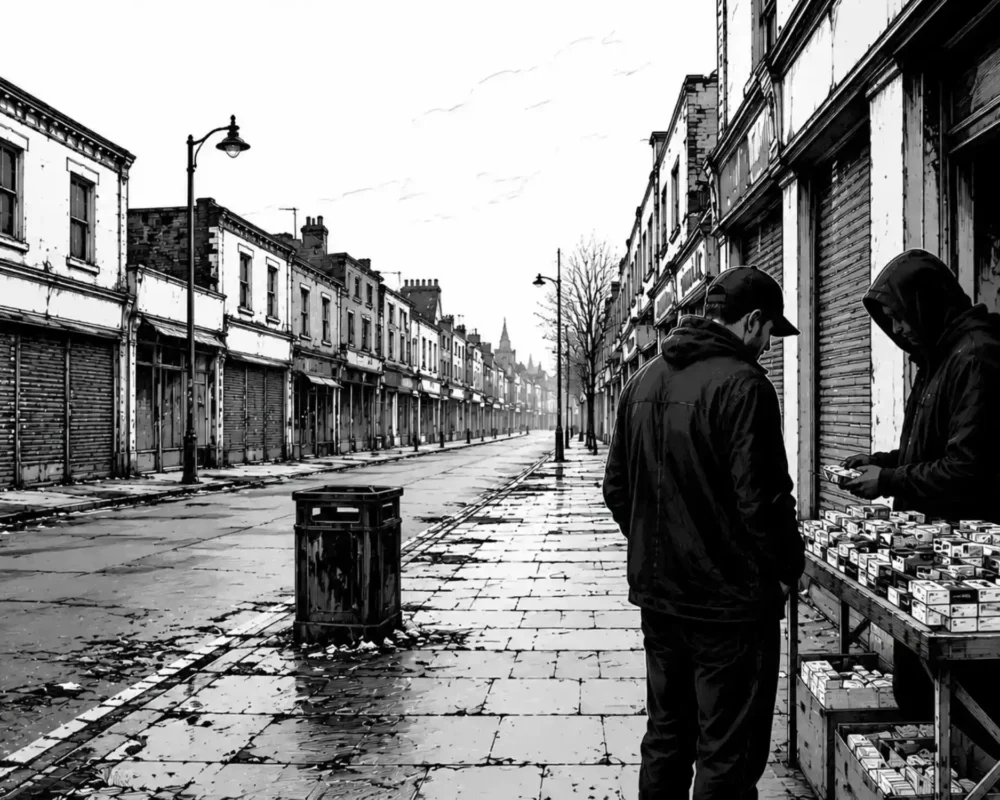
Every year, I eagerly await a report that confirms what I see before my eyes. KPMG’s ‘Illicit Trade in Tobacco Report’ is a beast of research, conducting in-person ‘pack-surveys’ (where packets of tobacco, whether to be rolled or already neatly packed into paper, are surveyed to find whether they are legally bought or smuggled, counterfeit […]

Admired for his reformist approach to the NHS, Wes Streeting is generally seen as the most market-friendly figure on the British Left. Yet his call for social media companies to be treated like tobacco businesses reminds us that even the best of a bad bunch can still be pretty awful. After resigning as Health Secretary, […]