Fake fags are killing Britain’s high streets
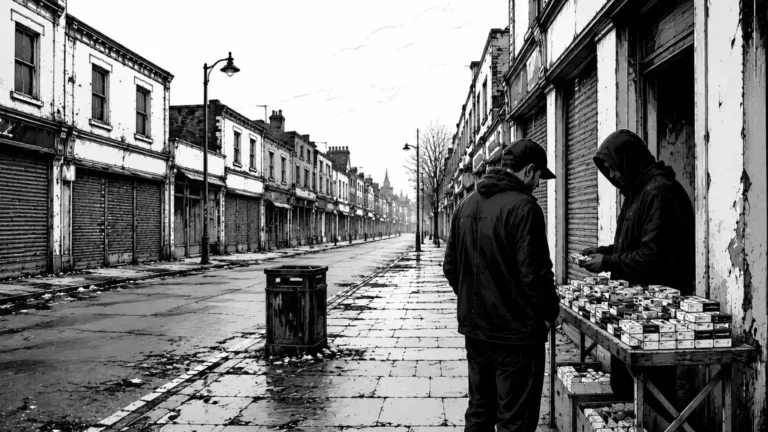
Every year, I eagerly await a report that confirms what I see before my eyes. KPMG’s ‘Illicit Trade in Tobacco Report’ is a beast of research, conducting in-person ‘pack-surveys’ (where packets of tobacco, whether to be rolled or already neatly packed into paper, are surveyed to find whether they are legally bought or smuggled, counterfeit or worse) from sardine-salting Atlantic coast to front-lines in Ukraine, and from Aperol-slurping Sicily to the Finnish forests.
For the UK, the report makes for sickening reading. While the Government would welcome the half a billion fewer cigarettes smoked compared to last year, the 22 billion cigarettes consumed is made up of a growing number of counterfeit and contraband tobacco (up to 7.3 billion, or 32.3% of cigarettes). This is up by over 15% in a year, meaning that current smokers are now switching en-masse to black market fags. For the Exchequer, which expects what it is due in tobacco duty and VAT, it means a £4.3bn hole in its spreadsheets, and more general taxation to fill the gap.
Smokers are now switching en-masse to black market cigarettes
HMRC, from its own hopeless statistical base, argues with ‘high uncertainty’ (to give credit where it’s due) that the UK is only losing £1.8bn a year in duty, which is already a staggering amount. It is double the amount we spend annually on bus subsidies and concessions, which is often a core policy ticket that politicians wage war over. However, £4.8bn, the more accurate figure, is four times the entire Border Force budget. This is clearly absurd, yet the Government and other political parties continue to ignore this significant problem.
Illicit tobacco is often, much like with illicit drugs, the end point of a very long and painful supply chain. Whether it is the smuggling of the product itself, with its lack of duties, quality control (what is inside of counterfeit cigarettes contains rat droppings, pesticides, heavy metals, you name it), or the finances, which end up in terrorism-related funding, according to the CIA, or people smuggling. We cannot forget that when criminals handle products and money, they do not pay their taxes and they use the money for the things criminals do – and the Government is handing them this cash through sheer incompetence.
But how is illicit tobacco destroying the high street? There are multiple reasons. Firstly, crime begets crime. The damage caused by career criminals, hawking fake cigarettes from fake shops, further brings high streets a peg down. I don’t know about you, but I know that healthier high streets aren’t ones populated by American Candy Shops and other signs of retail decay – let alone the boutiques of piracy that are the real problem here. If the illegal stores are doing well, then other nefarious characters enter the action in a continuation of Say’s Law.
Secondly, if legal businesses are ordered to sell cigarettes at the regular retail price of around £15 (not including overheads and other regulatory costs), how are they supposed to compete with less scrupulous outfits who sell cigarettes as low as £5? This causes shops to close up, letting staff go or reducing hiring, and of course, lessening business rates revenues. While the Government is spinning up its Pride in Places scheme, with £5.8bn in funding to boot, it does not have an effective policy to counteract what is causing such shame for our shops.
There are, of course, simple solutions to this which would cut the costs of crime and the associated degradation of our towns, as well as meeting the Government’s goals to cut smoking rates. As with any substance abuse, admitting there is a problem would be a positive first step – currently, the Government has only kicked some small change towards the overwhelmed trading standards officers that are drowning under a tidal wave of crime. Instead, much heavier fines, closure orders and even a mandatory licensing scheme could help stem the tide.
Likewise, cutting tobacco duty would be a positive move to at least reduce demand from black market cigarettes if smokers insist on tobacco. Reversing wholesale the vape excise duty, marketing and incoming flavour restrictions would also serve to assist the rate at which smokers transition over to much less harmful smokeless alternatives. As a former smoker and user of the alternatives, I know which I’d recommend to users of black market tobacco. Alas, those of us who take a rational and mature approach to evidence-based policy will not be holding our breath.


Most of those who, despite all discouragement, continue to invest in the UK have a sense of foreboding over an Andy Burnham premiership. We know that he will try to reconcile two irreconcilables. First, he will offer bold, exciting change from the uninspiring couple of years under Keir Starmer. Second, he will resist holding an […]

Andy Burnham is not a forward-looking man. His musical interests stop at around 1998, his approach to industry is straight out of the 1970s and his favourite football team hasn’t won a trophy for over thirty years. It’s little surprise then that he takes a dim view of the ongoing tech revolution. It was reported […]
Rachel Reeves has found another group of taxpayers to squeeze: graduates who still think they have a student loan rather than a second income tax. At the 2025 Budget, she froze the Plan 2 student loan repayment threshold at £29,385 for three years from April 2027, rather than uprating it with earnings. Freezing a threshold […]