What next for Labour – Wes Streeting or Tony Blair?
27 May 2026

Brook Mitchell / AFP via Getty Images
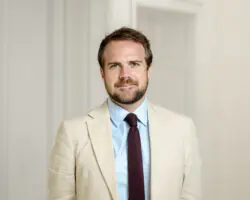
Admired for his reformist approach to the NHS, Wes Streeting is generally seen as the most market-friendly figure on the British Left. Yet his call for social media companies to be treated like tobacco businesses reminds us that even the best of a bad bunch can still be pretty awful.
After resigning as Health Secretary, encouraging a contest for Labour leader, Streeting is setting out his stall for government and trying to generate as much publicity as possible. Hence this pronouncement yesterday:
‘Social media should be treated like tobacco – it’s extremely addictive, bad for our health, and big tech is borrowing the big tobacco playbook to avoid regulation. We’ve got to give our children their childhood back.’
The MP for Ilford North argued that ‘a ban for under-16s should be the start, not the end’, and lamented that we ‘have given the pen to tech moguls to write our future for us. It’s time to take the pen back’.
Wes Streeting is generally seen as the most market-friendly figure on the British Left. Yet his call for social media companies to be treated like tobacco businesses reminds us that even the best of a bad bunch can still be pretty awful
That Streeting has adopted this stance isn’t surprising. Under governments of both stripes, paternalism has been in vogue for some time – it was Rishi Sunak, after all, who introduced the generational ban on tobacco sales. Streeting has continued this legacy.
Likewise, when it comes to social media, the Tories under Kemi Badenoch have been leading the charge on a ban for children. With signs that Keir Starmer is keen to avoid outright prohibition, his leadership rivals like Streeting – and also Angela Rayner – have been pushing for stricter action.
Advocates point to Australia – which has implemented its own ban on children using certain platforms – as a leading light in cracking down on kids’ screentime. The Antipodean policy requires platforms such as Facebook, TikTok, X and Instagram to ensure ‘reasonable steps’ are taken to keep children off the apps.
Yet though it’s popular among the public – over 70% of Britons support a ban for under-16s – there’s currently little evidence that it would work. In March, the Australian government released its update on the ban’s progress. Around 70% of Australian children still have access to major social media platforms and there has been no noticeable drop in cyberbullying or image-based abuse as a result.
Be it drugs, alcohol, tobacco, pornography or prostitution, prohibition has a track record of failure as users find ways around the ban via the black market. Social media is no different, and children – often more tech-savvy than their parents and legislators – will discover loopholes and, in extremis, use the dark web to access banned sites, potentially exposing them to even more harmful content.
More interesting than the mechanics of the ban, however, is what Streeting’s position tells us about the direction of the Labour Party.
When Keir Starmer was campaigning in the build-up to the general election, we were told that his government would adopt a ‘politics which treads lighter on our lives’. Not that that’s been adhered to much at all over the last couple of years, but this intervention from Streeting marks a flag in the ground.
If there is to be a leadership election over the coming months and Streeting is successful, he will preside over a government that takes a highly active role in people’s lives. It has also been heavily rumoured that he would receive a senior Cabinet role in the event of Andy Burnham taking over, meaning at least two of the most popular contenders for leader are signed up to the interventionist school of thought.
Increasingly, it seems that the forthcoming leadership race is not just an internal referendum on the Starmer administration, but on what broad philosophy should underlie the Labour Party.
While Streeting and Burnham might favour micro-management, theirs is not the only vision. This week, Tony Blair published a 5,600-word essay cautioning Labour to take the opposite approach. From expensive Net Zero targets to the Government’s job-killing workers’ rights legislation to personal taxation, the former Prime Minister called for the state to leave people alone and instead focus on fostering an environment that generates economic growth.
While not mentioned explicitly in his essay, Blair seems to have changed his tune on social media regulation too. While in 2024, he seemed to back some sort of ban, he has now urged the Government to work with AI companies and social media providers to drive innovation, not burden them with yet more red tape, and even criticised the European Union’s heavy-handed approach to the sector.
I’m no great fan of Blair’s. Indeed, while his essay might be groundbreaking within the context of the current Labour Party, to us at CapX it just reads like common sense. Nonetheless, we should hope that the Government takes Blair’s advice over the illiberal managerialism of Streeting.
Under both the Tories and Labour, politicians have interfered in the affairs of individuals and businesses for far too long – it’s time government got out the way, stopped pointlessly regulating and left us to our own devices.
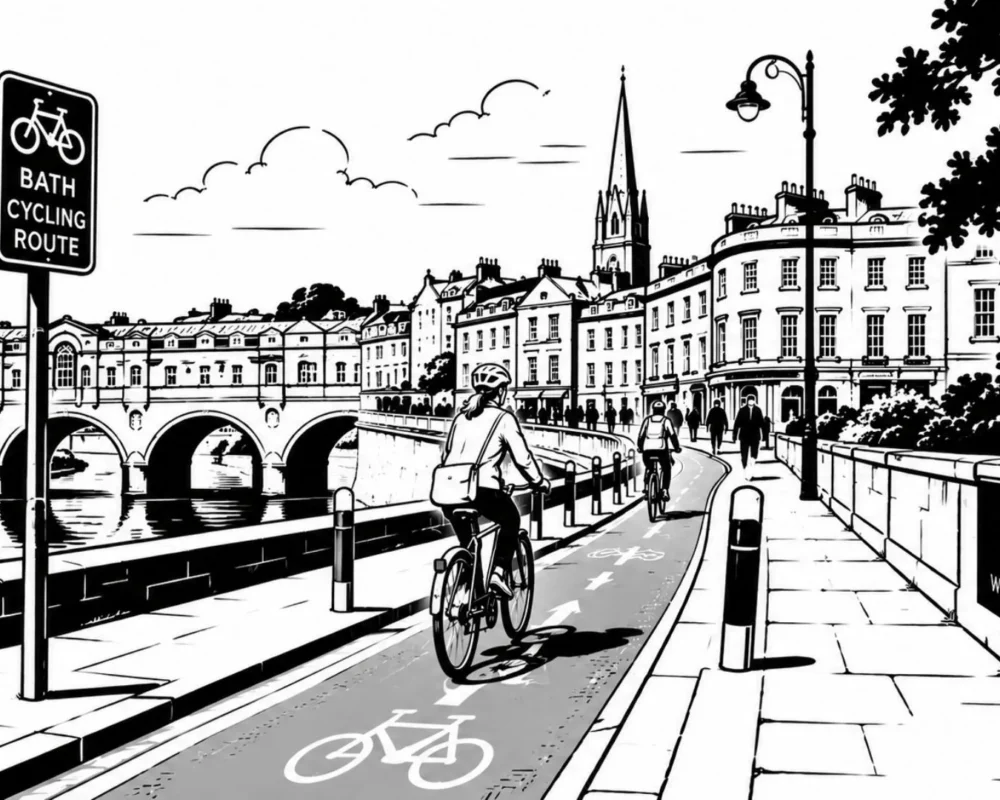
This week, Nimby Watch is in Bath, where councillors are at loggerheads over the concept of safety. I dislike Bath, and do not think it agrees with me, and yet Bath is to be my home? Aren’t you full of surprises? I didn’t have you down as a fan of Jane Austen, and here you […]
Whenever I think about Boris Johnson, the old French proverb ‘après moi le déluge’ comes to mind. It means a blithe, even nihilistic disregard for whatever ruination ensues after one’s own time. For many years, it was thought to have originated with Louis XV or his mistress Madame de Pompadour in the 1750s. It thus […]
At a few minutes past six on Friday morning, in a leisure centre on the Essex coast, the returning officer reached the bottom of a ballot paper roughly a metre long and announced a number that deserves more attention than it is likely to receive. Nigel Farage, 22,239 votes. The commentary had settled into its […]