State-run trains are already failing. Competition is the way to get them on track
Labour’s latest plan to nationalise train services contains no passenger growth target or cost control safeguards
If GBR is to grow its customers, reduce its reliance on taxpayer subsidy, deliver better services and value for money fares - then its services should be made to compete with subsidy-free open access
The highest overall satisfaction rating amongst long-distance train services is on the ECML where the dominant and state run LNER competes with three unsubsidised private open access intercity operators
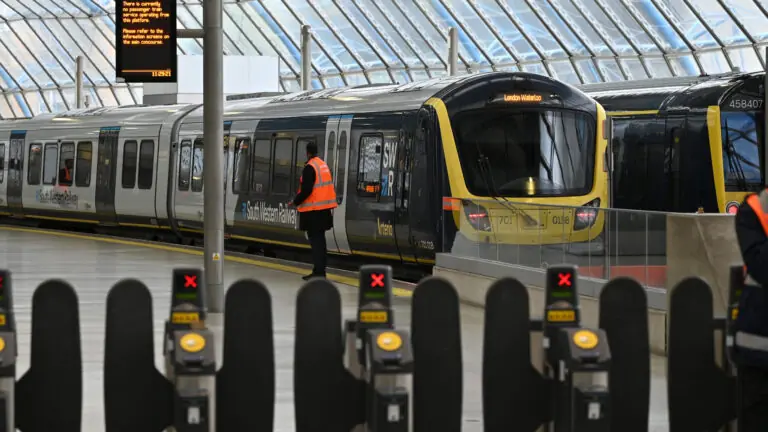
‘I accept that over the last year, performance at South Western Railway has not been up to scratch…we will leave no stone unturned in making sure that his constituents have a better travel experience in future,’ pledged the Transport Secretary in a Commons answer earlier this month.
Heidi Alexander had been asked by the Lib Dem MP for Woking, Will Forster, why the recently nationalised South Western rail services were enduring ‘horrendous delays and cancellations’. Forster asserted, ‘nationalisation has not gone to plan.’
Though these are early days for state-run trains, the signs are not good. Labour’s much vaunted Great British Railways (GBR) is still to be legally constituted as the Railways Bill makes its way through Parliament. Eighty years since Clemet Attlee created British Railways – later known as British Rail (BR) – Labour will again end private sector involvement in running most passenger trains and create the third biggest public sector employer in Britain, after the NHS and the armed forces.
‘Labour’s latest plan to nationalise train services contains no passenger growth target or cost control safeguards‘
John Major’s privatisation of the railways in the early 1990s endured early challenges but the benefits to passengers and social mobility are undeniable. Splitting track and train was a clear mistake but extracting civil servants from running loss making and subsidy drunk train services brought huge benefits. It delivered a huge increase in capital investment, a new focus on innovation, better trains, better safety and giving passengers what they wanted – rather than what BR decided to give them.
Until COVID, privatisation brought a clear focus on rail ridership that had been missing under nationalisation. BR oversaw the long-term decline in passenger numbers from around 1 billion in 1950 down to 750 million in 1992. Privatisation reversed the 40 year decline; growing ridership to an impressive 1.7 billion in 2019.
Labour’s latest plan to nationalise train services contains no passenger growth target or cost control safeguards. Instead, GBR risks enduring Whitehall micromanagement and political interference. For this, see the old BR Board begging ministers for more subsidy to run more loss-making trains. What chance is there that the so-called ‘independent’ GBR ‘Fat Controller’ won’t be second guessed and directed by civil servants?
If passenger numbers and their growth are no longer to be the key driver of GBR’s success then the omens are not good. A real worry is that if a primary ambition is to increase reliability; then this risks being code for a reduction in services. This is, in effect, just disguising failure by state run Network Rail and GBR. Look at Avanti on the West Coast Main Line, Britain’s busiest line. It will soon be nationalised and has been directed by Whitehall to cut one in seven services to save money. Govia Thameslink was nationalised in May and was ordered by the Department for Transport to strip hundreds of services from the timetable.
A real concern here is that in a desire to reduce rail’s subsidy minister are resorting to cuts when they should be following a clear plan to deliver growth. This model does exist and a 25-year case study exists on Britain’s most competitive and popular line – the East Coast Main Line (ECML).
New statistics from Transport Focus provide the government with a clear and free solution to boost ridership, deliver value for money fares, create more services and get more trains built with private money.
These figures show that the highest overall satisfaction rating amongst long-distance train services is on the ECML where the dominant and state run LNER competes with three unsubsidised private open access intercity operators; Hull Trains, LUMO and Grand Central. In the new stats, Hull Trains enjoys an eye-catching 94% satisfaction rating with LNER on 93%, showing how competition keeps LNER on its toes. This is considerably above other operators. Overall satisfaction with value for money by train operator ranged from nationalised Great Northern on just 49% to private open access operator LUMO on 75%.
Stay informed with our free daily briefing.
LUMO (75%) and Hull Trains (73%) enjoyed the highest value for money ratings within the long-distance sector – well above Avanti at 50%
These new statistics offer the government and GBR a clear solution which cannot be ignored. If GBR is to grow its customers, reduce its reliance on taxpayer subsidy, deliver better services and value for money fares – then its services should be made to compete with subsidy-free open access, especially across the long-distance intercity network.
The evidence is clear – will ministers accept it and deliver a GBR which works in the national and passenger interest?
Tony Lodge is a Research Fellow at the Centre for Policy Studies and a former Editor of the European Journal
More Transport
27 Nov 2026
Transport
David Starkie
Delays and costly design blight Heathrow expansion
It will surprise the majority of people that the most important port in the UK for the export and import of goods is Heathrow Airport. By trade value, Heathrow is gateway for a quarter of the nation’s goods trade, worth nearly £300 billion per annum. You would expect as a consequence, how an expanded airport might […]
25 Nov 2026
Transport
Myra Stok
Dockless e-bikes are a free market success story for London
Dockless e-bikes are getting Londoners cycling at no cost to the taxpayer. So why is the Government planning to cap them? Cycling is the fastest-growing major mode of transport in London, up by 43% since 2019. This is good news for the Mayor’s Transport Strategy, which set a target for 80% of all trips in […]
Popular
01 Oct 2026
Transport
Ben Hopkinson
How to make British infrastructure cheap again
Britain is pretty good at spending money on infrastructure. In the most recent OECD data, only China spent more on rail infrastructure as a share of GDP. Yet the problem for Britain is that we’re pretty bad at actually building infrastructure for the money that we do spend. The bulk of the money in the […]
Manage Consent
To provide the best experiences, we use technologies like cookies to store and/or access device information. Consenting to these technologies will allow us to process data such as browsing behavior or unique IDs on this site. Not consenting or withdrawing consent, may adversely affect certain features and functions.
Functional Always active
The technical storage or access is strictly necessary for the legitimate purpose of enabling the use of a specific service explicitly requested by the subscriber or user, or for the sole purpose of carrying out the transmission of a communication over an electronic communications network.
Preferences
The technical storage or access is necessary for the legitimate purpose of storing preferences that are not requested by the subscriber or user.
Statistics
The technical storage or access that is used exclusively for statistical purposes.The technical storage or access that is used exclusively for anonymous statistical purposes. Without a subpoena, voluntary compliance on the part of your Internet Service Provider, or additional records from a third party, information stored or retrieved for this purpose alone cannot usually be used to identify you.
Marketing
The technical storage or access is required to create user profiles to send advertising, or to track the user on a website or across several websites for similar marketing purposes.