Only a cultural reset can unleash Britain’s entrepreneurial spirit

Photo by Ezra Bailey via Getty Images
London Tech Week arrived with optimism and bold declarations. Prime Minister Keir Starmer promised £1 billion to scale the UK’s compute capacity for artificial intelligence. Meanwhile, Nvidia’s CEO, Jensen Huang, praised the UK’s research credentials and private investment, declaring our AI ecosystem ‘perfect for take-off’. His only concern? The absence of sufficient computing infrastructure.
It was an eye-catching endorsement, but also a flattering overstatement.
Yes, Britain boasts world-class research institutions, promising start-ups, and the third-highest level of private AI investment globally. But to claim that our ecosystem is already ‘perfect’ ignores the deeper structural weaknesses that continue to hold us back. The infrastructure gap matters. But so does our failure to consistently support entrepreneurs trying to build AI businesses here.
As Chair of the Young Entrepreneurs Forum, I hear from founders at the front line of this challenge. They don’t lack ambition. They don’t lack talent. What they lack is a fully functioning ecosystem. One that funds early-stage risk, cuts red tape, accelerates infrastructure delivery and rewards the risk-takers building new ventures from the ground up.
In that sense, Huang is only half-right. Infrastructure is necessary but it isn’t the whole picture. We need compute power. But we also need a system that empowers the people who’ll use it: entrepreneurs.
The gap between Britain and the United States isn’t just about scale, it’s about support. In the US, the system is designed to serve the founder from day one. Universities offer flexible leave for student entrepreneurs. Start-up accelerators like Y Combinator provide capital and de-risk ventures for follow-on investment. Most importantly, failure isn’t feared or punished, it’s seen as a natural, even necessary, part of building. Founders are expected to stumble and try again.
In the UK, we’ve become skilled at spinning out great ideas but, too often, we fall short when it comes to scaling them into world-leading companies. Our universities produce incredible breakthroughs. DeepMind, whose co-founder Demis Hassabis was born and educated in London, shows that the UK produces world-class ideas, yet scaling them into global companies often happens elsewhere.
And this drift in entrepreneurship is turning into an exodus. According to S&W’s Business Owners Sentiment Survey, four in ten UK entrepreneurs are considering moving abroad. Nearly half of those surveyed say current government policies are actively holding back their growth.
The reasons are clear: the October 2024 Budget introduced sharp tax increases, including higher capital gains tax rates, increased National Insurance contributions, and the removal of the non-dom status. Together, these measures raised the cost of founding, funding and scaling a business in the UK, sending an uneasy signal to entrepreneurs and investors.
This drift in entrepreneurship is slowly eroding Britain’s competitive edge. Over the past decade, the UK has watched as key assets, like Arm, were sold off and strategic opportunities allowed to pass by. While other countries built sovereign capacity in compute, chips and energy, we stood still.
AI isn’t just another tech trend. It’s a platform shift on a scale far larger than the internet. It will reshape industries, from healthcare and transport to education and finance. The companies defining that future are being built now, often by young people with new ideas and no legacy to defend.
At the Young Entrepreneurs Forum, we see first-hand how talented founders are being let down by the system. They’re building in spite of the environment, not because of it. That has to change. We need the same energy and clarity being poured into infrastructure to be applied to the people actually building the next generation of AI tools and platforms.
That means more than just cash. We need clear pathways for students and researchers to spin out ventures without sacrificing their academic careers. But instead of simply calling for less regulation, the real opportunity lies in better regulation – frameworks that actively enable responsible innovation rather than defaulting to risk aversion.
Above all, we need a cultural reset. One that understands economic growth comes from risk-takers, not committees. Britain must stop limiting ambition and start trusting its builders. The next potential global AI leader could be building something right now in Bristol or Birmingham, but without the support to survive the early stages, we may never hear about them.
We’ve already seen what happens when we get complacent. London’s position as Europe’s fintech leader has faced growing competition from Paris, with some reports suggesting the French capital may have edged ahead. In life sciences, we’ve missed out on billions in inward investment due to regulatory drag and stalled clinical trials. We can’t afford to let AI follow the same path.
Jensen Huang was right to spotlight our opportunity. But he was wrong to suggest that we already have the start-up piece in place. We don’t. Until we lower the barriers and unleash our founders, infrastructure alone won’t deliver what Britain needs.
We have the talent. We even have the ambition. But we need to get serious about enabling the people who can turn that ambition into world-changing products. In the race for AI leadership, second place doesn’t get to write the future.
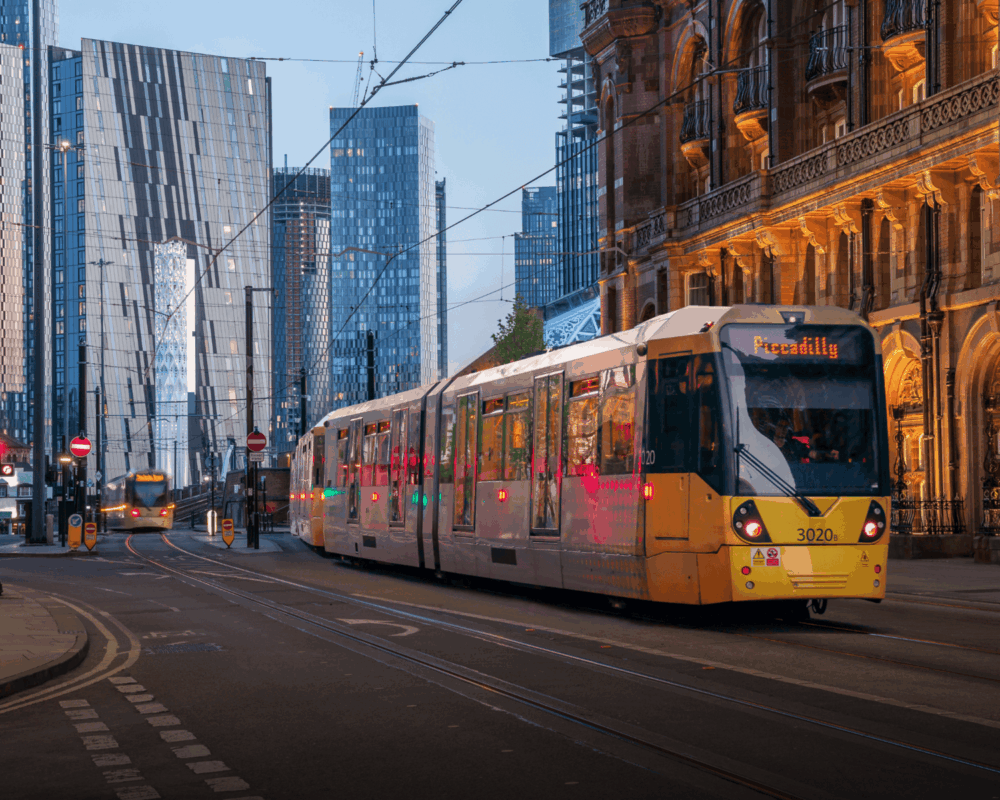
Since Andy Burnham became the Mayor of Manchester in 2017, the term Manchesterism has taken on a new meaning. To him, it stands for the expansion of the public sector and a managerial state. Now, with Keir Starmer on the brink of resignation and Burnham’s Makerfield by-election win clearing his path to Westminster, Britain may […]

Some are saying they don’t know what Andy Burnham’s big ideas are. They don’t know what he will try to achieve when he becomes prime minister. On GB News earlier this week, Boris Johnson described Burnham as a ‘mascaraed Mancunian mystery’. It is a peculiar concern. Burnham’s ideology seems to me no harder to identify […]

The UK has the lowest business investment of any G7 country. The last time its business investment stood above the G7 median as a proportion of GDP, John Major was Prime Minister. The Labour government’s instinct, both in its manifesto and in practice, reflects the old Keynesian mindset that “The duty of ordering the current […]