What the Left doesn’t get about investment
Left-wing economists conclude that government, through public spending, can simply increase investment and therefore create growth

24 June 2026

Darren Staples/Getty Images
Left-wing economists conclude that government, through public spending, can simply increase investment and therefore create growth
The UK has the lowest business investment of any G7 country. The last time its business investment stood above the G7 median as a proportion of GDP, John Major was Prime Minister. The Labour government’s instinct, both in its manifesto and in practice, reflects the old Keynesian mindset that “The duty of ordering the current volume of investment cannot safely be left in private hands.” The market, driven by its animal spirits and short-term profit-seeking nature, supposedly cannot generate sufficient investment, so the state must intervene and create the necessary conditions.
Mariana Mazzucato, whom Deirdre McCloskey once described in her CapX piece as The most dangerous female economist in the world,is back in the media pushing the same line over and over again. “Growth is a function of investment,” she argues, continuing that “we have a massive hole in the public pot.” “You achieve growth by solving problem through public and private investment.” Gotcha! One of the favourite gotcha moments of left-wing heterodox economists is to point out that investment is one of the components of economic growth and conclude that government, through public spending, can simply increase investment and therefore create growth.
In this view, what stands between Britain and higher growth is not red tape, high taxation, or big government, but free-marketeers preventing the state from spending more.
‘Left-wing economists conclude that government, through public spending, can simply increase investment and therefore create growth’
But can pouring investment into the economy solve these problems? The famous Polish economist Michał Kalecki believed so. He argued that free markets alone would not generate sufficient investment and that capitalist economies suffer from chronic underinvestment, requiring the state to step in. One of the countries that followed this logic was socialist Poland. During the Six-Year Plan, investment reached an average of 32.6 per cent of national income—more than double the typical level in capitalist economies. But did it solve Poland’s problems? Quite the opposite. Shortages and mismanagement continued on an even larger scale. Is the problem really investment? No. The problem is misunderstanding what investment is actually for.
Investment isn’t a magic variable that automatically creates growth simply by increasing it. As Andrew Lilico wrote, “Investment doesn’t create growth. It’s opportunities for growth that create investment.” Investment is not merely another variable in an economic formula that can be turned up at will. It is itself dependent on wider market conditions. What the UK faces is not a lack of investment but a lack of opportunities for investment, with the rhetoric of wealth taxes and exit taxes making investors increasingly uncertain about committing capital to the country.
This is one of the mistakes the Labour government has made under Keir Starmer: investment for the sake of investment. As Rachel Reeves declared, “The only way to drive economic growth is to invest, invest, invest. There are no shortcuts.” But when investment is not driven by market forces, it creates two phenomena: malinvestment and overconsumption. You may spend billions of pounds on Net Zero and create new green jobs, but that is merely the seen rather than the unseen. The unseen consists of the jobs that could have been created in more productive sectors but were crowded out by this policy.
If investment is not guided by markets, it is guided by politics. And politicians simply do not have the incentives to allocate capital in the most efficient way – not because they are bad people, but because they do not bear the consequences of poor decisions. A private entrepreneur who invests in the wrong business bears the losses; when she is right, she earns the profits. That incentive structure simply does not exist for government officials.
What is stopping private investors from investing in the UK is not that the government is doing too little to encourage public investment. It is the opposite: it is doing too much. The ballooning size of the public sector is precisely what worries investors. Who is going to pay for the UK’s £2.98 trillion national debt, the triple lock, and the ever-growing sickness benefits bill? Future taxpayers. When the economy is barely growing while government spending continues to rise, businesses naturally conclude that they will face higher taxes in the years ahead.
This was the insight of the classical economist David Ricardo. Ricardo argued that when consumers expect government spending to rise in the future, they save rather than spend. When consumption falls, new businesses, enterprises, and investments fail to emerge. Why start a business today if you expect higher taxes and lower profits tomorrow?
If the government is serious about raising investment, it should get out of the way. The best way to encourage investment is to reduce public spending and allow people to expect lower tax burdens in the future. The so-called neoliberal government, which somehow spends almost half of GDP, has already done more than enough spending.

Youth unemployment is one of those issues that politicians across the spectrum agree is a scandal. The debate tends to focus on training programmes, welfare incentives, employer subsidies. These things matter. But a report published today by the Jobs Foundation points to something more fundamental: the businesses that would employ young people are not growing […]
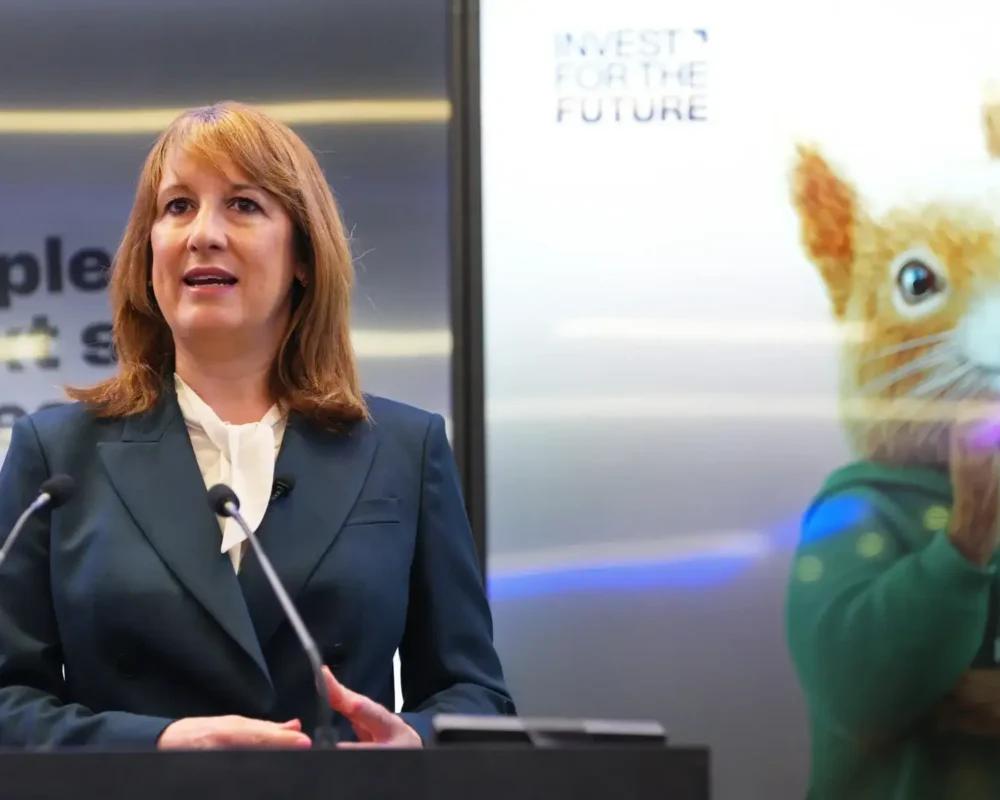
The British investment industry wants everyone to be familiar with a cartoon squirrel. Savvy, the character fronting a 20 million pound advertising campaign, is the latest attempt to boost investment in the UK. The government-backed ‘Invest for the Future’ initiative, launched last Thursday, is supported by some of the biggest financial services firms in the […]

Disruption is what venture capitalists seek to do. Good disruption, that is. Investing in early-stage companies, creating jobs, backing innovation and technologies that can move a country, or perhaps a region of a country, forward. But there’s a catch: economic displacement. This happens when policy intervention that boosts economic activity in one location has the […]