Net Zero can’t help Britain escape the energy trap
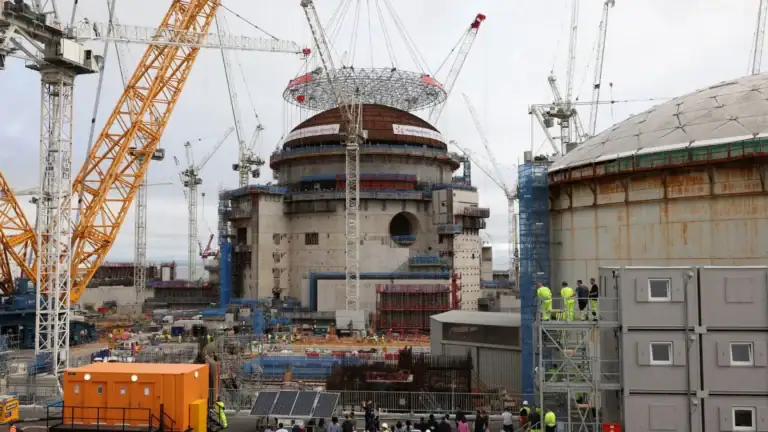
ADRIAN DENNIS/AFP via Getty Images
Nobody ever built a wind farm with wind. An energy transition is always a project that uses its current energy source to build its replacement while keeping everyone fed and warm. Every turbine, panel, pylon and battery is made, moved, installed and replaced with the help of cheap oil. The question under the plan for today’s transition away from fossil fuels is not ‘how much carbon is avoided?’ It’s ‘how much cheap oil is left to build with?’
The answer is – not enough. But that answer has been obscured by a historical miscategorisation. The International Energy Agency (IEA) dates the peak of conventional crude to 2006. Brent rose from $29 in 2003 to $133 in July 2008. James Hamilton’s Brookings paper found that was enough on its own to tip America into recession. The recession began in December 2007. Lehman failed nine months later. The first crisis of the post-peak world was filed as a banking failure, but it was the oil shock that came first. It has been written out of the story.
The first crisis of the post-peak world was filed as a banking failure, but it was the oil shock that came first
A shortage of cheap oil was met with a surplus of cheap money – $28 trillion printed by the world’s major central banks, then $173 trillion of new global debt on top. Some of it found its way into US shale, until then a geological basket case. The shale industry never lived on the oil it sold. It lived on the continuous injection of cheap money from investors chasing a growth story that oil field physics couldn’t support. Production rose from 5 to 13 million barrels a day. The oil was real, but it was not cheap: the biggest drillers burned $189 billion more than they earned producing it. It turned cash-flow-positive after 2020 only because that year’s price crash forced bankruptcies that wrote off the bad debts. The Federal Reserve bought oil-company bonds for the first time in its history to stabilise the survivors, and those survivors slashed their drilling budgets to harvest existing wells rather than develop new ones. Debt didn’t solve the peak. It pulled expensive oil forward and hid it.
Debt is a claim on future output, and output takes energy. And here is the paradox: cheap oil is running out – that is what is forcing a transition – yet the transition itself needs cheap oil. So now there are two demands on our energy system: the energy needed to build the transition, and the energy needed to make good $173tn of promises, shale’s among them. Either alone needs cheap, high quality energy in vast quantities. And now we face another constriction – semi-closure of the Strait of Hormuz, with the buffers that absorbed 1973, 1990 and 2022 gone.
Imagine the worst response to this predicament, and its name would be ‘Net Zero’. Replace an energy system based on dense, cheap energy stored in chemical and nuclear bonds that you can switch on when you want it, with one based on scavenging expensive diffuse flows of whatever is passing through in the moment. Assume the oil needed to finish the job will be there when you need it, at a price you can afford. Prohibit the discovery and production of your own affordable energy, and squander remaining stocks of it building and endlessly replacing the scavengers and all of the components required to make them behave like a reliable source. Cripple the economy with the developed world’s most expensive industrial electricity, blame gas and load the stupefying cost of subsidising the scavengers, their grid and their back-up onto household bills and taxes. Measure success in avoided tonnes of CO2 rather than in high quality energy delivered per pound. It doesn’t matter how worried you are about climate change: Net Zero fails because the physics and engineering of it fails.
The ideology can’t be salvaged, because it rests on a misdiagnosis of the problem. The response requires a fundamentally different energy strategy. Maximise and conserve all remaining fossil fuels, substituting between them where possible. Abandon all non-productive uses: wind and solar. End all subsidies and support for the charities and institutes that exist to promote them. Electrify everything that can sensibly be electrified. Spend the oil that remains only on what pays it back and asks for little or none to keep running: nuclear above all; geothermal; houses built to need no heating.
Can we succeed? There are big uncertainties. It’s not clear when global oil production tips into contraction: the IEA’s September report has world supply down 5.7 million barrels a day this year, but this is a war shock, not yet geology. And it’s not clear how we electrify global heavy industry. But what we can do is change the government, cancel Net Zero and put the economy on the emergency footing that gives growth a chance. We must.
Richard Lyon’s book ‘The Energy Trap’ is published today by Swift Press.


A century ago you had to be rich to get any kind of choice over your clothes. And if you weren’t in the upper echelons of society you could forget going on a foreign holiday. Today, mass production ensures there is an abundance of clothes to choose from at all budgets, and cheap flights have […]

The UK only has 13 days worth of natural gas storage capacity, and it’s about to be cut in half. Britain needs gas storage now, and it will need it as North Sea extraction declines. Otherwise, we’re badly exposed to another energy crisis. Centrica has seemingly given us an easy out by offering to regenerate […]
It’s not often that a Labour announcement reminds you of music. Reading Andy Burnham’s confirmation of his commitment to Net Zero in the Guardian last week, I couldn’t help but think of The Who’s 1971 epic rocker ‘Won’t Get Fooled Again’. Within it are the lyrics: ‘And the world looks just the same, And history […]