Burnham needs to get serious on energy
Christopher Furlong/Getty Images
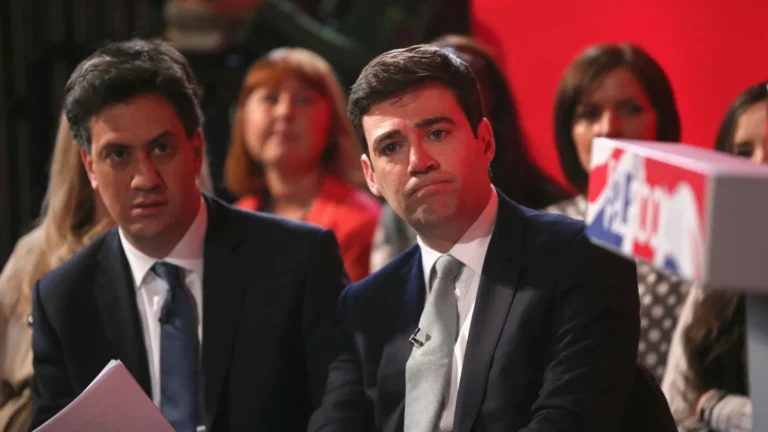
It’s not often that a Labour announcement reminds you of music. Reading Andy Burnham’s confirmation of his commitment to Net Zero in the Guardian last week, I couldn’t help but think of The Who’s 1971 epic rocker ‘Won’t Get Fooled Again’.
Within it are the lyrics:
‘And the world looks just the same,
And history ain’t changed…’
Keir Starmer may be gone and Ed Miliband moved on to the Foreign Office but unfortunately the Net Zero song remains the same. Within his statement, Burnham said he is ‘determined’ that Net Zero be reached by 2050, announcing £30 million in funding for municipal renewables projects, or what he dubbed ‘People’s Power’ projects – a name Marx could be proud of.
Our current path towards Net Zero is increasingly visible as an economic folly
The rhetoric is grand but the statement offers nothing in terms of new policy. It is effectively a rebrand of Ed Miliband’s Local Power Plan, a key operational arm of Great British Energy (GBE) that has seen its scope reduced as GBE’s original budget was cut back and the cost of the UK’s small modular reactor programme was lumped in. And as the CPS discussed in its paper, ‘Power to the Markets’, the sums allocated are piddling. Bill reducers they are not.
Here was a moment for Burnham to really stamp his authority and show some leadership by admitting that the national circumstances have changed and it’s now time to pursue a different approach to decarbonisation. No one who spent this last summer in the UK can deny that the climate is changing, but our current path towards Net Zero is increasingly visible as an economic folly, and the unfortunate reality is that, when it comes to mitigating adverse climate effects, the solutions lie outside the UK’s control.
Burnham may have given a subtle nod to adaptation, stating that the country will have to change ‘the way… we build homes and produce energy’ but that’s a line any primary school kid could have given you back when ‘An Inconvenient Truth’ was still all the rage. (He also included the way we all travel, but as the Climate Change Committee’s view this week on an extra runway at Heathrow showed, this really means returning us to an age when air travel was the preserve of the wealthy, pricing you, dear reader, out for nothing other than being too common – sorry, polluting – for your own good).
He recognised the dangers of the extreme heat we have faced this summer but said nothing of our current building codes that put air conditioning below passive cooling methods in a so-called ‘cooling hierarchy’. Nor did he mention that air-to-air heat pumps, which can provide cooling as well as heating, are eligible for only a third of the grant offered to air-to-water and ground-sourced heat pumps under Labour’s own Boiler Upgrade Scheme.
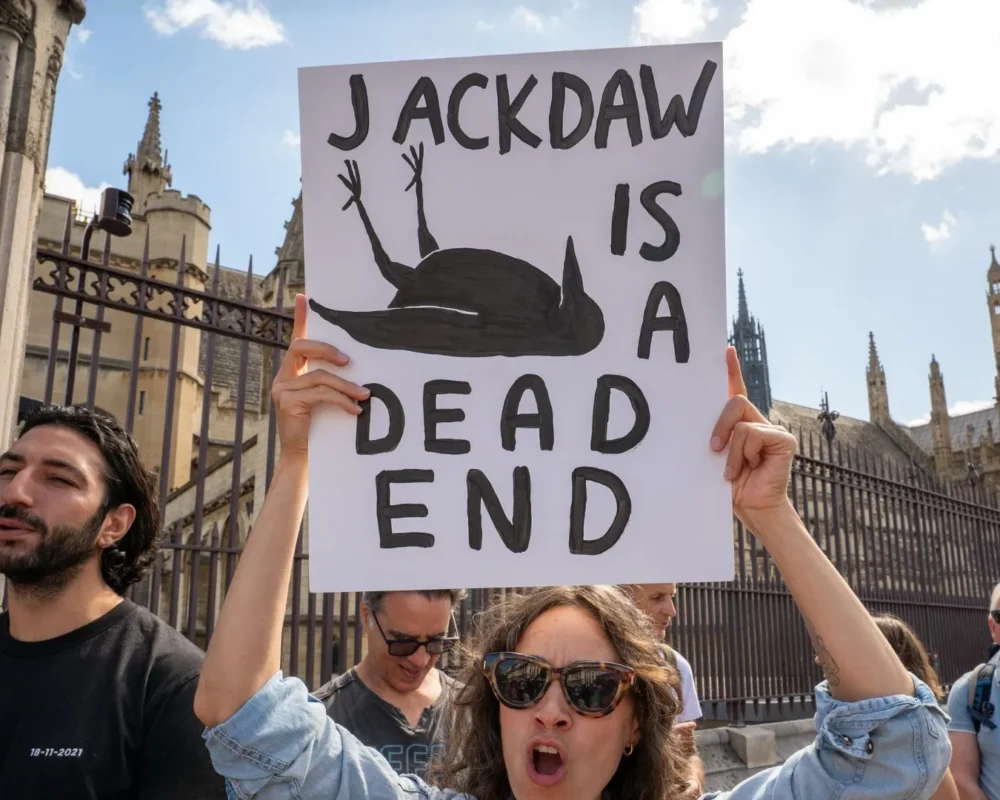
If Burnham was truly serious about making our energy secure and affordable, rather than fiddling at the margins, here’s what he could have done differently: he could have announced that he was going to approve the Jackdaw and Rosebank oil and gas fields – because they will boost domestic energy production far more than any municipal project can. He could have announced that there will be no further renewables allocation rounds – because households will be footing the bill for them for the next 20 years. He could have announced that the UK will be taking a more R&D-led approach to decarbonisation instead of Net Zero – because at less than 0.8% of global emissions, the UK alone reaching Net Zero simply isn’t going to solve a global problem like climate change.
But he announced none of those things. And that’s not including the likes of carbon taxes and other pieces of climate policy that are past their use-by date.
Unfortunately, it looks like the climate policy we had under Keir and Ed is set to continue as is under Andy Burnham. To quote The Who again, it looks to be a case of ‘meet the new boss, same as the old boss’.


A century ago you had to be rich to get any kind of choice over your clothes. And if you weren’t in the upper echelons of society you could forget going on a foreign holiday. Today, mass production ensures there is an abundance of clothes to choose from at all budgets, and cheap flights have […]
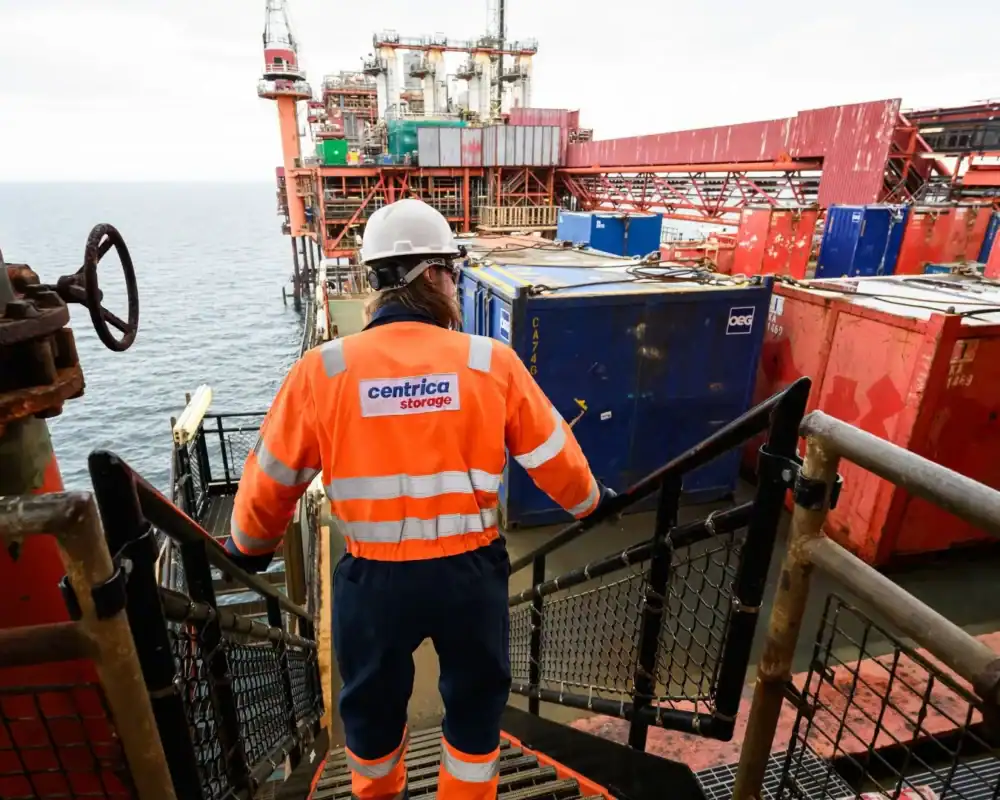
The UK only has 13 days worth of natural gas storage capacity, and it’s about to be cut in half. Britain needs gas storage now, and it will need it as North Sea extraction declines. Otherwise, we’re badly exposed to another energy crisis. Centrica has seemingly given us an easy out by offering to regenerate […]
If you think this summer has been sticky, count yourself lucky you were not in the Cabinet in August and September 1931, in the midst of possibly the worst economic crisis the country has ever faced. It is worth looking at what happened then, because high energy and Government borrowing costs mean a crisis of […]