Healey’s capital gains tax raid would backfire
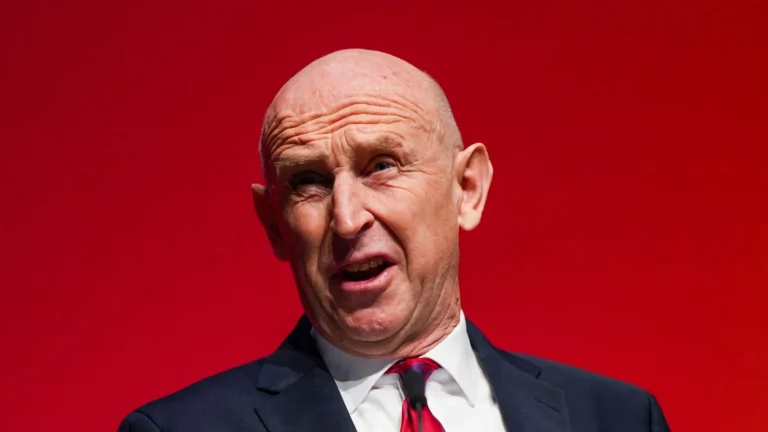
Ian Forsyth/Getty Images
The Chancellor seems to be weighing up a rise in capital gains tax (CGT) in the Budget later this month, with some suggesting it could be equalised with income tax rates of up to 45% – in line with Wes Streeting’s proposal earlier this year, when he was jockeying for the Labour leadership. For a government hunting for revenue, the logic is that a gain on asset value and a monthly pay cheque are both sources of income, so why not tax them the same? The logic is wrong, and it is expensive.
Entrepreneurs do not create jobs because the state asks nicely; they create jobs when the return on risking their capital and their time is worth it
Start with the principle. A capital gain is not a wage. A salary is paid for showing up doing a job; a capital gain is the reward, if one ever arrives, for putting money and time at risk with no guarantee of return. The farmer who sinks a lifetime’s savings into land and machinery, the entrepreneur who forgoes a salary to build a company, the investor who backs a business before anyone else will: none of them are paid until, and unless, the risk pays off. Losses are rarely offset pound-for-pound against future bills, and gains are not adjusted for the inflation eaten up over the years an asset is held. Treating a one-off, uncertain, multi-year return the same as a monthly payslip is wrong. As Shadow Chancellor Andrew Griffith wrote in the Telegraph a few years ago, capital gains tax ‘is a relative rounding error in terms of revenues raised but is a global smoke signal of our attitude towards those who create jobs and prosperity.’
That smoke signal matters because of what Britain needs right now. With those unemployed outnumbering vacancies by a factor of two and a half, the country needs more people willing to start a business, scale it and stay in the UK to grow it, not fewer. Entrepreneurs do not create jobs because the state asks nicely; they create jobs when the return on risking their capital and their time is worth it. An increase in CGT will cause many to not start, some to sell early rather than scale and some to simply take their next venture where the risk is better rewarded. Just last week, Jeremy Clarkson hit the nub of the problem: ‘Why would anyone start a business in this country right now?’ An increased CGT is not the way to reverse this sentiment.
Even judged purely as a revenue-raiser, the policy does not stack up. HMRC’s modelling released in June 2025, found that a 10-percentage-point rise in CGT would cost the Exchequer roughly £3.5 billion a year once ‘behavioural impacts’ were taken into account. In addition, as highlighted in a report by Daniel Herring, Head of Economic and Fiscal Policy at the Centre for Policy Studies, even a smaller increase of five percentage points could see revenue fall by £870 million. A tax rise that loses money by the Government’s own estimate is not a hard trade-off between fairness and growth. It’s a contradiction: a tax increase that actually shrinks the pie.
In light of this, the Jobs Foundation has launched a ‘Don’t Tax the Risk-Takers’ campaign, to support job creators in the UK. The campaign calls on the Government to resist further increases in CGT and recognise the connection between rewarding entrepreneurial risk and expanding employment opportunities. Behind every business investment are potential jobs, wages and routes out of poverty. If the Chancellor wants more of these opportunities, he must give people a reason to invest in creating them.
Good intentions are not good enough. We must think about how people respond to incentives. The entrepreneurs, investors, small business owners and farmers this tax would hit are precisely the people this country needs to start, scale and stay. Tax the risk-takers at a higher rate, and we shouldn’t be surprised when we have fewer job-creators.
Andy Burnham is set to make the same mistake that led to the ruin of Keir Starmer: lack of a domestic agenda, other than pushing the proverbial peas around the plate on energy bills, bus fares and the like, paired – like a bottle of plonk – with ambiguous statements on the big public issues. […]
The problem with being a political golden boy like Labour pensions minister Torsten Bell is that it paints a target on your back, putting you firmly in the crosshairs of rivals and commentators in your own party and the opposition every time you do or say anything at all. Kudos, then, to the man widely […]
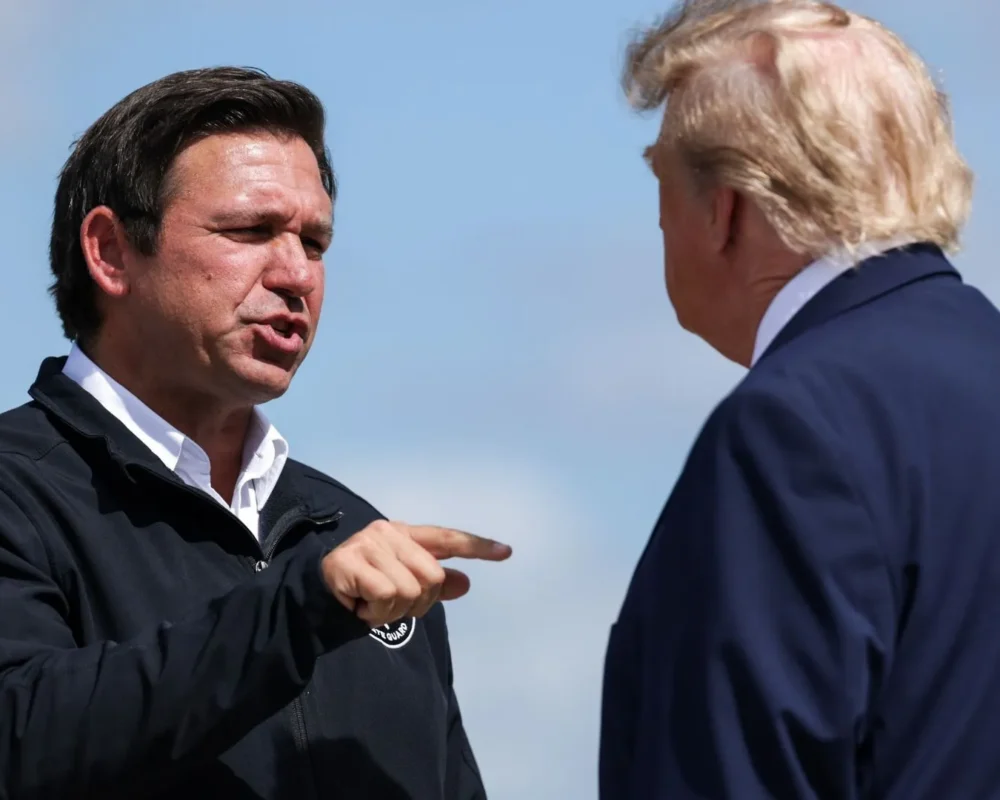
Ron DeSantis chose his moment with care. The night before the US midterms, the outgoing Governor of Florida appeared on a sports podcast. On election eve, DeSantis admitted that the Iran war had been ‘a big, big drag’ on Republicans, that the party had been ‘gaslighting’ voters by blaming Joe Biden for the price of […]


