Why universities should be able to set their own fees
The EU wants to ensure that students from EU countries pay home fees for all courses. The Russell Group estimates that the cost will be £570 million a year
The fee system shifts resources away from the more efficient, high-value courses
The only part of our university system that really works is international fees, because the price mechanism is allowed to function
In 1970 a book was published by the Nobel laureate in economics James M. Buchanan entitled ‘Academia in Anarchy’. At the time, academia really was in anarchy. During the student protests of 1969, American students, convinced of their moral righteousness and their belief that they were on the right side of history, burned around 40 buildings, and more than 4,000 students were arrested. Richard Nixon, the president at the time, wrote about the unrest, offering a message that could still serve as a motto for any university in the Western world: ‘A fundamental governing principle of any great university is that the rule of reason and not the rule of force prevails.’
But Buchanan’s book isn’t about the social causes of the protests, such as civil rights and the Vietnam War. He identifies an economic cause of the problems in academia: a distorted market. As he describes it, ‘Those who consume its product do not purchase it; those who produce it do not sell it; and those who finance it do not control it.’ In other words, consumers aren’t really consumers, and producers aren’t really producers, because the price mechanism is distorted.
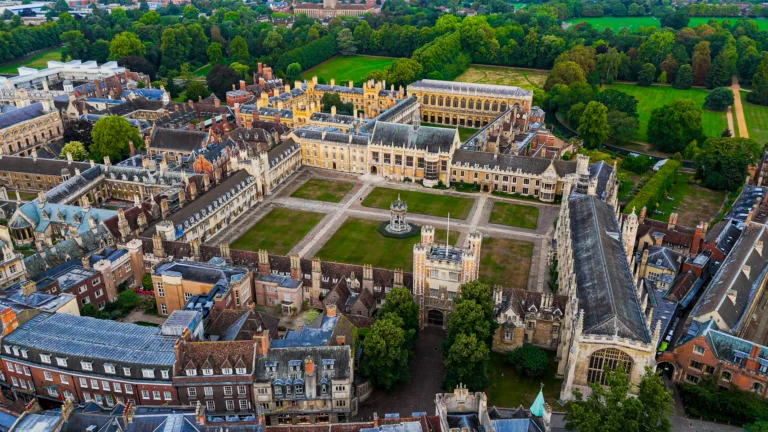
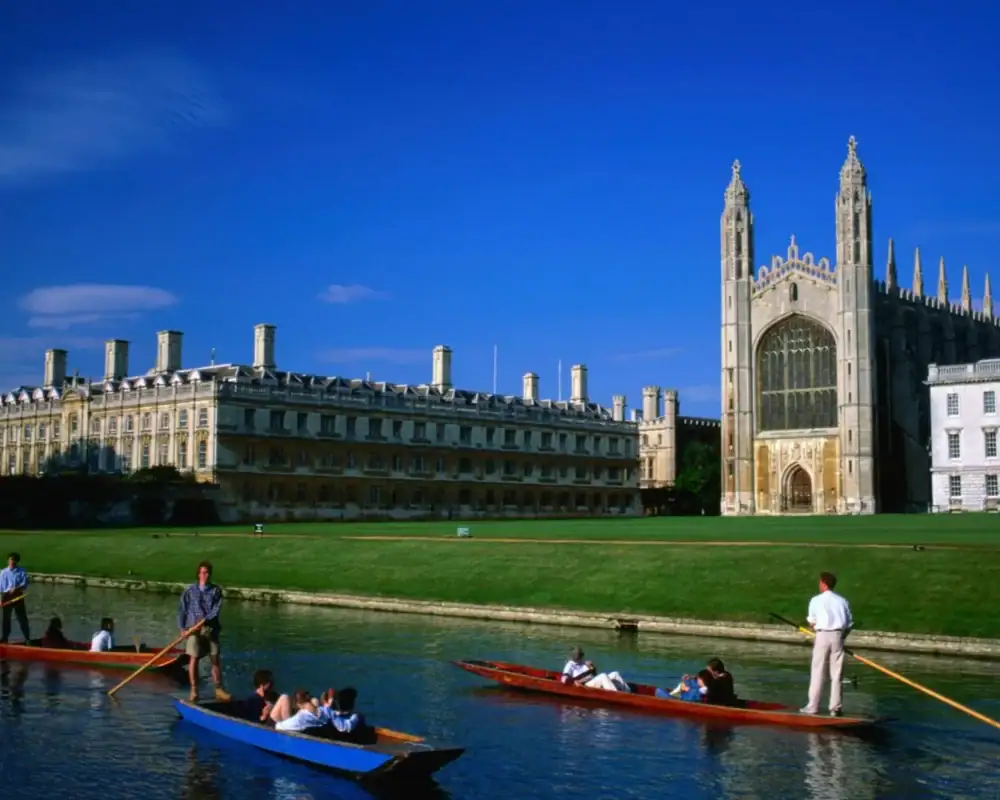
If you study Computer Science at Cambridge, one of the most competitive courses in the world, you pay the same as someone studying Sociology at the University of East London
UK universities make a loss on undergraduate students paying home fees. And now, as part of a range of deals, the EU wants to ensure that students from EU countries pay home fees for all courses. The Russell Group estimates that the cost will be £570 million a year, and the Financial Times reports that ‘ministers have signalled they are open to’ discussing compensation for universities’ losses. But international fees are the one element of the university sector that helps it function as a market, and this government could be on its way to eliminating it.
If you study Computer Science at Cambridge, one of the most competitive courses in the world, you pay the same as someone studying sociology at the University of East London. This shifts resources away from more efficient uses towards less efficient ones. The only thing standing in the way of this distortion is international fees, where a functioning price mechanism still exists. For these two courses, the international fees are £44,214 and £16,020 respectively.
The only part of our university system that really works is international fees, because the price mechanism is allowed to function. It is important, as free-market advocates, to remember that markets come first, then privatisation. What does that mean? Look at Singapore’s public hospitals. They are among the highest-quality public hospitals in the world, and in many respects are not that different from private hospitals in Singapore.
Why? Because they have to compete with the private sector, receive relatively small state subsidies, and must remain competitive to survive. The price mechanism makes even the state sector more efficient when it is not fully subsidised and needs to compete to survive. When a price mechanism exists, even if an industry is partly state-owned, it can improve through the competitive forces of the market.
But UK universities are becoming less and less dependent on the price mechanism and more dependent on government loans. Going back to Buchanan’s economics, the first problem is that students are ‘consumers who don’t buy’. When market prices are distorted, one of the first things consumers lose is the signals of profit and loss. As Mises argued, economic calculation happens in the dark. People study courses that don’t pay a return with a future salary by offering good job prospects, and we have seen the graduate premium declining over the last few decades.
Instead of blaming students for choosing those courses, we should look at the incentives. Prices are signals wrapped in an incentive. When all courses are priced below their market value and universities are making a loss on every home-fee-paying undergraduate, there is an incentive to offer courses that don’t pay. It’s simple: courses that pay more should have a higher price. This is a good signal for students to understand which courses lead to better career outcomes, but also for producers, which in this case are universities.
And that’s the second problem. Universities have become ‘producers who don’t sell’. When the allocation process isn’t market-based, decisions are made without the correct information. Universities have less incentive to invest in better courses because they have the comfort of knowing they can be bailed out and subsidised by taxpayers. Even with the news we receive about universities merging, such as the planned merger between King’s College London and Cranfield University in 2027, the problem wouldn’t be solved. They lack the power of price discovery, and until that problem is addressed, no amount of mergers, subsidies or cuts can help the sector.
Stay informed with our free daily briefing.
The price of the government destroying the price mechanism is paid by taxpayers: the people Buchanan describes as ‘owners who do not control”. The cost of subsidies, and the losses on every undergraduate, which could be extended to EU students as well, is paid by people who didn’t make the choice. Although they are the financiers, they have neither ownership nor control.
If Burnham wants closer ties with the EU, it isn’t the responsibility of British taxpayers to subsidise European students. If we want our universities to stay at the top of global rankings, we need more of the price mechanism, not less. That’s why we need to keep international fees and even consider introducing different prices for home students.
Mani Basharzad is a Junior Research Associate at the Institute of Economic Affairs and an economic journalist.
More Education
Popular
12 Nov 2026
AI
Damian Pudner
AI is the final blow for Mickey Mouse degrees
Ever since Tony Blair set his ambition for 50% of young adults to enter higher education, successive governments have promoted university as the route to prosperity. The result is a bloated, expensive sector that has spent decades expanding on the assumption that more students, more degrees and more universities must somehow be a good thing. […]
Popular
11 Nov 2026
Education
Len Shackleton
British universities are not fit for purpose
Britain’s higher education system, long heralded as a world leader in research and teaching, and a major export earner, is in big trouble. Yet our main political parties do not seem to be aware, or are turning a blind eye. The trouble is economic, academic and cultural, as we explain in a new book from […]
28 Sep 2026
Education
Anthony O'Hear
Our universities belong to the bureaucrats now
With the introduction of student fees in 1998, one might have expected that universities would gain independence from the state and its agencies. They would live off the fees paid by those who wanted them, free to act in accordance with whatever academic values they chose to embody. But the opposite happened: all the movement […]
Manage Consent
To provide the best experiences, we use technologies like cookies to store and/or access device information. Consenting to these technologies will allow us to process data such as browsing behavior or unique IDs on this site. Not consenting or withdrawing consent, may adversely affect certain features and functions.
Functional Always active
The technical storage or access is strictly necessary for the legitimate purpose of enabling the use of a specific service explicitly requested by the subscriber or user, or for the sole purpose of carrying out the transmission of a communication over an electronic communications network.
Preferences
The technical storage or access is necessary for the legitimate purpose of storing preferences that are not requested by the subscriber or user.
Statistics
The technical storage or access that is used exclusively for statistical purposes.The technical storage or access that is used exclusively for anonymous statistical purposes. Without a subpoena, voluntary compliance on the part of your Internet Service Provider, or additional records from a third party, information stored or retrieved for this purpose alone cannot usually be used to identify you.
Marketing
The technical storage or access is required to create user profiles to send advertising, or to track the user on a website or across several websites for similar marketing purposes.