Britain is heading for a 1931-style crisis
James Willoughby/SOPA Images/LightRocket via Getty Images
If you think this summer has been sticky, count yourself lucky you were not in the Cabinet in August and September 1931, in the midst of possibly the worst economic crisis the country has ever faced. It is worth looking at what happened then, because high energy and Government borrowing costs mean a crisis of a similar kind might, unfortunately, be gathering pace now.
If I am in London hardly anyone seems to mention inflation. Outside London, the provinces are obsessed with the price of diesel, petrol, household energy and increasingly, food.
You cannot force a complex modern economy to pivot around a single number. But that is exactly what we are doing today, with the Net Zero legislation forcing us to reduce our carbon emissions to zero by 2050
In 1931 there was also a Labour Government, led by Ramsay Macdonald and the matter at hand was that Britain was on the gold standard, fixing the pound at £4.25 per troy ounce. It had returned to this rate after the First World War and the entire Establishment agreed it was vital, desirable, a good thing etc.
The trouble was it was too high. The weakened British economy after the First World War and then the Wall Street Crash could not withstand the demands of keeping the pound effectively pegged too high. The Bank of England had to keep selling gold at that rate, or borrowing money to buy sterling in order to prop it up.
As for the rest of the economy, it meant that manufacturers could not export their products as they were effectively priced too high relative to competitors. The Bank had to hold interest rates excessively high at 4.5%. We were being squeezed to death.
This is very similar to the situation we are currently suffering from. You cannot force a complex modern economy to pivot around a single number. But that is exactly what we are doing today, with the Net Zero legislation forcing us to reduce our carbon emissions to zero by 2050. This is not possible, or at least not without squeezing the life out of us as in 1931. We do not have capacity to cope with a crisis like the closure of the Strait of Hormuz, through which about 7% of the world’s oil and gas is exported.
In 2019 the entirety of polite society agreed that it was a Jolly Good Thing to put Net Zero into law, including the Bank of England, the Church of England, the BBC, the universities, the financial press, etc, etc. Nigel Lawson, the former chancellor, was by contrast practically banned from the airwaves for suggesting it was a crazy idea.
Last week the Government was forced to pay the highest interest rate for 30 years, at 5.8%, in its latest gilt auction. Andy Burnham’s assertion that ‘national security should not come at the expense of social security’ at Prime Minister’s Questions was also taken badly. It is quite possible the market will seize up altogether and, in which case, not only would Burnham and John Healey be unable to fund their plans, the credit rating of large parts of the private sector would be affected.
The received explanation for this state of affairs is that Britain is borrowing too much and this is because public spending is out of control. Furthermore, Liz Truss’s ill-fated mini-Budget seriously damaged investor confidence.
This is baloney. Or at least part baloney.
As big a reason for investors’ concern about Britain is that we are prone to inflation. This inflation is driven by energy and food costs as the Governor of the Bank of England told the Treasury select committee last week.
Will the Bank raise interest rates at its meeting this week? The European Central Bank has already done so. The Office for National Statistics will publish its inflation numbers for August on Wednesday but the really substantial moves in prices were this month, in September. The CPI index for the previous 12 months was running at 2.9% in July, that looks like a distant memory.
Net zero has reduced our ability to produce, import, refine and store sufficient cheap energy by trying to replace fossil fuels with renewable electricity. Electricity anyway only accounts for about a quarter of consumption.
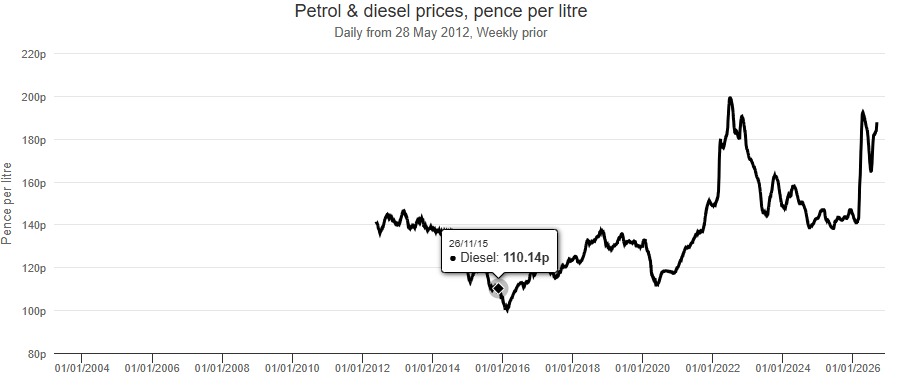
If you simply take diesel, the workhorse fuel used by lorry and tractor drivers and those with outdoor generators, its average price has risen steeply in recent weeks to 185p a litre, heading for the 199p record set in 2022, when Liz Truss accompanied her mini-Budget with a vast household energy bailout. It was the simultaneous combination of the two, not just the proposed tax cuts, which shocked the market. With the latest forecast suggesting an 18% rise in the price cap in January, that is where we are again now.
Mr Burnham might have to provide another bailout of some kind. If you look at the price of oil or natural gas and refined products, they are all going through the roof. President Trump’s war in Iran might be the catalyst, but the underlying reason we have shortages and inadequate capacity of our own in Europe, is Net Zero. We have, for example, closed five refineries in the last few years, which means the remaining four, which mostly produce petrol not diesel, are going like the clappers.
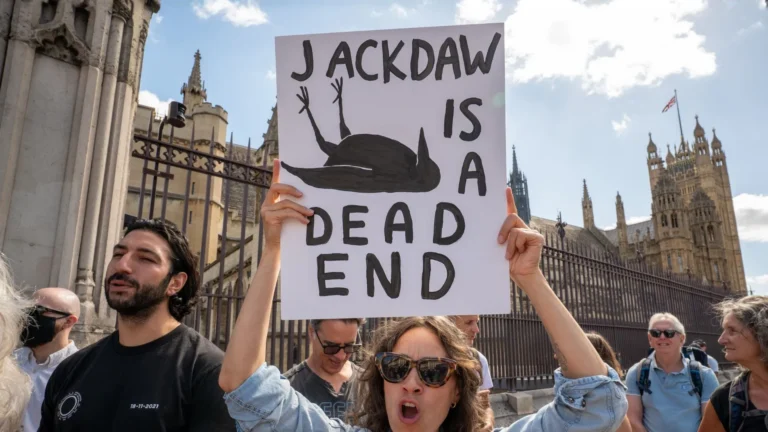
We are shutting down the North Sea with similar recklessness and have almost no gas storage. This week the Government was expected to at last approve production at the Jackdaw field in the North Sea. But this has reportedly been delayed due to the Holborn and St Pancras by-election, where the Greens are the main challengers to Labour.
Back in 1931, the Labour Government fell as it was forced to introduce emergency spending cuts. It was reconstituted as a National Government with the Conservatives but still led by Ramsay MacDonald. He entered Left-wing mythology as a traitor, never to be forgiven. In September, the dilapidated Royal Navy (sound familiar) mutinied in response to pay cuts. An emergency decision was taken by the new Cabinet to ‘temporarily’ suspend the Gold Standard. Incredibly, the crisis eased within a few months as sterling and interest rates fell and Britain recovered from the Great Depression faster than any other advanced nation.
1931 may not be an exact comparison, but if you don’t like it, there are others, like the removal of exchange controls in 1980 or the exit from the Exchange Rate Mechanism in 1992. Both resulted in recovery.
Will Mr Burnham and Mr Healey be forced into a similar emergency suspension of Net Zero and, related, the triple lock on pensions? It is not beyond the realm of possibility. Much will depend on how energy prices, inflation and the gilt market behave in coming weeks.


The verdict is clear. The Right has woken up to the innate statism associated with a statutory Net Zero target. Reform UK reject it outright, and the Conservatives have pledged to scrap the 2050 deadline and the 2008 Climate Change Act by which net-zero targets are enforced. Both accept the approach is a millstone around […]

This week, Nimby Watch is in Axminster, because where else would you go to talk about the technologies of the future? Alright then, where are we off to this time? In this edition of Nimby Watch, we’re focusing in on Axminster, where – Oh, I love that we’re finally doing something different! I’m a huge […]
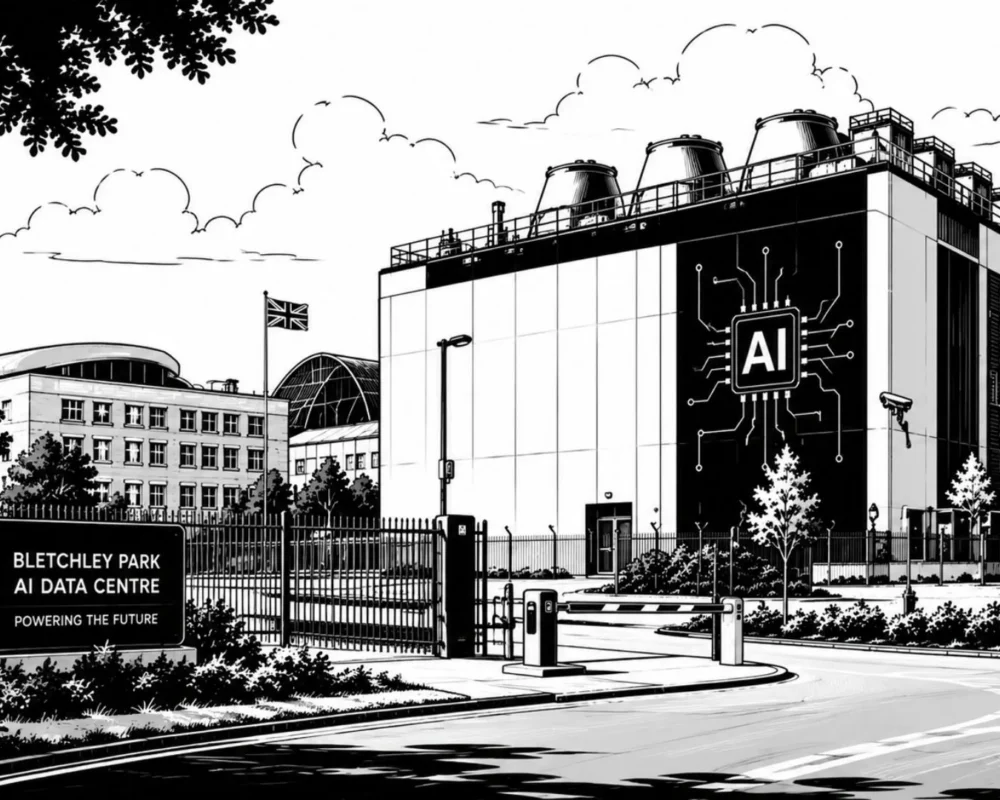
In 1943, a Post Office engineer called Tommy Flowers built a codebreaking machine out of 1,500 thermionic valves, partly out of his own pocket. Within a year Colossus, the world’s first programmable electronic computer, was cracking Nazi High Command ciphers at Bletchley Park. Britain had invented the data centre, in a large shed, and chock-full […]