Burnham has charm – but he needs new ideas
22 July 2026

Eddie Mulholland-WPA Pool/Getty Images
As Andy Burnham stood outside Downing Street on Monday to launch his new regime, our new Prime Minister did his best to prove to his 349 parliamentary backers that they had made the right decision.
Much of his speech was rhetorical filler. ‘I will put the care of people at the heart of everything I do,’ declared the magnanimous King of the North. ‘Let’s build a new national sense of unity, of common purpose and positivity. Let us make this the moment when Britain starts to believe again.’ It was more A-level politics student than Nye Bevan, but in fairness he was only 20 minutes into the new job.
Besides, national transformation isn’t why Burnham was selected as Keir Starmer’s successor. Burnham was put in place as the antidote to his predecessor’s failure to connect with voters.
Starmer was uniquely wooden in his approach, and doubtless that turned many voters off him. But his fundamental failing was not one of presentation, but policy
There is indeed much that Burnham possesses as a politician that Starmer lacks. Word clouds commissioned in recent years to describe the former prime minister repeatedly threw up the same word: ‘boring’. The adenoidal human rights lawyer who apparently doesn’t dream or have a favourite song or novel was never going to pass the pint test. Even his professed love for ‘the Arsenal’ felt a bit forced.
Yet Burnham manages it. A Scouser and Toffeeman who has somehow reinvented himself as a proud Mancunian and gotten away with it, often filmed playing the guitar while singing along to The Smiths or Oasis, is, at least on the surface, more relatable.
The plan is simple: deploy the more charismatic Burnham to preside over Starmerism with Northern characteristics.
Yes, much of his Cabinet is drawn from seats outside of the Southeast, but many of the main characters from the previous iteration are still hanging around.
For instance, Ed Miliband may now be Foreign Secretary, but he will continue to influence energy policy through his long-standing friend and successor as Energy Secretary Miatta Fahnbulleh. John Healey’s commitment to ‘fiscal control’ and commitment to growth sounds remarkably like Rachel Reeves’s ‘securonomics’ agenda. As Work and Pensions Secretary, Pat McFadden remains committed to ‘fair and sustainable’ welfare reforms.
Of course, there are some points of difference. As I wrote in these pages recently, Burnham lacks Starmer’s enthusiasm for tech, and has scrapped the Department for Science Innovation and Technology and may do the same with the digital ID scheme.
Broadly, much will remain the same. But that is precisely the snag in the Labour Party’s plan. Yes, Starmer was uniquely wooden in his approach, and doubtless that turned many voters off him. But his fundamental failing was not one of presentation, but policy.
If Burnham is as in tune with the mood of the British people as he claims, he ought to pay attention to a couple of statistics. Families are worse off now than they were at the beginning of the Starmer premiership, with disposable incomes falling by 0.5% between July 2024 and March 2026. This has been felt acutely across the country, with over half of all Britons feeling less wealthy than they did when Starmer was elected.
This has nothing to do with Starmer’s robotic style and will not be changed by Burnham’s red-rose populism. It is the predictable result of bad policy.
It is hardly surprising that the Britons are feeling the squeeze. Reeves’ 2025 budget saw taxes rise £26 billion, while doing nothing to curb public spending. The Employment Rights Act and increases in Employer’s National Insurance has hit jobs, rather than incentivising businesses to create them. Listings for temporary contracts rose at the start of the Summer as firms have continued to hit the brakes on permanent hires in the face of red tape and political uncertainty. The Centre for Policy Studies (CapX’s parent organisation) has calculated that it is now £2,367 more expensive to hire a worker on the minimum wage than it was in 2024.
Burnham has already suggested that he lacks the introspection and creativity to go about changing this. His diagnosis is straight out of the 1970s playbook: greater nationalisation, less technological innovation, more council housing, and a reduced focus on London.
In his first Cabinet meeting, Burnham claimed that he would head up a ‘cost-of-living government’. After the last two years, I think Britain has had enough of this misnomer. If the Labour Party genuinely wants to lower the cost of living, then it would deregulate our business environment to create jobs, unleash the private sector to build more homes, reform the welfare system to encourage work and design a tax system that rewards those who pay in.
Britain doesn’t need regionalist gimmickry; it needs bricks and mortar change. If Burnham fails to recognise this, we will see a speed run of the Starmer premiership as yet another leader promises the world but delivers decline.

There is a standard response from any Chancellor or Prime Minister asked questions about government finances: ‘I am not going to write the Budget in front of you’. And neither should they. The Budget is a potentially market-moving financial event. The figures it contains have to add up, make sense. The measures have to be […]
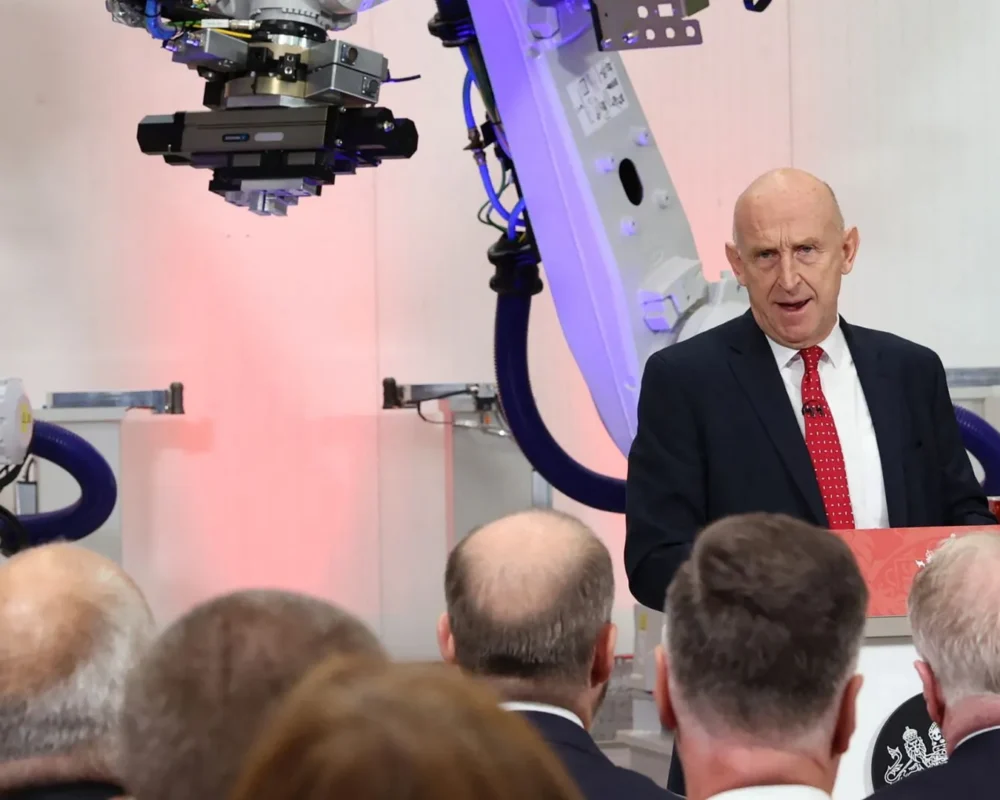
This morning, John Healey delivered his first major speech as Chancellor. He set out his vision for the economy and, while it was encouraging to hear his determination to drive growth and solve the NEET crisis, all while claiming to be committed to fiscal discipline, it was quite light on detail. However, one specific point […]

Dear Andy Burnham, Firstly, I must congratulate you on your new role. I am sorry that I have not written to you sooner and I know that you’ve technically been in post for a while now. In my defence though, you did go away almost immediately after taking office. The reason that I am writing […]