The Knowledge Problem
British history needs celebrating not rewriting

10 November 2026

Toby Melville / POOL / AFP via Getty Images
My favourite place in the world is outside Bank station, where Lombard Street meets Cornhill. To your right is Lombard Street, a name macroeconomists will recognise from Walter Bagehot’s 1873 book, which popularised the idea of the central bank as lender of last resort and which Ben Bernanke leaned on heavily during the 2008 financial crisis. To your left is the Bank of England. In front of you is the Royal Exchange, which is far more than a fancy drinking spot for bankers.
Voltaire, when he visited the place, wrote: ‘When you enter into the Royal Exchange of London’, people of all different religions, ‘the Jew, the Mahometan, and the Christian trade together as if they were of the same religion, and bestow the name of infidel on bankrupts only. … Was there in London but one religion, despotism might be apprehended; if two only, they would seek to cut each other’s throats; but as there are at least 30, they live together in peace and happiness.’
It’s worth remembering how new and fragile the religious tolerance and freedom we have in the West really are. In 78 countries around the world, Christians face high, very high or extreme persecution
Whenever I pass that location, it reminds me that there are things more important than politics that bring us together, as if we were all of the ‘same religion’. One of them is Remembrance Sunday: one day when we come together to cherish the memory of those who defended our liberty without knowing us. But the things that are above politics are under attack on two fronts. The first front wants to politicise everything.
Culture Secretary Lisa Nandy’s department announced on Saturday night that ‘as we mark Remembrance Sunday, Erasmus+ will give a new generation the chance to build connections across Europe’. Turning Remembrance Sunday into a political point-scoring exercise misunderstands it. It is the one day when we put politics aside. And that’s okay. In some sense, it’s even good not to care about politics.
Christopher Freiman’s argument in his book, ‘Why It’s OK to Ignore Politics’, is that political participation is usually an ineffective way for an individual to improve the world. An over-politicised world, where people end friendships for political reasons and refuse to date people from other tribes, ignores the very essence of why politics exists. Politics doesn’t exist for our tribe to win, but, in Voltaire’s words, so that we can ‘live together in peace and happiness’.
The second front is an attack on the West’s history. It wants us to see that history as a catalogue of crimes. Today, this is no longer limited to the woke Left, but includes the woke Right as well, with Tucker Carlson wanting us to rethink whether Churchill was the good guy or the bad guy in World War II. But seeing only the guilt and mistakes of history – and judging earlier centuries through the political fashions of 2026 – makes us blind to the real achievements of the past.
On Bonfire Night, I went to St Bartholomew the Great in the City of London. As the rector, Father Marcus Walker, said in his sermon, outside this church, centuries ago, people were burned at the stake for their faith. It’s worth remembering how new and fragile the religious tolerance and freedom we have in the West really are. In 78 countries around the world, Christians face high, very high or extreme persecution, and in 12 countries, apostasy carries the death penalty.
It’s important to remind ourselves of the achievements of this island’s history. No one got everything right 400 years ago, but there were those who learned and corrected their mistakes. And this achievement is uniquely Western: to have societies in which people of different beliefs, religions and skin colours enjoy the same rights and freedoms. This is what we miss when we view historical figures through only one lens: their worst moral traits. Yes, Thomas Jefferson was a slave owner. But for all the limits of America’s founding, the Declaration of Independence Jefferson wrote, with its assertion that ‘all men are created equal’, became the justification abolitionists like Frederick Douglass used to demand an end to slavery.
The Killing of History is a must-read book by historian Keith Windschuttle, published in the 1990s. It argues the profession of history is under threat thanks to schools of thought that deny the existence of an objective, knowable truth about the past. When the search for truth is no longer the goal, history instead becomes just a tool for social justice. This way of thinking about history, as Windschuttle argues, doesn’t even help the oppressed, because ‘it denies them access to the truth about the past’.
As Nigel Biggar and Robert Tombs argue in their new book Our Islands’ Story, Britain needs a better story about itself – and telling it is vital for integration. How can you expect people to embrace a culture when they are taught that it is the cause of all the world’s misery, built on slavery, and when that culture is so constantly apologetic about itself? The West’s history isn’t perfect, but Abraham Lincoln did not teach Hitler how to commit genocide, whatever the Columbia academic Mahmood Mamdani, father of New York’s mayor, has suggested.

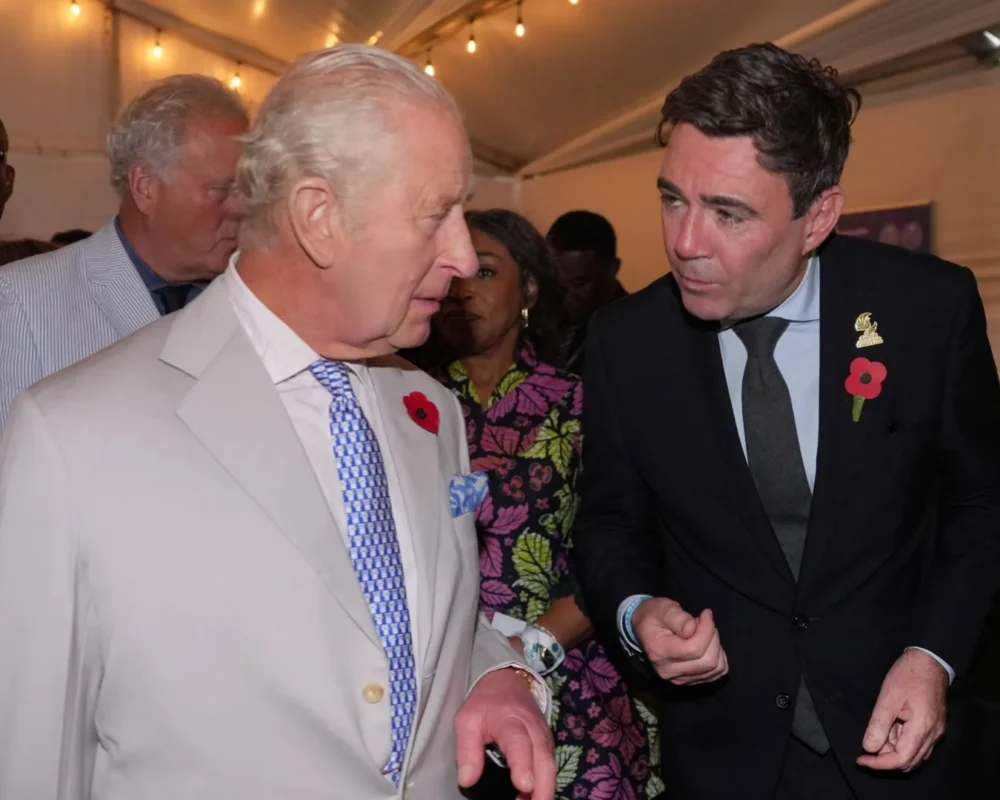
The Commonwealth is an anachronism in the 21st century – an imperial hangover that shows no signs of abatement but is instead getting worse. As King Charles addressed his subjects in Antigua and Barbuda ahead of this week’s Commonwealth Heads of Government meeting (CHOGM), our Prime Minister was throwing out statements about possible apologies and […]
The next assault upon economic logic to arrive in the bookshops is coming from Isabella Weber. The Guardian is already drooling over ‘Anti-Fascist Economics: In Defence of Affordability, Dignity and Democracy’ which means, obviously, that all proper-thinking residents of north London will be doing so as soon as they can. Weber is an economics professor […]
There are many phrases of Adam Smith that are well worth echoing today, and one of the most significant is this: ‘The end of all production is consumption.’ It is not to create jobs. The people who talk of new industries creating many new jobs are putting the cart before the horse. The aim of […]