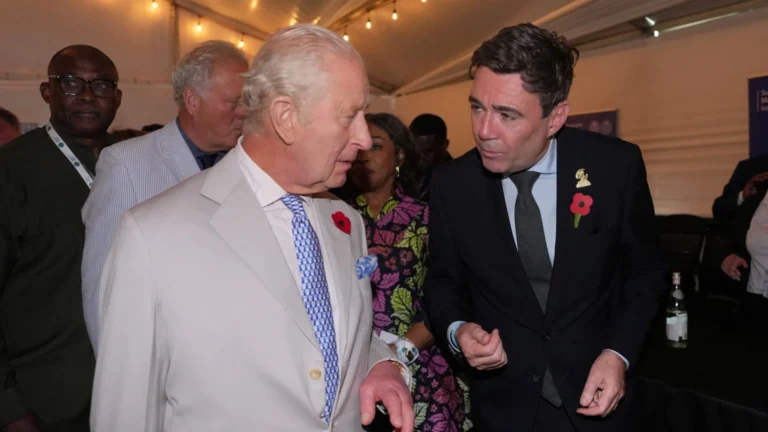
The Commonwealth is an anachronism in the 21st century – an imperial hangover that shows no signs of abatement but is instead getting worse. As King Charles addressed his subjects in Antigua and Barbuda ahead of this week’s Commonwealth Heads of Government meeting (CHOGM), our Prime Minister was throwing out statements about possible apologies and even reparations to atone for Britain’s involvement in the Atlantic slave trade.
Reader, let me declare upfront: there is no need for atonement. Britain was not unique in its practice of slavery; it certainly was unique in its efforts to end it. The Royal Navy’s West Africa Squadron was the manifestation of this. For nearly 60 years it patrolled Atlantic waters, freeing 150,000 slaves in its time while losing 1,600 men of its own. Beyond this, when Britain outlawed slavery throughout the Empire, it spent £20 million in compensation to get slave owners onside, representing 40% of the state budget and 5% of national GDP at the time. Taking the GDP figure, that would be akin to £150 billion today.
All this talk of reparations seems to be a cover for an attempted shakedown of the UK by its former colonies, especially those who’ve proven to be incapable of adequately governing themselves post-independence
Yet despite all this, the biennial CHOGM summit has once again taken on the tiresome quality of an extended family grievance fest over Britain’s role in the slave trade. Before the King’s visit to the Caribbean, the head of the Commonwealth, Shirley Botchwey, stated an apology ‘wouldn’t hurt’ – less of a polite suggestion than a thinly veiled insistence that this should happen.
For those who aren’t part of our handwringing, navel-gazing political class, one might wonder what the Commonwealth is for in today’s world. The organisation’s charter calls for the promotion of democracy, good governance and human rights, yet 43% of its members are classified as either partly or not free at all (Uganda, for instance, has had the same president for the last 40 years), while half rank below global benchmarks for both corruption and per capita GDP.
All this talk of reparations seems to be a cover for an attempted shakedown of the UK by its former colonies, especially those who’ve proven to be incapable of adequately governing themselves post-independence. Looking at the Government’s own numbers, the UK is providing more than £373m in aid to 33 Commonwealth countries, with the vast bulk going to Africa (the Caribbean receives a rather miserly £3.7m in comparison, with some countries not eligible at all for aid, which might explain the calls for reparations).
Then there is the fact that the UK takes the Commonwealth far more seriously than the rest of its constituent members do. Commonwealth citizens are eligible to vote in UK elections, a privilege only 12 countries reciprocate (nearly all of them in the Caribbean except, ironically, Mauritius).
They are also eligible to join the UK Civil Service, while other members reserve this right exclusively for their own citizens. Much as some might stress the royal connection, only 15 members still retain Charles III as their sovereign while, excepting a handful of other monarchies, the rest are republics. If most of these nations were eager to see the back of the monarchy and British rule, it’s questionable as to why their citizens are permitted to help run the apparatus of the British state.
Then there was the starry-eyed thinking behind the so-called Boriswave, which swapped freedom of movement with the EU for an influx of citizens primarily from Commonwealth nations, with India, Pakistan and Nigeria forming the largest cohorts of new immigrants.
So where to from here? Apologies or agreements for any form of compensation, which seems to be the Burnham playbook, will only turbocharge the whines for money, not abate them.
Instead, the UK should tell those nations asking for reparations that such payments will not be forthcoming. It should also insist that more of the Commonwealth’s members uphold the values in its charter.
And we should go further: scaling back our commitment to the Commonwealth by limiting eligibility to vote in domestic elections and restricting the right to join the Civil Service to citizens from Commonwealth realms who retain the monarch. This would serve both to reward those nations who wish to maintain historical links to the UK and discourage republican sentiments within them.
Stay informed with our free daily briefing.
In the long run, the UK should foster closer relations with the Anglosphere outside of the United States: Australia, Canada and New Zealand – all members of the original Commonwealth. All three of these countries uphold the same values as the UK, have close and historical familial links and have some of the highest living standards in the world. This isn’t a call for CANZUK – as fully sovereign countries, each has its own interests that will ultimately preclude any formal union – but the opportunity for deeper cooperation between this quartet is very real, as the AUKUS defence pact and the UK’s recent trade deals with Australia and New Zealand attest.
In a more uncertain world, the UK needs to be agile and realistic about its own interests. The Commonwealth, sensible as it was for a previous time, is an albatross around the country’s neck. If it cannot be reformed, we should withdraw – and focus on our real friends.
Sean Ridley is Energy and Environment Researcher at the Centre for Policy Studies.
More Foreign Policy
30 Oct 2026
Foreign Policy
Ted Grainger
Labour’s food tariffs are bananas
Good news everyone. The Government has conceded the war on free trade. The Chancellor has seen the light and announced a package of tariff removals and extensions with the explicit aim of reducing household costs. That’s the good news. The bad news is that the package announced is pitiful. It should be celebrated that you […]
28 Oct 2026
Economics
Ryan Bourne
Is Britain really a MoneySavingExpert economy?
Ed Conway is a great economic commentator. Yet even the best of us err. In a long essay for the New Statesman, the Sky News economics and data editor recently argued that Britain runs on what he calls the ‘MoneySavingExpert model’. ‘The country’s guiding principle,’ Conway wrote, ‘from the Thatcher years to the Blair ones […]
Popular
22 Oct 2026
Energy & Environment
James Price
Britain is heading for blackouts
A quick show of hands. How many of you have a working torch in the kitchen drawer, and not just on your phone? Candles, matches or a working pack of AA batteries? What about a week’s worth of tinned food, a camping stove, a full jerry can? A generator? Most readers will have answered no […]
Manage Consent
To provide the best experiences, we use technologies like cookies to store and/or access device information. Consenting to these technologies will allow us to process data such as browsing behavior or unique IDs on this site. Not consenting or withdrawing consent, may adversely affect certain features and functions.
Functional Always active
The technical storage or access is strictly necessary for the legitimate purpose of enabling the use of a specific service explicitly requested by the subscriber or user, or for the sole purpose of carrying out the transmission of a communication over an electronic communications network.
Preferences
The technical storage or access is necessary for the legitimate purpose of storing preferences that are not requested by the subscriber or user.
Statistics
The technical storage or access that is used exclusively for statistical purposes.The technical storage or access that is used exclusively for anonymous statistical purposes. Without a subpoena, voluntary compliance on the part of your Internet Service Provider, or additional records from a third party, information stored or retrieved for this purpose alone cannot usually be used to identify you.
Marketing
The technical storage or access is required to create user profiles to send advertising, or to track the user on a website or across several websites for similar marketing purposes.