Scrap the windfall tax on oil and gas
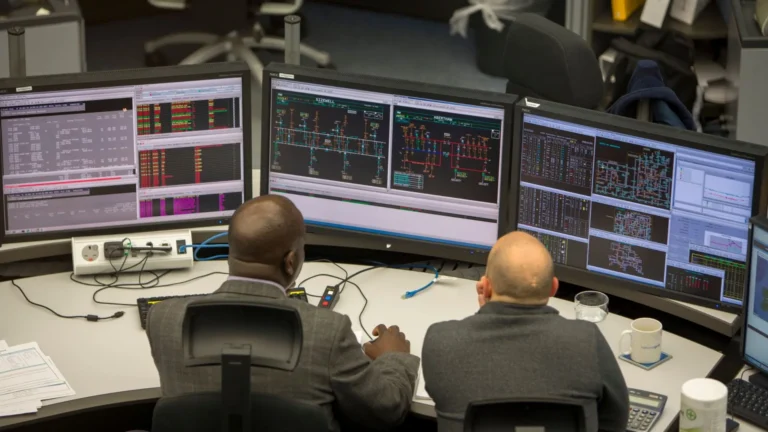
National Grid electricity control room – Andrew Aitchison / In pictures via Getty Images
The long-overdue decision to approve the Jackdaw gas field has finally been taken. We are still waiting on a green light for the Rosebank oil field, but the small print in the Budget documents suggests that its approval will not be far behind.
But we cannot treat Jackdaw, Rosebank or the wider North Sea as a silver bullet for the UK’s energy woes. New oil and gas extraction will bolster our tax receipts and energy supply by increasing domestic production, but to get a grip on spiralling energy bills and ensure real, long-term energy security, we need to have a wider conversation about what else needs to be done.
Formally ditching Ed Miliband’s arbitrary and counterproductive 2030 target to decarbonise the power sector would be a welcome recognition that it is inflating energy bills
This means recognising where the high costs are coming from, understanding why approving Jackdaw, although welcome, does not fix all our energy problems, and acknowledging that many more changes are needed.
Firstly, the system of levies on energy bills has led to ever more schemes and subsidies being added to what consumers pay, rather than coming out of general taxation. While each individual item may only add a small amount, collectively they make our power more expensive than it needs to be. The Chancellor announced during the Budget that no new levies would be added to bills until a new ‘Cost Control Framework’ is in place. But this won’t come until next year’s Spending Review, leaving billpayers continuing to suffer while the Government makes up its mind on the specifics.
And although the Government has promised to focus on bills, so far we have seen too little movement on actually cutting them. Ed Miliband’s 2030 Clean Power Target, which seems to just about be clinging on, means that a slew of renewables projects, that are far more costly to billpayers than they needed to be, have been approved. Yes, we need more domestic energy, but this must be coupled with affordability, and it is incredibly frustrating to see the cost-saving benefits of renewables be undermined like this.
Additionally, our outdated energy grid is overstretched, undermining both cost and security.
When domestic energy generators are producing energy, they are often told to turn off because the grid cannot cope, at the expense of the billpayers. Moreover, whether it is the rise of AI or the growing need for air conditioning to tackle heatwaves, electricity consumption is going to go up.
Finally, and most obviously, the invasion of Ukraine and the blockade of the Strait of Hormuz have caused the price of both oil and gas to skyrocket, hitting households and businesses hard.
This leaves us with the decisions to approve Jackdaw and Rosebank. New drilling obviously won’t fix an outdated grid. It also won’t bring down the cost of energy, as new gas will likely have a negligible impact on prices in the UK because the amount that can be extracted is so little in the context of the European market.
However, it will help short-term energy security, bolstering our supplies at a time of global instability. But long term, North Sea oil and gas will continue to decline. So although Jackdaw – along with Rosebank and other potential new licences – will help in the short term, we must not expect North Sea oil and gas to keep riding in to save the day for evermore.
So that means we need to think bigger and be quicker.
Formally ditching Ed Miliband’s arbitrary and counterproductive 2030 target to decarbonise the power sector would be a welcome recognition that it is inflating energy bills. The Government would also cut costs for consumers significantly by doubling down on shifting green levies on bills over to general taxation, where they should have been all along.
We should also urgently scrap the windfall tax on oil and gas, the Energy Profits Levy. We do still need oil and gas, and it makes sense to utilise the North Sea basin as long as it is viable. At a time when we need more investment in all forms of energy, ditching this tax makes sense.
This is better for tackling climate change too. Cutting the cost of all electricity would make the shift to clean technologies like EVs and air conditioning units far cheaper. This in the long run, is how we will decarbonise, grow the economy, and protect British households against rising temperatures.
All this speaks to the need for a new approach on energy: one that both fights climate change and cuts costs for British consumers and businesses; one that realises that cutting taxes and streamlining red tape to incentivise investment is far more effective than relying on bans and subsidies.
We should start with an honest assessment of what has worked and what has not. We should appreciate the advantages that Rosebank and Jackdaw will bring, but accept their limitations. And we should work towards a wider market-led approach to cut bills and boost energy security, all while seriously tackling climate change.

Ambitions to get our economy growing require an equal determination to address the barriers that hold it back. This summer, half of England was reported to be in serious drought for the second year running, and the Environment Agency warns of severe consequences for the economy, environment and wildlife if conditions do not improve. There’s […]
This week it seems that another Net Zero domino will fall. The Government is reported to be on the point of announcing that the Zero Emission Vehicle (ZEV) mandate, which lays down targets for the sale of new cars, will be watered down. This follows a consultation launched in August. At present, manufacturers are under […]
Ed Conway is a great economic commentator. Yet even the best of us err. In a long essay for the New Statesman, the Sky News economics and data editor recently argued that Britain runs on what he calls the ‘MoneySavingExpert model’. ‘The country’s guiding principle,’ Conway wrote, ‘from the Thatcher years to the Blair ones […]