Don’t swap Britain’s growth for EU food rules
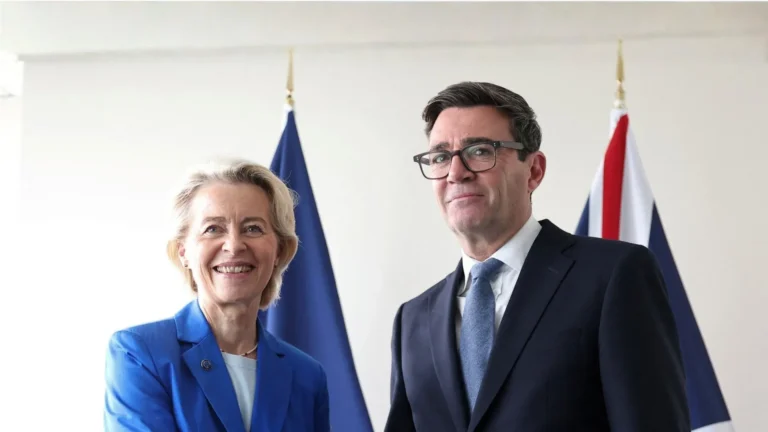
Toby Melville - WPA Pool/Getty Images
The UK-EU relationship must be viewed through the lens of the battle for the world’s operating system.
There are three operating systems in the world. The first is a competition on the merits system where countries are free to engage in regulatory competition but inter-operate on the basis of mutual recognition and equivalence. This historically has been the Western System. It underpins the rules of the WTO, and is hardwired into agreements like CPTPP and the Australia-New Zealand Trans-Tasman Mutual Recognition Agreement. In its early days, it even underpinned the EU’s single market.
The second system is what the EU has morphed into. It relies on limiting competition by distorting its market through a very precautionary approach to regulation and then seeks to impose that regulatory system on the rest of the world through the Brussels Effect. Such a system needs harmonisation for market access because without it European business simply cannot compete globally.
The third system is the Chinese system, one which includes a top down regulatory system based on a state-led economic system replete with anti-competitive market distortions that destroy wealth out of both the Chinese economy and its partners. President Xi has advocated for the Chinese System to become the system of countries where China is making large investments, Latin America, Africa and Asia.
The choices the UK makes matter enormously in this context – it could move from the traditional Western System to the European System at great cost not only to itself, but to its trading partners, and ultimately to the global economy. Because the UK is a big economy, its choices have wider implications for the world than just for itself.
The test of a trade agreement is what it does to prosperity across the economy
While the PM has moved the conversation onto the UK’s long-term relationship with the EU, there is a more immediate milestone coming up that holds more short-term significance. The UK-EU summit expected around November 20 presents a clear and present danger to UK economic growth. The agrifood and emissions trading scheme dynamic alignment proposals could lock the UK into slow growth regulatory systems, and cause major concerns for our non-EU trading partners, including potential retaliation.
Ministers could return with fewer border checks and warmer diplomatic language, while committing the country to rules that make it harder to innovate, attract investment and trade globally. The photographs will record a diplomatic success. Households will live with the economic consequences.
There is a good case for improving our relationship with the EU. Exporters face costly paperwork; unnecessary barriers damage businesses on both sides. But the test of a trade agreement is what it does to prosperity across the economy. But counting certificates removed at Dover tells us little about opportunities lost in laboratories, factories and negotiations with other trading partners.
My work on anti-competitive market distortions starts from that wider perspective. Open trade, competition within domestic markets and secure property rights reinforce one another. A policy that improves access to one market can still leave us poorer if it obstructs competition at home or commerce elsewhere. That is the central economic danger of the reset.
Consider the proposed sanitary and phytosanitary (SPS) agreement, covering food, animals and plants. Its scope extends into pesticides, organics and marketing standards. Under the published framework, Britain would follow relevant EU rules as they change, subject to limited exceptions. This reaches into production and consumption in Great Britain, including businesses that sell nothing to Europe.
The Food Standards Agency has now made the implications unmistakable. Its September board paper says that, under the planned agreement, GB authorisations would cease to apply and businesses would need EU authorisation to market regulated food and feed products here, subject to very limited exceptions. An innovator could satisfy British regulators and still lose the domestic route to market on which its investment depended.
The same paper considers permitting EU-authorised products before the agreement takes effect. That illustrates a choice ministers should examine much more seriously: Britain can recognise another jurisdiction’s approvals while retaining its own. Why make recognition conditional on surrendering our capacity to approve products independently? Opening our market to safe products should expand the choices available to consumers and producers. We have adopted unilateral recognition of EU standards and requirements in medicines (and for that matter included the US and Japan). So if we can do this for medicines, why not for agrifood as well? This would not require us to become part of the EU’s SPS zone.
These decisions matter to household budgets. Rules that unnecessarily obstruct new agricultural technologies, crop protection or competing suppliers can raise production costs and weaken productivity. Farmers need effective safeguards alongside access to innovation. Consumers need affordable food. Automatically importing future restrictions prevents Britain from deciding whether a different, scientifically justified approach would achieve those objectives more effectively.
The Growth Commission, which I chair, has estimated a £15 billion GDP loss from SPS alignment. Our published evidence includes the benefits of easier EU trade but also counts opportunities for domestic regulatory reform that alignment would foreclose. Ministers should answer that analysis with a transparent assessment of the same costs and opportunities.
The international consequences are equally serious. Trade agreements depend on what countries permit into their markets as well as the tariffs they charge. Britain can offer Australia or New Zealand a tariff concession, but its value diminishes if regulatory conditions obstruct the products concerned. Alignment could therefore erode the commercial value of our Pacific partnerships and constrain future bargains with India and other markets.
Washington also has longstanding objections to aspects of European agricultural regulation. Its latest trade policy report records a broad coalition of countries challenging EU pesticide policies. Adopting those restrictions would give our partners reasons to direct their objections towards Britain too. Ministers must assess how that could affect wider negotiations, including the interests of British pharmaceutical and automotive exporters. A concession in one sector can carry costs elsewhere.
There is also a democratic price. The proposed arrangements give Britain opportunities to comment on developing EU rules, without a vote in the institutions adopting them. The Court of Justice would remain the ultimate authority on EU law within the SPS arbitration framework. Parliament could debate the consequences, but changing the rules would risk breaching the agreement. That is a substantial restriction on future governments’ choices. In practice as with other areas of EU rule-making, and as has even been applied to countries that are single market members only (such as Norway, Iceland and Liechtenstein) we would end up being a rule taker – a fact that the Prime Minister has recently noted.
Energy deserves the same scrutiny. The EU’s March negotiating mandate envisages dynamic alignment for participation in its electricity market, alongside a permanent mechanism for British contributions to EU cohesion funding. Better electricity trading may bring benefits. Those benefits must be weighed against payments and restrictions on energy reform, particularly when industrial competitiveness depends on affordable power. This is not cooperation, it is, again rule taking. We would be locking into the very set of rules that has caused de-industrialisation in Europe and a staggering energy cost in the UK.
A better approach has been available throughout this debate. Britain should seek equivalence where different rules deliver comparable protection, backed by enforceable commitments and proportionate safeguards. The EU’s veterinary agreement with New Zealand demonstrates that recognition can facilitate trade without wholesale adoption of EU law. Digital customs, trusted traders and better sharing of information can also reduce costs. Securing European agreement will require serious negotiation; these measures cannot promise the disappearance of every check. But it is incumbent on UK negotiators to at least ask for what they need, and allow other forces (such as all the countries that object to the EU’s SPS rules – a long and growing list) to help us secure a different approach.
Britain should use its position as a major customer for European food exporters. Their commercial interest in maintaining access to our market gives both sides a reason to negotiate practical solutions before accepting regulatory dependence as the inevitable price.
Before November’s summit, ministers should publish the proposed obligations and an assessment covering EU access, non-EU trade and domestic reform. Parliament should see precisely which future laws Britain must accept, the available exceptions, financial contributions and the consequences of withdrawal. Businesses need to understand whether today’s promised simplification could invalidate tomorrow’s investment.
Britain should arrive ready to cooperate on defence, supply chains and security, with clear limits on commitments to follow rules it cannot control. It should be guided by the need to preserve its independent trade policy and domestic regulatory autonomy. The Government must also explain how the reset preserves space for a competitive British technology sector. The freedom to improve policy has economic value only when governments use it. Having failed to exploit that freedom fully, we should be especially wary of signing it away. The November summit should expand Britain’s opportunities. An agreement that narrows them for the sake of a successful announcement would leave the country paying long after the applause ends.
As my Growth Commission noted in its recent Budget, the UK could, if it adopted the right set of policy prescriptions, emerge as the world’s fourth largest economy in ten years. All is not lost for the UK, and it is not destined for de-industrialisation and stagflation. But its choices will determine not only its fate, but that of the globe.

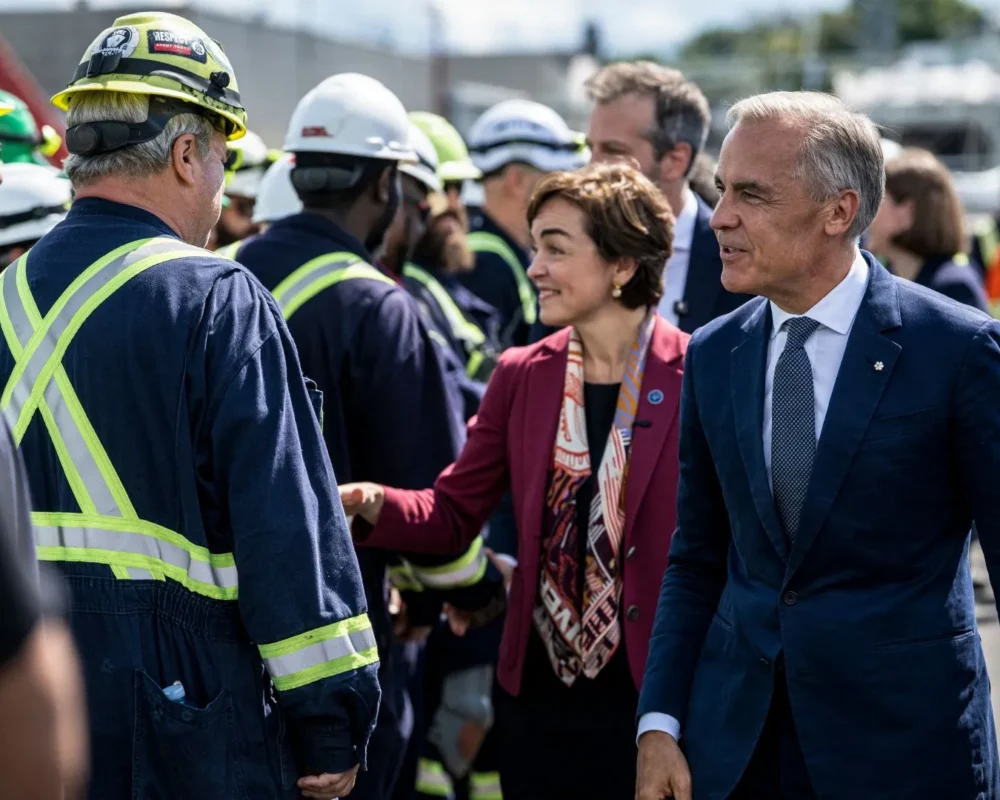
Late on August 28, trade talks between Canada and the United States broke down, an escalation in the trade war that the Trump administration began with Canada in early 2025. This escalation isn’t because Canadians favour tariffs as much as the US president, but because they refuse to quietly acquiesce to American demands. It might […]
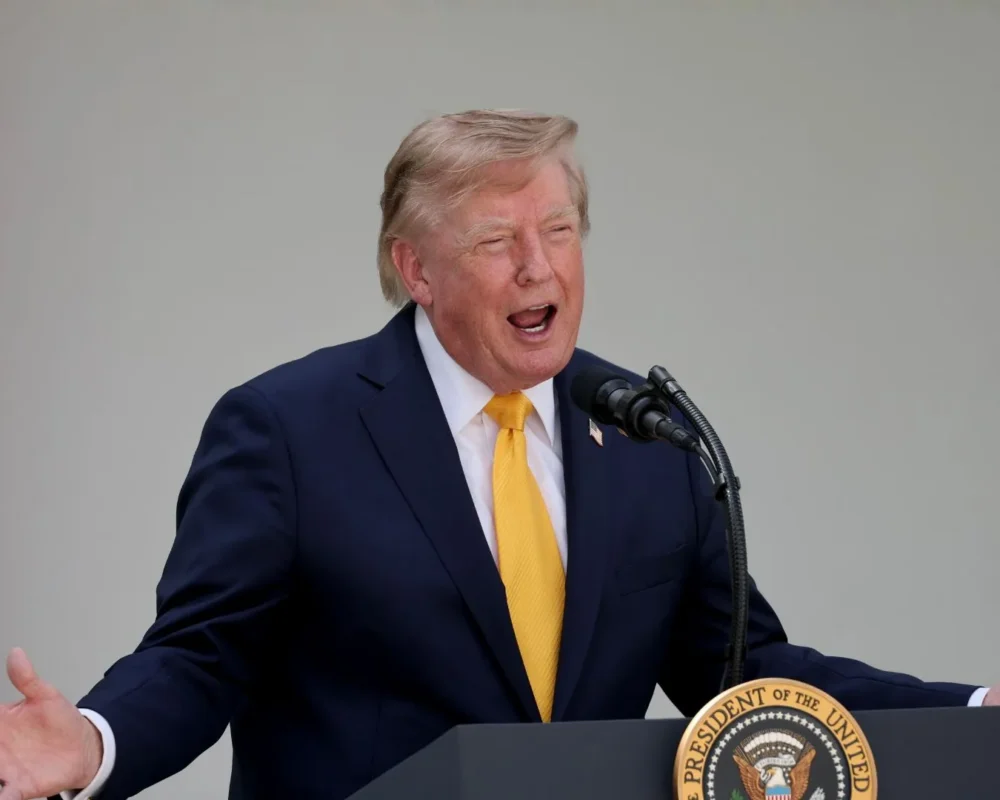
President Trump’s imposition of ‘economic D-Day’ against Iran – a series of sanctions against any nation dealing financially with Iran, as well as banks and businesses – has already been dismissed by the usual suspects whose knee jerk response is always to attack any new measures against the Tehran regime. When it comes to Iran, […]

Here’s a fun fact for you: Ireland, a country of just over 5 million people, is one of the top five largest exporters of pharmaceuticals on the planet. Ireland’s exports are estimated around 100 billion euros, with 19 of the top 20 pharmaceutical companies having a significant footprint employing roughly 50,000 people. This has translated […]