AI is the final blow for Mickey Mouse degrees

12 November 2026
Ian Forsyth/Getty Images
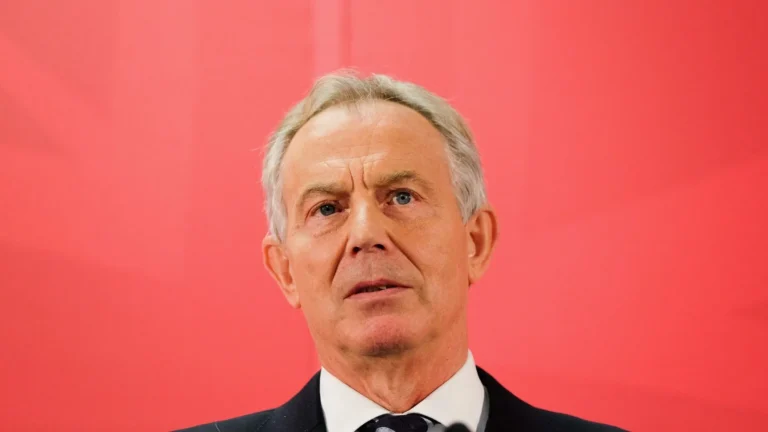
Ever since Tony Blair set his ambition for 50% of young adults to enter higher education, successive governments have promoted university as the route to prosperity. The result is a bloated, expensive sector that has spent decades expanding on the assumption that more students, more degrees and more universities must somehow be a good thing.
But more than four in 10 higher education institutions in England expect to run a financial deficit this year. According to the Office for Students, 42.7% of providers expect to be in the red in 2025/26. And with artificial intelligence threatening to undermine the very foundations of traditional university education, the financial carnage may only just be beginning.
With AI turning the graduate jobs market upside down, persuading students to spend three years and tens of thousands of pounds on a degree is becoming a bloody hard sell
For years, universities have relied on overseas students paying considerably higher fees to prop up their finances and subsidise domestic students. Now that the numbers are falling, the financial ramifications are becoming painfully clear.
And all this is happening before AI has properly got started.
Research published by the Institute for Fiscal Studies in June found that a quarter of graduates can expect to be financially worse off over their working lives than if they had never attended university. Some creative arts, philosophy and languages courses offer particularly miserable returns. A rather awkward detail when AI is threatening to make some of today’s graduate jobs redundant.
And the jobs market is hardly overflowing with opportunities. A June study by LinkedIn and the Department for Science, Innovation and Technology found that UK hiring fell 14% in the year to April, with 30 of 38 entry-level occupations reporting declines. For example, recruitment of accountants fell 29%, graphic designers 28%, software engineers 27% and data analysts 15%. AI cannot be blamed for all of this, obviously. Britain’s appallingly anaemic growth of the last two decades and a Government determined to make hiring young people as expensive as possible have done more than their fair share of self-harm. But anyone who believes AI won’t have a profound effect on graduate employment is kidding themselves. If you’re an 18-year-old contemplating £30,000 in tuition fees for a career that might be done by AI before you’ve finished your degree, you’d be forgiven for wondering whether university is quite the investment you were promised.
Businesses, meanwhile, are wasting little time getting to grips with AI. According to the Office for National Statistics, adoption among firms employing at least 10 people has almost trebled, from 12% in 2023 to 35% in June 2026. In information and communications, it’s already 58%. Whatever universities might think, the world of work isn’t waiting for them to catch up. So, universities can continue to keep their heads in the sand, charging as though nothing has changed, with tuition fees in England £9,790 this academic year, rising to £10,050 next year. Or they can evolve.
AI is already threatening to demolish the economics of university education. Today’s models can explain complex subjects, provide personalised tuition, test understanding and tailor lessons to individual students, all at a fraction of the cost of conventional teaching.
Of course, serious universities still have plenty to offer, from world-class research and professional qualifications to intellectual development, critical thinking and the social experience of campus life. But with AI turning the graduate jobs market upside down, persuading students to spend three years and tens of thousands of pounds on a degree is becoming a bloody hard sell. Students are starting to question whether the university experience justifies the eye-watering price tag, and universities can hardly afford for too many of them to decide it doesn’t.
Expect mergers, campus closures and universities going bust. Some will adapt, specialise and prosper, but plenty of others will discover that the graduate gravy train has finally hit the buffers. Frankly, how many tears will be shed over the demise of the Mickey Mouse degree?
Naturally, the demands for bailouts will be deafening. Vice-chancellors will warn of economic devastation, local politicians will demand intervention and ministers will be told that allowing a university to fail is somehow an act of national vandalism.
Students caught up in closures should be protected and allowed to complete their studies elsewhere, but taxpayers should not be expected to bankroll failed institutions indefinitely. Businesses disappear when customers find better or cheaper alternatives, and universities should face precisely the same commercial discipline.
The idea that higher education deserves permanent protection from market forces is economic nonsense, particularly when so many institutions have spent years demonstrating such a spectacular inability to manage their own finances.
The IFS estimates that around four in 10 degrees generate a negative net fiscal return for the Exchequer. We are already subsidising courses whose additional tax revenues fail to cover their public cost, so quite why this should entitle universities to even more money is anyone’s guess.
Politicians need to accept the Blair-era experiment of mass university education has run its course. AI could administer the final blow to institutions that have spent decades expanding their costs and inflating the price of their qualifications.
Universities have spent decades teaching economics while apparently believing its most basic principles don’t apply to them. They’re about to receive a rather expensive lesson.

Andy Burnham is set to make the same mistake that led to the ruin of Keir Starmer: lack of a domestic agenda, other than pushing the proverbial peas around the plate on energy bills, bus fares and the like, paired – like a bottle of plonk – with ambiguous statements on the big public issues. […]
Reports earlier this week suggested that there have been ‘robust cabinet discussions’ over the Government’s approach to AI. The Financial Times reports that those discussions have yielded seven core principles, signed off but not yet published, including that ‘control and sovereignty matter’ and ‘infrastructure must serve a national purpose and deliver for communities’. Missing from […]

Britain is looking for the effects of artificial intelligence in all the obvious places: redundancies, vacancies and unemployment numbers. So far, there is little evidence of dramatic change in overall headcount. The Office for National Statistics reports that most British businesses using AI have not changed the size of their workforce, even as AI adoption […]