The Price Mechanism
Why is Britain losing its millionaires?

30 July 2026
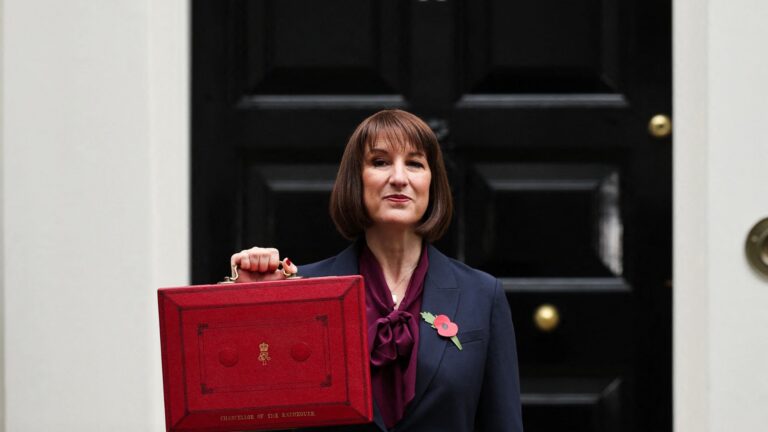
Adrian Dennis/AFP via Getty Images
The Roman historian Livy can claim to have invented an entire genre. Midway through his vast History of Rome, he breaks off from the narrative to ask a question nobody had thought to put in print before: what would have happened had Alexander the Great turned his armies west and marched on Italy? It is the first exercise in counterfactual history, and while debated, I think it is a tremendously useful analytical tool to assess the impact of events, compared to potential alternatives (as well as being great fun to contemplate).
I thought of Livy this week, as the wonderful wonks at the Adam Smith Institute updated their Millionaire Tracker. As of 2025, Britain has an estimated 442,000 sterling millionaires (measured in constant prices across all assets, pensions and property included), the fewest since the financial crisis, and down 7% since 2024. Some are simply poorer, thanks to higher rates and falling real asset values; others have left for friendlier tax regimes. Reading this, I thought of Livy’s counterfactual, and how different Britain would be if we hadn’t taken this path.
Instead of a boom, we have fewer millionaires, with all that comes with that – less tax revenue, less investment and less entrepreneurship
Imagine that in October 2024, Rachel Reeves had stood at the despatch box and declared Britain open for wealth. Inheritance tax, one of the most punitive in the OECD (only France is greedier in Europe), abolished. Capital gains tax cut, rather than hiked after months of anonymous briefings suggesting that it could go even higher. The non-dom regime brought back and made even more attractive, rather than scrapped.
What would that Britain look like today? Family offices leasing floors in Mayfair rather than the Dubai International Financial Centre. Founders with capital from selling their companies seeding the next generation of British ones, rather than taking a Portuguese golden visa or shipping their belongings to Milan.
We would see cranes over every city, charitable endowments flowing into universities, hospital wings named after glorified benefactors.
The top 1% of earners already pay 29.1% of all income tax; in counterfactual Britain there would be more of them, not fewer, and the receipts would fund the NHS and rearmament without a single extra penny taken from working people.
This isn’t a hypothetical boom, it’s just happening elsewhere. Dubai’s millionaire population has doubled in a decade – up 102% – and Henley & Partners recorded a net inflow of nearly 10,000 millionaires relocating there in a single year.
Look at what Britain has – the common law, the English language, our schools and universities, our time zone, the City of London, our amazing cultural and social hinterland. We still have everything going for us, apart from the terrible policies holding us back.
Instead of the boom above, we ran the experiment in reverse. Non-dom status abolished, inheritance tax extended to farms and pensions, capital gains rates hiked with threats of worse to come, and a public culture that treats wealth as toxic waste to be destroyed wherever possible.
And so instead of a boom, we have fewer millionaires, with all that comes with that – less tax revenue, less investment and less entrepreneurship. As Robert Jenrick put it in response to the Tracker, ‘We can’t build an economy on envy.’
There will be those who cheer. ‘Good riddance to the rich,’ they say, as though Britain’s millionaires were all oligarchs idling on superyachts. They are not. They are business owners who employ people, doctors with full pension pots, couples in family homes bought decades ago. And every person who leaves represents a tax burden that must now be met by someone who stayed.
The ASI’s prescriptions are hardly revolutionary: abolish inheritance tax, cut capital gains tax and subject our treatment of internationally mobile wealth to an honest competitiveness audit. The only radicalism on display is the Government’s, in testing to destruction the theory that you can soak a tax base that has wings.
Livy concluded that Rome would have seen off Alexander because Rome was always greater than any one man. Her strength lay in institutions that endured. So, still, does ours. But while Alexander never did march west, today our wealth-creators really are fleeing in the face of an even more destructive force: socialist economics.
Don’t dwell too long on the counterfactual – you’ll only mourn the Britain that might have been. With the right policies, there’s still time to build it.


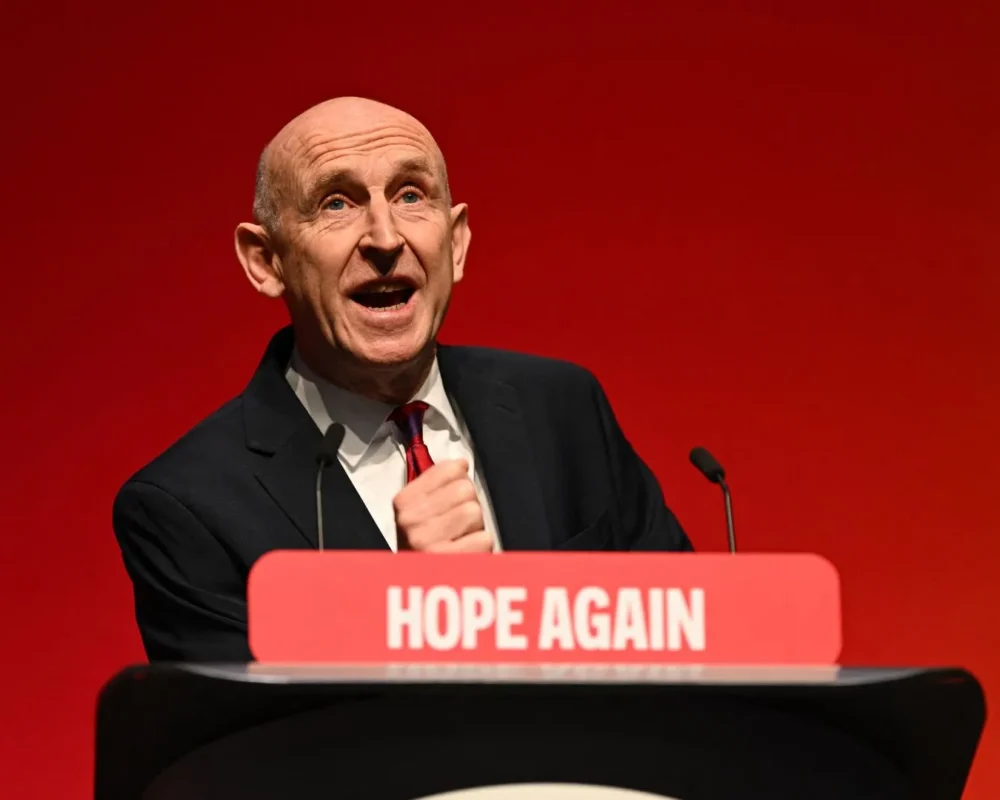
Andy Burnham used the Labour Party conference in Liverpool this week to commit the Government to a National Care Service, universal and free at the point of use, while promising to ‘stick to our fiscal rules to get borrowing and debt down’. The service is due in the next Parliament and is supposed to be […]
A year ago I ended the Growth Commission’s annual Growth Budget with the prediction that if the then Chancellor Rachel Reeves continued with her policy of tax and spend, she – or more likely her successor – would be back in a year’s time asking for more. So the Government can’t say that they weren’t […]

Earlier this month, the Government announced it would pause its wide-ranging plans for Local Government Reorganisation (LGR), which would have redrawn local council and parish boundaries and overhauled a system that has been in place for centuries. As focus shifts to Andy Burnham’s less wordy – but no less ambitious – plans for devolution, England’s […]