Why are the Greens campaigning against invented forms of poverty?

Photo: Christopher Furlong/Getty Images
Amid some brief research about the new MP for Gorton and Denton, Hannah Spencer, I came across her campaign against a boutique poverty measure I hadn’t previously been aware of: ‘furniture poverty’.
The campaign ‘End Furniture Poverty’ defines someone in furniture poverty as being unable to access or afford furniture or appliances that are ‘essential to achieve a socially acceptable standard of living’. The list of what’s needed includes beds, sofas, wardrobes, carpets and curtains, but also things like washing machines, fridges, cookers and, yes, a TV. The campaign says 26% of social housing tenants are in furniture poverty; 8% are in ‘deep furniture poverty’, And to solve it, it wants taxpayers to stump up for furnishing more social housing and higher benefit levels in general.
This methodology is now standard fare among anti-poverty charities. You take the old workhouse noun ‘poverty’, bolt a spending category in front of it, and declare a new affliction which society (read: taxpayers through government) must deal with. We’ve seen ‘food poverty’, ‘fuel poverty’, and now ‘furniture poverty’. But why stop there? One could imagine ‘car poverty’, ‘clothes poverty’ and ‘cutlery poverty’ if we want to explore a new first letter. Or what about sub-components of furniture? Perhaps ‘futon poverty’, ‘ottoman insecurity’ or ‘coffee-table precarity’.
There’s a serious point behind the facetiousness. The campaign considered anyone reporting they needed a furnishing but couldn’t afford it or otherwise obtain it to be living in furniture poverty. But what does ‘need’ really mean? Money is entirely fungible. Households do not receive neat little envelopes marked ‘for beds’, ‘for carpets’ and ‘for drapes’. Except in truly extreme cases of deprivation, the collection of furniture inside someone’s home today will reflect multitudes of spending decisions made up to that point. In isolation, the contents of their home tell us little to nothing about their real, underlying poverty status.
I’ve seen rich men living in luxury city apartment blocks with sofas looking like they have been rescued from a ‘90s pub lock-in, alongside floor mattresses for beds. Those people were not in poverty, given their propensity for expensive travel and partying. Likewise, the poorer families examined in this campaign surely can’t be judged by this metric alone either.
One poor household might make sure the children have decent beds, a sturdy table and a serviceable sofa because those things matter more to them than new clothes or light entertainment. Another parent might make the opposite choice and have a massive TV on the wall and tickets to the local football club every now and then, because that is what they value most. They might both technically want more furniture that they cannot afford after those decisions. But different human beings have different revealed preferences.
Indeed, the campaign’s own literature quietly concedes that a fixed essentials list wrongly assumes all households have the same needs. A dining table and chairs might be essential for a family with children, but not a single adult. Yet once you admit different households rationally prioritise different things, you are admitting the lack of insight the measure delivers.
The more you read, the clearer it becomes that these metrics are just extremely imperfect reflections of real poverty: things like low income, unstable housing and cash-flow constraints. These afflictions may mean people can’t afford all the furniture that others might expect a typical family would want. But that’s not evidence of a newly discovered pathology called Furniture Poverty. That is just poverty, plus the perfectly obvious fact that a sofa is a lower priority than groceries, fuel or rent for most.
These types of measures also tend to go beyond what most people accept as poverty too. Who determines what is ‘socially acceptable?’ In this campaign, a TV is included because the aim is a ‘normal’ standard of living, including the ability to take part in ‘social and societal norms’. But once we aim for what’s normal, is it not inevitable that this poverty metric will just reflect the tastes of the median British household, one that is not in poverty? This relative measure, then, quickly becomes less about real deprivation and more a debate about the average British taste for soft furnishings.
Why spend so much time critiquing a poverty metric I’d never heard of until this week? In part because this fallacy of decomposition is increasingly common in economics reporting. You see it when inflation commentary talks about how a few individual price changes are burdening families, ignoring what’s happening to the overall basket of goods. And you see it in tax policy too, where progressives judge the wisdom of any individual change based on its redistributive effect, when what should matter to an egalitarian is the degree of redistribution in the overall tax-and-benefit system.
The answer to poor households lacking basic household items is not to keep slicing poverty into ever more theatrical subcategories. It is the boring agenda of trying to generate higher incomes through productive growth, allowing the building of enough housing, and letting markets work their magic in delivering cheap food, clothes and other essentials. Once you start treating items in the IKEA catalogue as the basis for intervention, politics stops being about alleviating real hardship and starts becoming a subjective discussion of what makes a house a home.


‘A Waiter in Paris’ is the story of a young Englishman who graduated from a good university in London with a humanities degree, trained and educated for a world that no longer exists. ‘All while I applied for other, more “prestigious” jobs. Jobs that didn’t appear to exist anymore.’ That’s how Edward Chisholm puts it […]
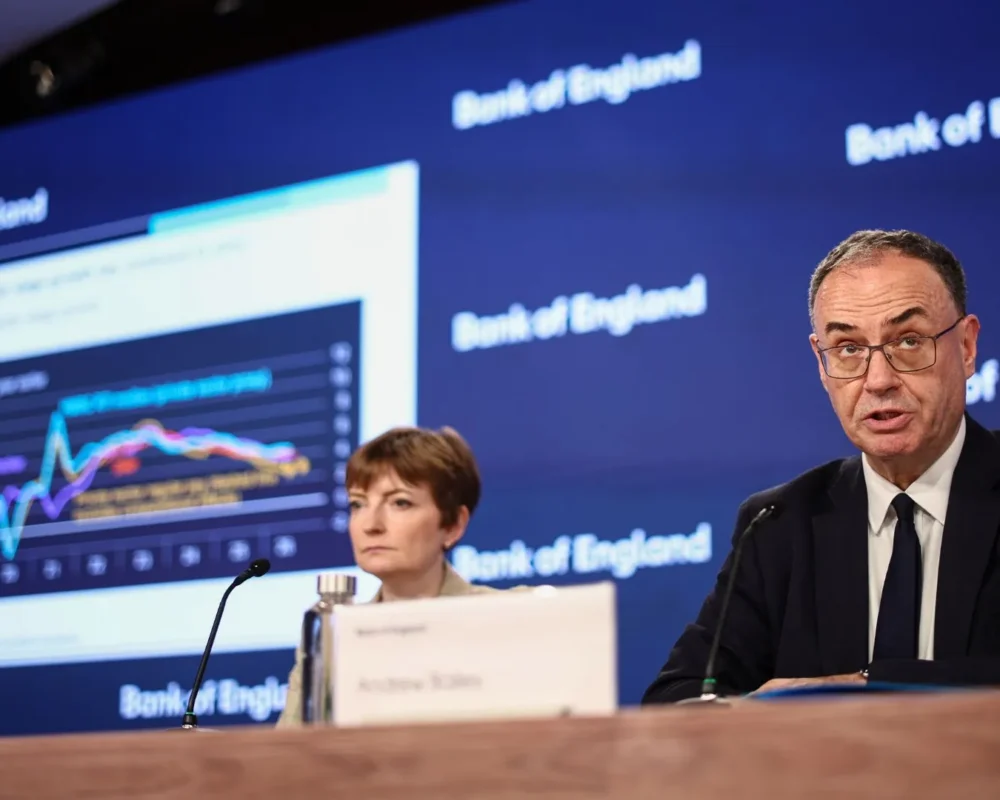
Few people enjoy gazing into the crystal ball more than economists. Attempting to divine the future, otherwise known as forecasting, is a numerically intensive pastime of many people in the profession. It is also a common mandate of many state institutions. For instance, the Office for Budget Responsibility (OBR) produces aggregate forecasts of government receipts, […]
Andy Burnham may have stumbled on the most effective way yet of prolonging Britain’s managed decline: make people feel that something fundamental has changed when much of the machinery underneath has not. His first speech as Prime Minister was full of ‘common purpose and positivity’, getting Britain to ‘start to believe again’ and ‘bringing back […]