What’s going wrong with Britain’s economic forecasts?
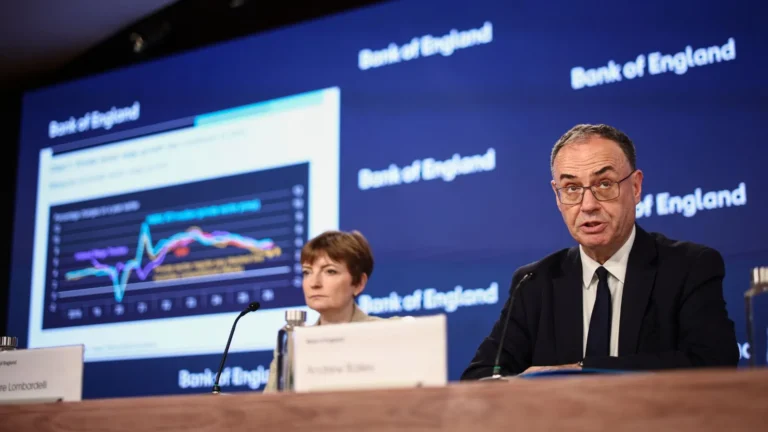
Henry Nicholls - WPA Pool/Getty Images
Few people enjoy gazing into the crystal ball more than economists. Attempting to divine the future, otherwise known as forecasting, is a numerically intensive pastime of many people in the profession. It is also a common mandate of many state institutions.
For instance, the Office for Budget Responsibility (OBR) produces aggregate forecasts of government receipts, spending, borrowing and debt and evaluates how government decisions affect the fiscal outlook. The Bank of England produces projections for inflation and economic growth to inform its monetary policy decisions.
There is an open question as to whether British institutions possess the systems, expertise and organisational memory needed to produce and improve those estimates efficiently
Unlike other institutional bodies, the Office for National Statistics (ONS) has a wide remit to peer both into the future and into the past. The ONS routinely produces projections for population numbers, mortality and households. It also maintains extensive economic and social statistics, including GDP, prices, employment and unemployment.
One of the more perplexing things the ONS does that recently caught people’s attention is that it continually revises previously reported figures. For example, in 2023 the ONS changed its estimate of GDP in late 2021 from 1.2% below the pre-Covid level to 0.6% above it. This was part of a scheduled revision as more data became available, and the revision occurred in a positive direction, so this is one of the more ‘forgivable’ retroactive changes.
Some other episodes are harder to defend. Falling response rates and increased uncertainty caused the ONS to suspend its usual suite of Labour Force Survey labour-market statistics from October 2023 through January 2024, although the survey itself continued. Last year, the ONS also discovered that it had implemented the method for linking producer-price data incorrectly, rendering over a decade of data unusable until a corrected series was published.
The OBR also suffers from poor forecasting disease, but in different ways. In March 2022, the forecast borrowing for the following financial year was £50.2 billion, but borrowing ended up reaching over £130 billion, largely due to the government increasing departmental spending immediately after the forecast. The 2025 review found that the OBR has a pattern of understating borrowing by about 3.1% of GDP on average, partly because the forecasts make optimistic assumptions about the country’s growth prospects and partly because governments enjoy increasing spending between forecasts.
One thing to keep in mind is that revising recently reported figures is a normal procedure, part and parcel of any institution that compiles national statistics. As most reports are based on estimates, which have their own margin of error, it is natural to expect that as more surveys and administrative records become available, old numbers can be adjusted to make them more accurate.
For example, the Spanish equivalent of the ONS carried out a scheduled revision of GDP figures in 2024 as part of a wider cross-EU project. Growth figures for the previous three years were increased by an average of 0.3% and the overall level of GDP in 2023 was revised by 2.5%, a large change (larger than most ONS revisions) driven by the new census and more accurate business records.
Do the Spanish also suffer from an inexplicable forecasting disease? Most certainly not. It takes a long time to build an accurate picture and revising figures is normal, however there is an open question as to whether British institutions possess the systems, expertise and organisational memory needed to produce and improve those estimates efficiently.
Ben Bernanke’s review found that the Bank of England was not in any sense uniquely bad at discharging its functions compared to its peers, but found its processes lacking. The Bank used to be overreliant on outdated software and on carrying out calculations using older mathematical models which come with various shortcomings. The Bank’s staff were also heavily reliant on curating data using manual fixes, which created an unwieldy and inflexible system.
Because Bank staff spent so much time laboriously producing forecasts, there was too little time left for software and model development, while weak infrastructure made the forecasting process more labour-intensive.
Perhaps the biggest thing we can criticise about the ONS and other Civil Service institutions is that a combination of short-termist thinking, outdated technology, high staff turnover and an over-reliance on generalists creates a culture of weak learning, where all energy is channelled into patching things up and trying to make existing processes churn out results as opposed to developing and innovating workable frameworks which deliver improved results in the long term.


This week saw a south-Atlantic gale of outrage after Argentina’s chainsaw-wielding President Javier Milei repeated his country’s entirely bogus claim to the Falkland Islands, with President Donald Trump twisting the knife by saying the USA’s view of the issue was ‘under review’. It came just weeks after Argentina’s footballers brandished a ‘Malvinas’ banner at the […]

There is a standard response from any Chancellor or Prime Minister asked questions about government finances: ‘I am not going to write the Budget in front of you’. And neither should they. The Budget is a potentially market-moving financial event. The figures it contains have to add up, make sense. The measures have to be […]
The Victorian economist William Stanley Jevons was clearly a worrier. When, in 1863, the Tyneside arms-maker Sir William Armstrong calculated that Britain’s coal would run out in 212 years, Jevons checked the sums. Armstrong had assumed the country’s appetite for coal grew by the same tonnage every year. But it actually grew by the same […]