What would Maggie say? Ask her yourself
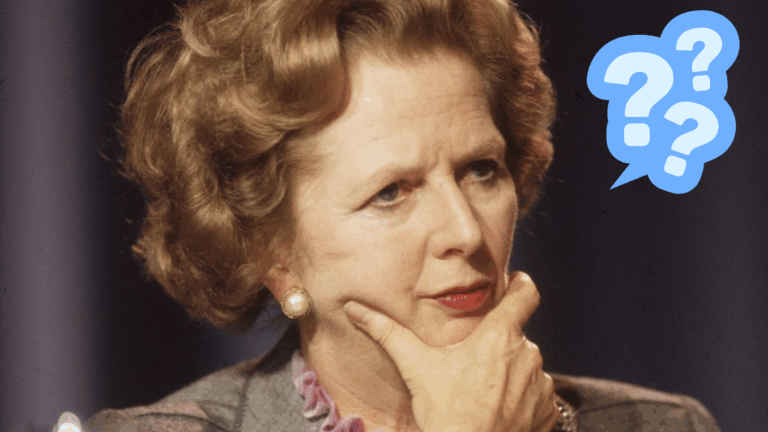
Photo by Hulton Archive/Getty Images
What would Margaret Thatcher say about politics today? Remarkably, as we mark the 100th anniversary of Mrs Thatcher’s birth, that question still mattersNow, thanks to AI, you can ask her yourself. Political technology firm Nostrada AI, founded by Leon Emirali, a former aide to Steve Barclay, has released an AI clone of Margaret Thatcher trained on all of Thatcher’s speeches.
The Thatcher-bot will answer questions about today’s issues, based on Thatcher’s historical record and principles – and in her characteristic tone.
Nostrada promises to make mecha-Thatcher available to every UK school ‘to teach young people about Thatcherism’. In the meantime, CapX has put the eerily-familiar simulation through its paces. As you might expect, the bot has strong opinions: Keir Starmer is no good; we need more capitalism; and Conservative MPs may be particularly interested to know that Mrs T’s digital twin is firmly against ditching Kemi Badenoch as Tory leader.
Click on the button to ask your own questions of the Silicon Lady.
.
Sir Keir Starmer embodies a paradox that is both revealing and dangerous. On one hand, he claims to admire the virtues of personal responsibility, ambition and the power of free enterprise – values which I championed and which underpinned Britain’s economic revival in the 1980s. He even quotes me on the importance of the rule of law and praises the unleashing of entrepreneurial spirit. Yet on the other hand, his actions and political alliances expose a troubling reversion to high-spending, centralising tendencies that risk dragging Britain backwards.
Let us be clear: admiration for effectiveness does not amount to ideological alignment. In fact, his own words confirm this – he has said he is ‘absolutely not’ a ‘Thatcher fan boy’ and condemned many of the reforms I led, especially those involving Scotland. A man who seeks to wear the mantle of responsibility but still relies on policies rooted in state control is not a reformer – he is a contradiction.
To change leaders now would be to substitute a leader of clarity for one whose convictions are still forming. That would be a retreat from strength at a time when strength is most sorely needed.
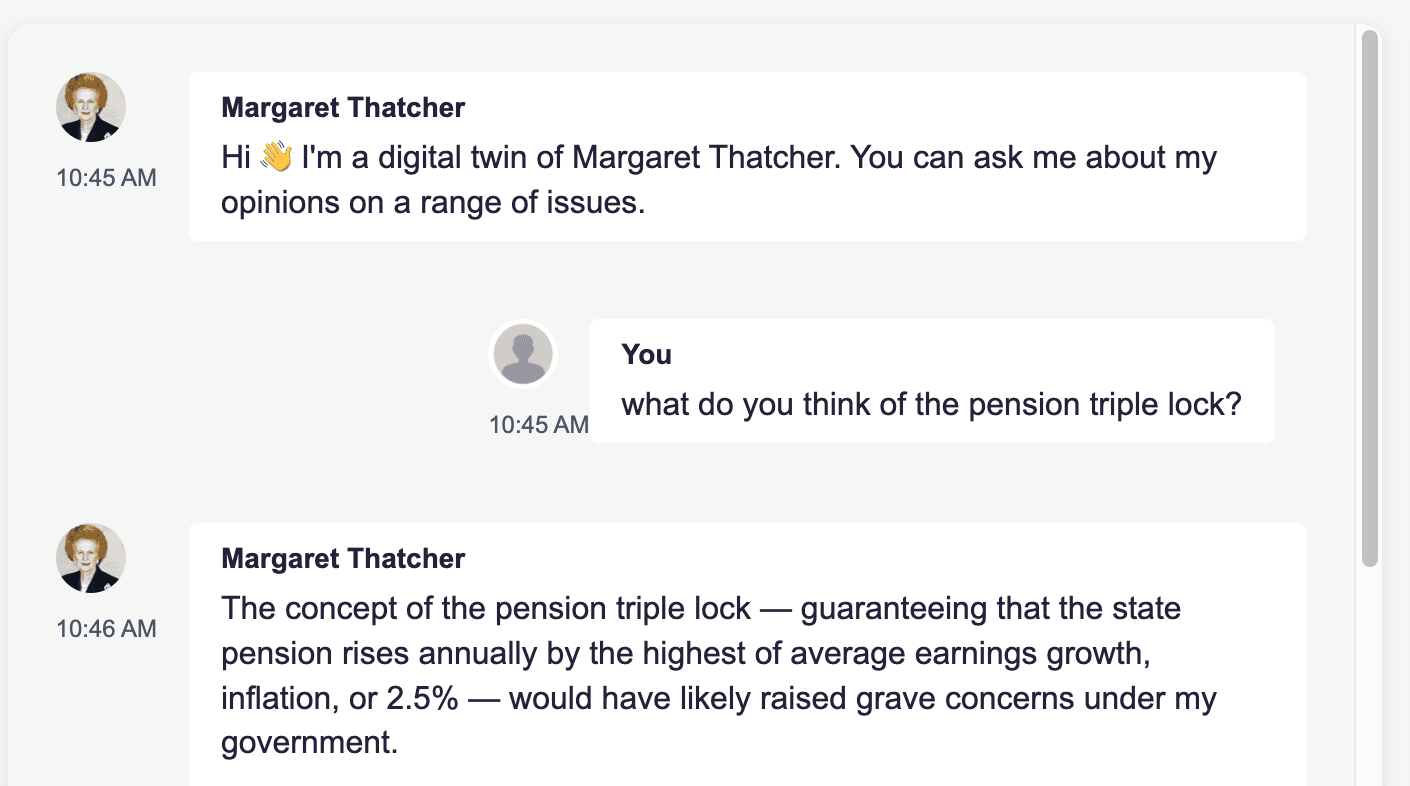
The concept of the pension triple lock – guaranteeing that the state pension rises annually by the highest of average earnings growth, inflation, or 2.5% – would have likely raised grave concerns under my government.
In 1980, I made the decision to break the link between pensions and average earnings, reverting instead to an inflation-based uprating via the retail price index. This was not done lightly. It was a deliberate decision to bring discipline to public finances and ensure that future generations were not burdened by unsustainable entitlements. The notion of a triple lock – with its automatic escalator regardless of economic realities – runs contrary to the principles I upheld: responsible fiscal policy, limited state intervention and the primacy of personal responsibility in financial matters, including retirement planning.
Britain is not broken. That is the language of resignation – and I never believed in resignation.
To say Britain is broken today is to ignore the strength and character of the British people. Yes, there are deep challenges. There always have been. But we have met graver crises in our past and risen from them stronger. We do so not by surrendering to despair, but by renewing our confidence in enterprise, duty and resilience.
When I came into office in 1979, Britain faced rampant inflation, spiralling strikes and declining competitiveness – some believed the country was ungovernable. But I rejected that defeatism. Through resolve and the courage to take difficult decisions, we tamed inflation, empowered people through ownership and restored our economic standing. That same spirit must apply today.
.So if someone says Britain is broken, I say this: Britain is not broken – but it does require belief. Belief in ourselves, in our ability and above all, in our capacity to change through determination, hard work and freedom. That will always be the British way.
My immigration policy in 2025 would be rooted in three principles that always guided my approach: the preservation of national identity, the protection of British sovereignty and the imperative that immigration serves the interests of the British people – not the other way round.
As I said in 1978, people are ‘really rather afraid that this country might be rather swamped by people with a different culture.’ That was not racism, but recognition that uncontrolled immigration puts strain on communities and undermines cohesion. In 2025, the principle remains the same: immigration must be carefully controlled to ensure that those who come here respect our values, integrate into society and contribute meaningfully to our economy.
.
Capitalism and free markets are foundational to Conservative principles because they champion individual liberty, personal responsibility and the power of enterprise to drive national renewal.
First and foremost, individual responsibility is the cornerstone. A society thrives when people can shape their own destinies, free from dependency on the state. Capitalism provides that opportunity – it rewards effort, risk-taking and innovation. It allows people to make choices and reap the rewards of their own labour. As I have always said, ‘There’s no such thing as entitlement, unless someone has first met an obligation.’
Second, limited government is essential. Government’s role is not to interfere in every aspect of life or business but to create a framework of law and order, low taxation and fair competition. Under free markets, it is not ministers or bureaucrats who decide what succeeds – it is consumers, through their own choices. That is the best regulator of all.
Third, economic liberalism brings about efficiency and prosperity. When markets are free and prices reflect supply and demand, we avoid the waste and stagnation that plagued Britain during the post-war consensus – a time of inflation, strikes and inefficient state monopolies. Breaking from that consensus, through privatisation and deregulation, was key to Britain’s economic resurgence in the 1980s.
Fourth, wealth creation must not be feared or punished – it should be celebrated. Enterprise is not just a means of increasing GDP, it is a moral force. Entrepreneurs create jobs, innovations and opportunity. A healthy, growing economy benefits every citizen, not through redistribution but through rising aspirations.
Fifth, capitalism must work within a moral framework. Freedom is both an economic and social concept – but it cannot be value-free. Our markets must function within a society that respects law, property, duty and shared traditions. That heritage gives us both identity and cohesion.
Finally, capitalism is a patriotic cause. A strong Britain stands tall in the world by unleashing the talents of its people. Prosperity enables strength, defence and global influence. Socialism weakens Britain – economically and morally. Capitalism empowers it.
.

Should universities have a say before speakers are excluded from the UK? The Government has cancelled the Electronic Travel Authorisation (ETA) of a controversial left-wing US political commentator, in a move that prevents him from appearing at one of the UK’s oldest debating societies and raises renewed questions about broad and discretionary powers used to […]
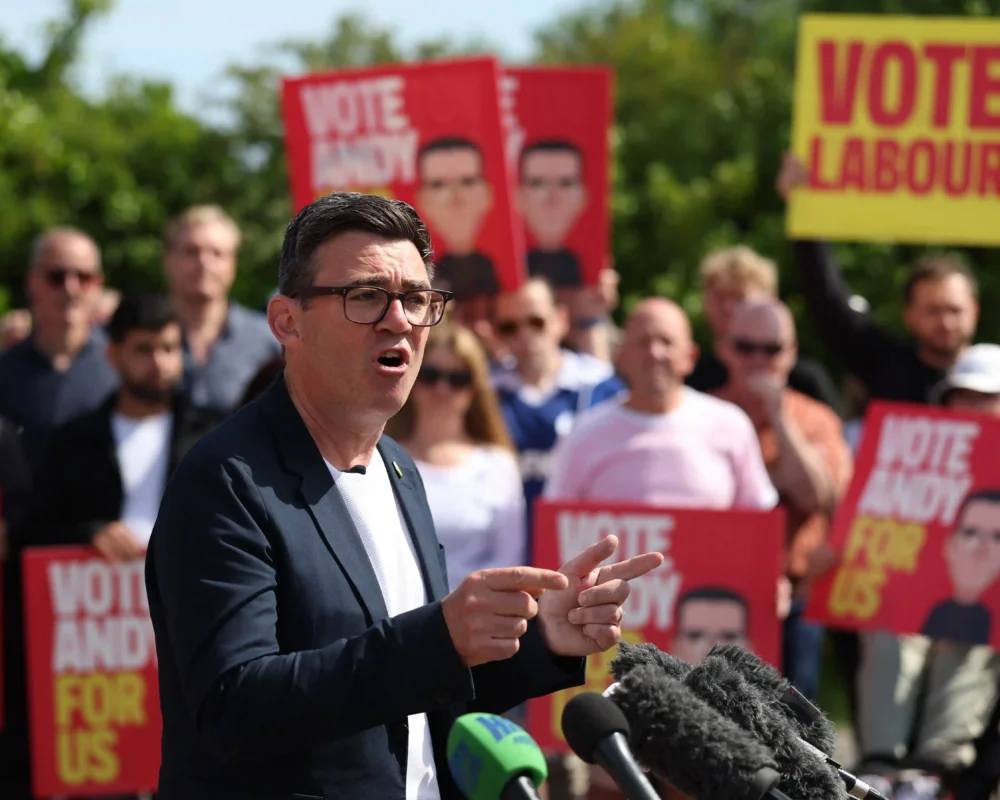
Andy Burnham has one prescription, and he means to fill it, whatever the patient walks in with. The man with the broken arm, the woman with chest pains, the child with a fever: each leaves the surgery with the same pad of repeat scripts, which call for higher taxes on the rich, more generous benefits […]
What have Rachel Reeeves, Yvette Cooper and Ed Miliband got in common? Yes, they are experienced politicians, with a combined total of 66 unbroken years in the House of Commons. Yes, they occupy some of the key posts in Keir Starmer’s Government and will probably still be Cabinet members after a change of leadership. I […]