Why I am still a Thatcherite – and you should be too

10 October 2025
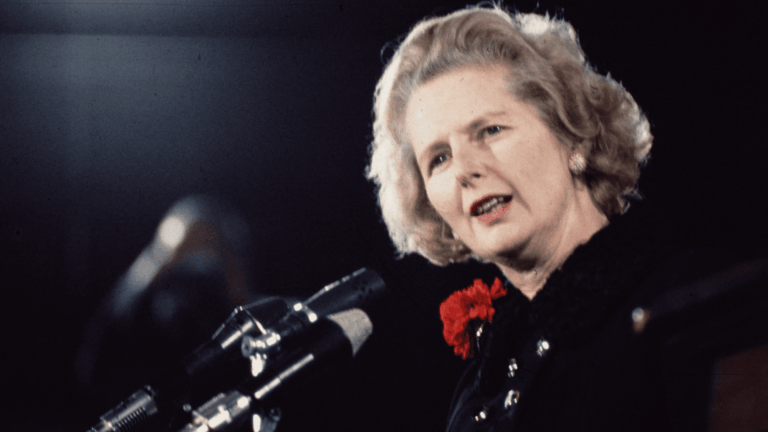
Photo by Hulton Archive/Getty Images
‘Isn’t it time we stopped talking about her?’
Fifty years since Margaret Thatcher became leader of the Conservative Party, her face, and even some of her iconic outfits, were all over this year’s party conference. Not everyone was happy about that. Hot takes and tweets grumbled about it being time to move on, to pack away the old clothes and put out something a bit more 2025.
At CapX, however, we’re proud to still fly the Thatcherite flag. Not just because, as part of the Centre for Policy Studies, the think tank she co-founded, Thatcher’s ideas are in our DNA. But because Mrs Thatcher remains the woman for this moment, with the ideas that Britain still needs to get back on the right track.
Mrs Thatcher was born a hundred years ago. The new generation of political activists can barely remember her funeral, never mind her achievements in office. That doesn’t mean her insights are out of date. Indeed, Thatcher was always a woman who fought against her time – and when necessary, her own party – to drag it into a prouder and more prosperous future.
Today, we are on the cusp of some of the biggest economic and technological changes since the industrial revolution. This is a time for transformative thinking – the kind of ambition that gave us privatisation and the Big Bang in the City of London. Yet is also a time when British identity feels threatened by demographic and social changes, a set of fears that risk trapping us in a politics of security at all costs, just when we need the courage to think bigger. Thatcher knew how to speak to both issues at once. She evoked our proud history to explain how by embracing free market reforms we could follow our best traditions – and carry them to new heights.
It’s often said that Thatcher was a politician of principle, and that is of course true. But what matters to me is the nature of the twin principles she articulated with such consistency and flair: national pride and economic freedom. Of course, today’s political situation is very different, but these bedrock values are as relevant – and as essential – now as they always were.
Thatcher’s principled rhetoric also offers a lesson in something that the Right has failed at since the rise of Tony Blair. She refused to concede moral terrain to the Left, consistently making the case that her approach was not just in line with the facts of life – but was the moral path as well. She insisted that the heavy-handed interventionism, anti-individualism and hostility to ambition of her opponents deserved to be called out for its inhumanity, not just its practical failings.
I am old enough to have grown up in Thatcher’s shadow: born a year after she took the party leadership. My first hazy memory of a political event is lying on the kitchen floor and hearing something on the radio about a war in the Falklands. I can understand why those who have grown up in the shadow of the 2008 financial crisis feel very different. But the leader who pulled Britain out of a previous economic and cultural malaise and brought it into the 1980s is exactly the example worth looking to for inspiration now.
Mrs Thatcher wasn’t a patrician figure – she spoke for middle-class Britain and challenged the grandees who were holding her party back. She didn’t want favours, she just wanted a system open to talent and energy.
Today, in a Britain full of suspicions that meritocracy is fraying and a politics dominated by a narrow caste of technocrats, this is a message worth shouting once again. Thatcher saw that the real culture war worth winning was to present a dynamic, optimistic, welcoming alternative to the failing status quo that people could look at and think: that’s for me.
Thatcher’s politics was all about agency: embracing it, restoring it and trusting it. The pollster James Kanagasooriam has said that in Britain today, agency is the next big idea. We need to think like Thatcher to tackle this challenge.
She also grasped that the lever to yank Britain out of its cultural torpor was economic. Not through fiddly carveouts to interest groups, but by cutting back tax and regulation and unleashing both the British people and the capital to power their enterprise. While the new tax and spending announcements from the Conservatives – especially on stamp duty – are welcome, they also show how far there is for the party to go to get back to Thatcherite principles.
Why are we still talking about Mrs Thatcher? Because, in economics and culture, her revolution remains unfinished. Because with Labour in hock to the unions and the economy grinding to a halt, she shows a path back to growth. And in an age of anger, where politics seems to be all about looking for someone else to blame – Maggie offers something different. A call to agency, and a rejection of the idea that Britain is a nation of victims, doomed to decline.
Taking Thatcher’s unfinished revolution forward doesn’t need new principles. It needs fresh ideas for sound policies, and fresh voices willing to take a principled stand. That’s what CapX is here to offer (and the Centre for Policy Studies too). If you think the same, then join us. Because the future Margaret Thatcher fought for won’t build itself.

What explains prosperity? That is the most important question in economics. It was this question that led Adam Smith to write ‘The Wealth of Nations’. Before Smith, the physiocrats like Turgot explored it in works like ‘Reflections on the Formation and Distribution of Wealth’. It is this question that makes economics not only interesting, but […]

Just as there is a battle on the Right in Britain, so too is there a battle inside the Conservative Party for what the party should focus on. There are those who are concerned about the threat of political Islam, the damage to the social fabric of the Boriswave and other elements of mass immigration, […]
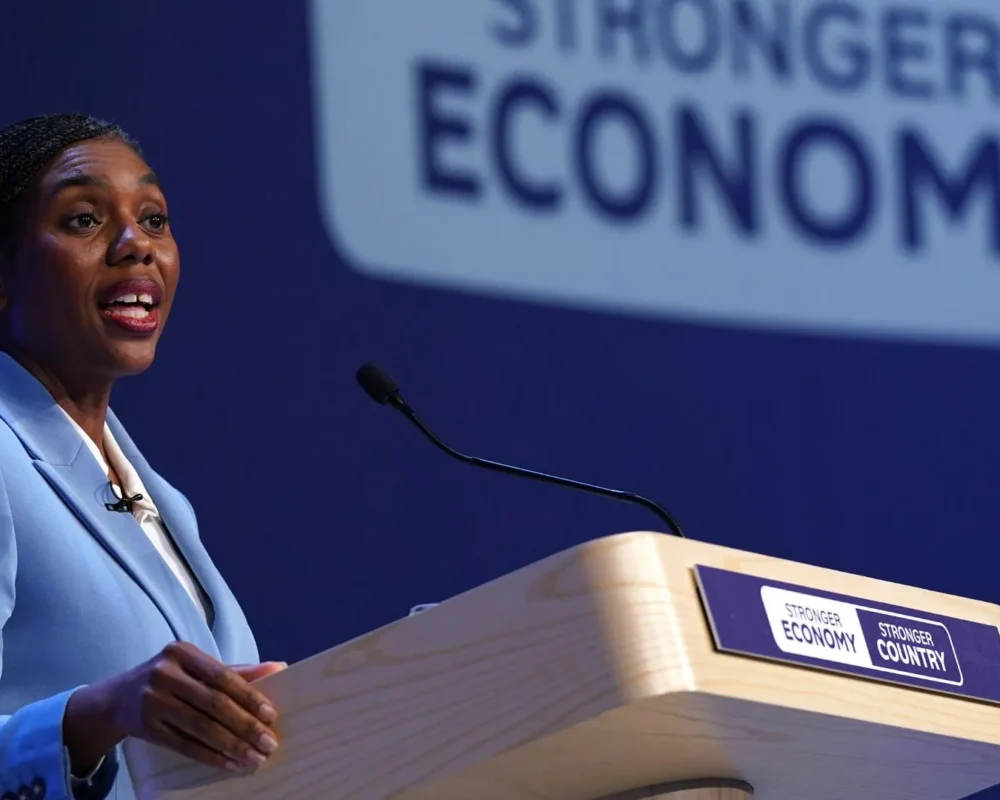
When William Buckley went on the front page of Time magazine, the title was simple: ‘Conservatism Can Be Fun’. That is what Kemi Badenoch has done at this conference. Conservatism can be fun, can be serious and can learn from its old mistakes. But most importantly, what makes it the world’s oldest party is its […]