We need a Great Reform Bill: time to start writing it

Margaret Thatcher and Keith Joseph. Photo by Evening Standard/Hulton Archive/Getty Images
This year marks the 50th anniversary of Margaret Thatcher becoming leader of the Conservatives, an event that is quite rightly being commemorated. But it is also 51 years since the founding of the Centre for Policy Studies – CapX’s parent organisation, and the intellectual logistics hub of the extraordinary 1980s. Indeed, the Thatcher Revolution would simply not have happened without its groundwork, and the blueprint crafted by the likes of Keith Joseph and John Hoskyns in particular.
Without seeking to depress the reader, the nature of the policy landscape before us today is in some respects even worse. Sure, the economy is not in a doom loop driven by untrammelled unions, an addiction to state intervention and Communist levels of wealth grabs – despite the aspirations of some to get us there. But even so it is gripped by a sanctification of deficit politics, a cult of the nationalised health service, the dominance of a pseudoliberal functionary legal order and the chill hand of bureaucratic torpor.
There is, in varying degrees, room for hope as loosened bricks fall away from the Overton Window. But what’s also different today is that an additional set of snares also face us, less directly associated with issues of public spending and wealth generation and increasingly a source of societal anger. That means that rather than one central blueprint for radical reform, today’s compounded and often interlinked problems will need a dozen schematics – presuming in the first instance that the right someone comes to power.
In a new paper, I seek to set out where we are at and what our own modern Hoskyns approach needs to be. It starts from the context of the Conservative Party leadership debate of last year, where the idea was introduced of a new ‘Great Reform Bill’. This basically involved identifying where repealing or amending or refining or replacing a piece of legislation removes the central cement of a big problem and quite possibly several interconnected ones. The classic example is the Human Rights Act 1998 and the way the UK is constrained through fourth generational judicial reinterpretations of rights, the system having turned away from sustaining the basic and truly fundamental towards embracing the quixotic and contentious. These judicial decisions have had a range of absurd societal consequences. Since fixing single pieces of legislation starts to unravel the wider malign web, why not then put the key ones together in a single legislative bag?
Well, it turns out that the number of bad laws is much bigger than you might think. Our review identifies a significant number that merit early redress, often with carry-across effect into other problems civil servants are failing to fix. It also shows the interconnectivity of process – laws restrict and direct but they also mandate and funnel. The reason why HR make bad calls, or wild compensation payments get paid, or staff are compelled to attend woke training causes, or fringe politically-correct organisations are funded by the public purse are typically interlinked; they are motorised at source by poor laws but then become systemic interpretive and attitudinal problems.
But the report also flags that our new study is very partial, indeed is starting from the wrong end. Policy planners need to grid problems out to the same level that was carried out in the 1970s. Here we hit the buffers of practicality. Washington DC has brigades of think tankers. But – excepting the curious anomaly of the Tony Blair Institute – London only has small platoons. In many cases, complex fields that puzzle Whitehall departments are left to be tackled by what amounts to less than an infantry section.
The first task is to openly acknowledge the scale of the mission. Thankfully the think tanks of the Right do have a number of extraordinary Duracell bunnies in them. Fortunately, too, the Conservative Party itself has finally grasped the immense potential of its Conservative Policy Forum and is setting up Member Expert Groups (MEGs) to provide technical support. Will they recall the furious Scottish cannon Mons Meg, or turn out to be more ‘Family Guy’? Everything lies open on that front, depending on how radical and varied in their expertise these members turn out to be.
I fear the result will be eclectic and depend on the frontbenchers involved, leaving much to the think tank compagnies franches to deliver as usual. We shall yet see. The task in any event is doubly Herculean for Reform UK, not so much because of their known frictions over state intervention and subsidy but rather through their underdeveloped policy pipework. The Brexit Party was able to quietly draw in some impressive expertise to help draft manifestos, but the results were nowhere near as comprehensively engaging as today’s national reforms demand.
The foundation of modern government is inertia. For proof I cite the example of the Severn Barrage Hydro-Electric Scheme, still a talking point today. The committee looking into it issued its first conclusions in 1933. Bureaucracy since then has only gotten worse. Additional constraints today lie in a kakophonic chorus of permissions, reviews, appeals, rights, obligations, duties, fears and assumptions that stop things being done, gleefully embraced by banshee activists, remunerated lawyers and canalised civil servants. Those too all need to be properly broken down so the right fixes get worked out.
So even once you remove the key logs on the beaver dams, it’ll still take a lot of current to shift the muck downstream. As John Hoskyns understood back in the day, you need a big plan, a detailed plan, one crafted with insider knowledge and input. Our radical reformers need to understand which laws to change, which systems to unblock, which vested lobbies to unfund – all across a range of policy areas while thinking ahead to likely second, third and fourth order effects.
Planning all that requires time and coordination, and little fixes just won’t be enough. Best get seriously cracking then.
‘The Great Reform Bill’ is published by The Red Cell.


The Roman historian Livy can claim to have invented an entire genre. Midway through his vast History of Rome, he breaks off from the narrative to ask a question nobody had thought to put in print before: what would have happened had Alexander the Great turned his armies west and marched on Italy? It is […]

Andy Burnham is, apparently, going to solve the old age care problem. I tend to think he won’t but there we are, me and my cynicism. For he’s talking of organising something like the NHS, a National Care Service, which – as with the NHS – is the wrong way to do things. In order […]
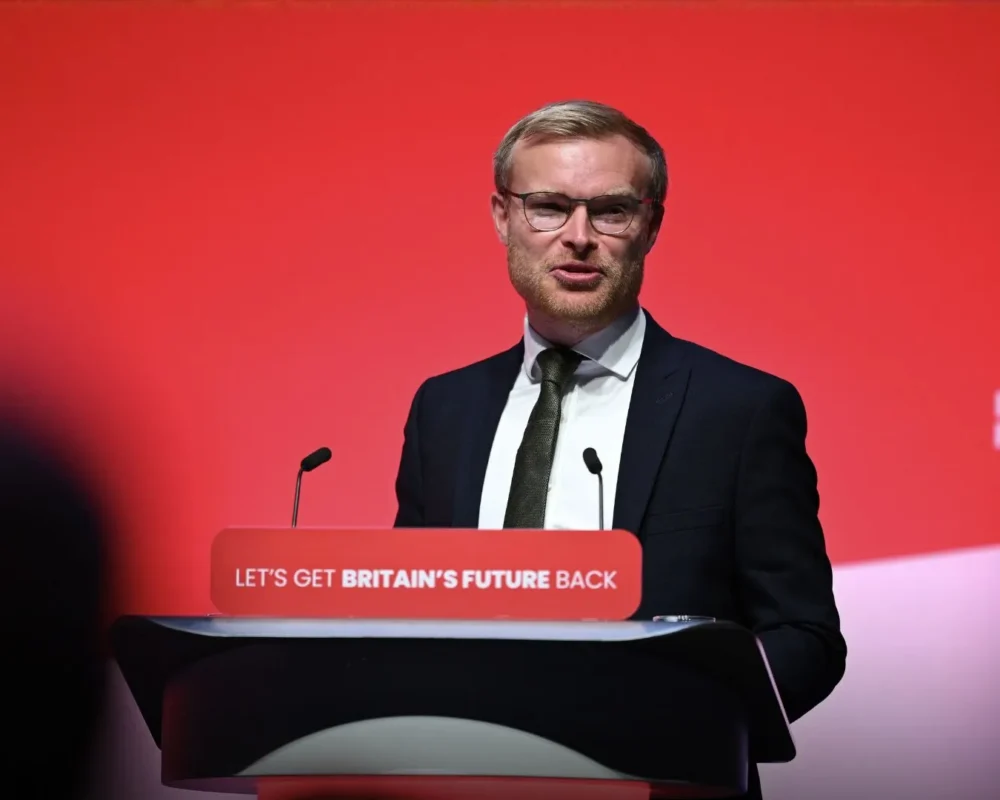
On June 23 Britain’s grid came close to collapse. Despite energy minister Michael Shanks calling claims ‘scaremongering’, new whistleblower information shows the grid had indeed been pushed past safe operating limits. A leaked National Energy System Operator (NESO) document said that ‘system constraints were breached and system security was compromised’ – a damning indictment of […]