We are being lied to about the cost of living
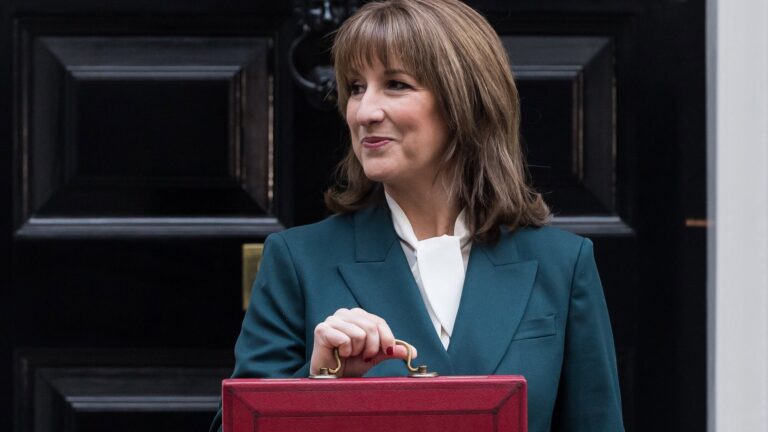
Photo: Wiktor Szymanowicz/Future Publishing via Getty Images
We have an old yet, of late, poorly-respected tradition of Chancellors delivering their Budget speech with a tipple. Kenneth Clarke was the last to honour it, sipping a whisky at the despatch box in 1995. Before Clarke, Geoffrey Howe had a gin and tonic; Benjamin Disraeli, a brandy and water; and William Gladstone opted for a sherry and beaten egg – which ought to be illegal. The 21st century has yet to see a Chancellor follow suit. If I were in Rachel Reeves’s shoes today, I’d have reached for the white spirit.
The build up to this Budget degenerated from farce to grim tragedy as a series of leaked details and retractions left investors and the electorate none the wiser as to what was actually coming. That is until about 30 minutes before Reeves was scheduled to deliver her speech, when the leak from hell put all uncertainty to bed. In an unprecedented error, the Office for Budget Responsibility accidentally released its Economic and Fiscal Outlook (EFO) document too early. This contains all the details of the Budget, and is traditionally published after the chancellor’s speech. Thank God the adults are back in the room.
It confirmed the worst suspicions of many commentators: this Budget was not going to be cheap. In what Reeves styled as a cost-of-living Budget, designed to provide ‘immediate relief to families’, taxes are being raised across the board to the tune of £26 billion. According to the EFO, the tax burden will hit a record high of 38.3% of GDP by 2031. Part of this will be made up by increasing taxes on everything from milkshakes to online gambling. But what is most alarming – particularly for Labour’s ‘working people’ – is that income tax thresholds will be frozen until the 2030-31 financial year. This will drag 1.7m people into higher tax brackets by 2029-30, and some 780,000 Britons will be forced to pay income tax for the first time.
Despite some performative tinkering with programmes like the Motability scheme, spending is going up too – as a share of GDP, it is projected to rise from 44% in 2024-25 to 45% in 2025-26. Due to unemployment being higher than anticipated, the Government’s U-turn on tightening eligibility for personal independence payments and the increase in the cost of the triple lock on state pensions, welfare spending will soar by £16bn by the end of the decade. When spending increases, so does debt. The OBR calculates that debt will rise as a share of GDP from 95% of GDP this year and will end the decade at 96% of GDP, which is 2 percentage points higher than projected in March and twice the debt level of the average advanced economy.
I’m no Columbo, but I’m beginning to doubt this Government’s commitment to growth.
Kemi Badenoch described today’s announcement as a ‘Budget for Benefits Street paid for by working people’ – she’s not wrong. Rather than make the tough calls on public spending that would get our mounting debt down and deliver tax cuts that would allow the most productive parts of our economy to flourish, Reeves has picked yet more short-termism at the expense of our future prosperity.
The political fallout is twofold. First – short of a Damascene conversion among Labour’s leadership – it has been confirmed that this Government has no originality or courage, and is determined to continue on the same path of tax and spend that has failed us for years. But that was baked in from the start. The more interesting question is what the stewards of the post-Labour economy will do to fix it.
Despite recent controversies over his behaviour while a schoolboy and the conviction of his party’s former leader in Wales for taking Russian bribes, Nigel Farage is still polling well, and the Reform UK surge is even penetrating London. But for all his right-wing positioning, Farage seems captured by many of the instincts that plague the Labour Party. A major announcement at today’s Budget was the lifting of the two-child benefit cap, which the Reform leader also advocated for earlier this year. Yes, Britons need to have more children. But that sentiment should not be read as a pass to expect the fiscally prudent to stump up for others to have as many as they like regardless of their capacity to support them. There are cost-cutting reforms that could be made to the housing and childcare sectors to encourage people to start families in a sustainable way, but they require a political leader that can confidently articulate trade-offs. This is something that Labour and Reform – both populist in different respects – struggle with.
Before you scream ‘14 YEARS!!’ at the monitor, I am under no illusion that the Tories do not have some answering to do. The last Conservative administration was – in a number of respects – an economic failure. Tax and public spending rose, and the only real attempt at systemic reform under Liz Truss was a catastrophe.
That being said, a lot of the most sensible thinking on economics at the moment is coming from Badenoch’s Conservative Party. Her announcement at Conservative Party Conference that she would abolish stamp duty would remove a major distortion in the housing market. She has committed her party to reinstating the two-child benefit cap – making the case for individuals living within their means (although it remains to be seen whether her fiscal discipline will end up extending to the state pension and winter fuel payments). In a speech earlier this year, she was also explicit about bringing down the cost of the welfare state: under a Badenoch premiership, sick notes would be rationed, not doled out as get-out-of-jail-free cards.
Ignore Reeves’s rhetoric – this Budget will do nothing to genuinely lower costs for British people. Instead, it picks the pockets of the productive to prop up an unsustainable welfare state.
Yet as taxpayers feel the pain, this Budget might just open up a real debate about what getting the cost of living under control should look like. Will it be an endless doom loop of high public spending, price freezes and wealth taxes, or the painful, politically courageous task of fixing the deep-rooted issues in our economy? My money’s on the latter, and it seems that Badenoch’s might be too. But if she – or Farage if he changes tack – fails to explain to voters that long-term financial sustainability does not happen overnight, we can expect this Budget to be repackaged rather than replaced for years to come.

Last week, the Community Security Trust’s (CST) report covering incidents between January and June 2026 showed alarming results. The unprecedented wave of antisemitism that started on October 7, 2023, when Hamas massacred and kidnapped over 1,200 people in Israel, shows no sign of easing. On the contrary. The 1,926 incidents recorded represent a 21% rise […]
This weekend the Telegraph ran a story with the striking headline ‘Burnham told to trade nuclear umbrella for access to single market’. The idea is the brainchild of Nick Boles, the former Conservative MP who quit the party in 2019 over Brexit, switched his allegiance to Labour and helped to advise Keir Starmer on the […]
There is a long-standing maxim in broadcasting: always assume the mic is hot. In other words, if you are within range of a microphone, work on the basis that you are being recorded and exercise the appropriate level of discretion and confidentiality. Over the past 10 or 15 years, it has become clear that this […]