We all pay for Westminster’s cultural decay

16 February 2026
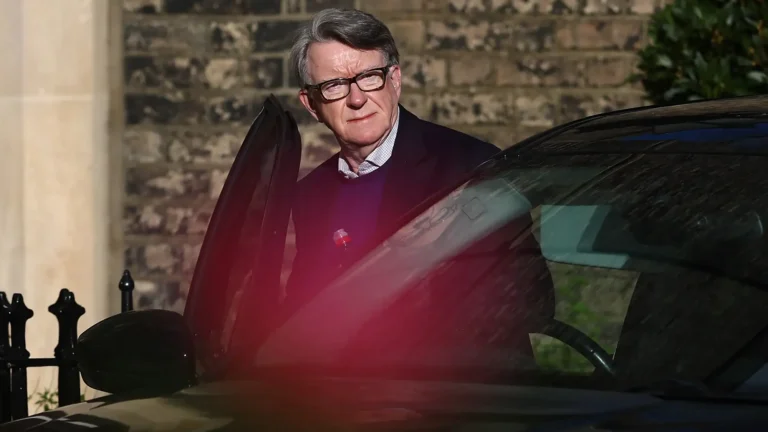
Photo: Peter Nicholls/Getty Images
‘It’s nice, isn’t it. The quiet.’ ‘This is what serious government looks like. This is how it makes appointments.’ This was the sentiment of the chattering classes upon Labour’s election victory in 2024. Britain, according to them, was about to become a safe heaven of peace and stability.
Yet it’s now 2026, and the Government is in crisis.
For years, pundits have blamed corroding public trust in politics on an evil triumvirate of forces: populism, ‘disinformation’ and foreign agents. Driven by dark money, social media, artificial intelligence and hostile powers like Russia, they claim these forces have manipulated the British people into voting for projects they never really wanted.
Perhaps they should look closer to home. For a decade, the public has repeatedly voted for the promise of real change. This Government promised exactly that. But from policy and political blunders to the seemingly endless cycle of scandals, it is delivering continuity. Like the Tories before them, Labour have jolted from crisis to crisis, and failed to take the radical action necessary to end our social and economic decline. That Peter Mandelson’s appointment was pushed through, despite widespread knowledge of his relationship with Jeffrey Epstein, typifies a corrupt political class.
Westminster is sick with a cultural acceptance of decay: harassment, abuses of power, misconduct in public office, cash-for-access – the list goes on. Each episode is treated as an isolated moral failure by Westminster but not by the public, who grow increasingly frustrated, angry and distrustful of their leaders.
In truth, this reveals the institutional rot at the heart of the old political class. It is a largely closed ecosystem: strange loyalties, deeply entrenched norms and – as previous chapters of Peter Mandelson’s life demonstrate – remarkably forgiving of those who know how to play politics. The last fortnight has shown an old system on its knees, crumbling and disintegrating under its self-inflicted pain.
What’s more, the system has become so consumed with the storylines of perpetual crises that the radical action necessary to deliver for the British people is sidelined. Rather than pushing through serious reforms or tackling the cost of living with radical action, the ‘grid’ is almost entirely taken up managing the fallout, and trying to save the Prime Minister’s own position.
This is how decline happens. Not through a single catastrophe, not through one person or one government’s failures, but in no small part through the steady diversion of attention and energy towards crises of their own making. When a political class becomes permanently subsumed by scandal, governing is replaced by communications management, and institutions take over policymaking. Reforms are endlessly postponed, difficult decisions get kicked down the road and short-term decisions are driven by polls and internal politics.
The cost is borne out in the lives of people across the country. Energy prices remain far too high, rent is still unaffordable in many areas, especially London, and basic public services keep getting worse: none of these problems are solved by a system absorbed by self-inflicted scandals. The tragedy is not just the decline that everyone across the country feels and sees, but that politics has become so starved of talent that it relies on the same failed networks, beset with the same dreadful scandals, to try to steer the ship of the state away from the rocks we are hurtling towards.
The public understand this instinctively: that’s why they’ve repeatedly voted for change, in its many guises. They are not angry because politics is noisy, but because it is ineffective and unable to focus on what matters – instead repeatedly blown off course by its self-inflicted failures. If we have the courage to replace this exhausted and broken system, we can finally deliver what we all demand: change.

Last week, I met my friend Becky for coffee in Buenos Aires. Becky lives on Las Malvinas and, unsurprisingly, calls them ‘the Falklands’. I never do, of course. After nearly ten years in Argentina, I have learned to discuss this particular subject in something closer to a stage whisper. Hearing the ‘F’ word spoken at […]
Margaret Thatcher is back in the news. But it is not her admirers on the Right who have put her there. It is our new Labour Prime Minister, whose diagnosis of our country’s ills seems to be that Britain was on the right path up until 1979, when the Conservatives got into power and precipitated […]
The verdict is clear. The Right has woken up to the innate statism associated with a statutory Net Zero target. Reform UK reject it outright, and the Conservatives have pledged to scrap the 2050 deadline and the 2008 Climate Change Act by which net-zero targets are enforced. Both accept the approach is a millstone around […]