Triple lock savings can’t pay for social care
Ian Forsyth/Getty Images
Picture the scene. A new Labour leader delivering his first speech as Prime Minister to the party conference, two years after a general election victory. The fiscal backdrop is poor, financial markets are not convinced by the credibility of UK economic policy and there is a deep divide between what his MPs want and what the economic situation will allow.
The Prime Minister’s response was to deliver an economic and financial reality check to the party faithful.
That was Jim Callaghan, fifty years ago this week in Blackpool. His blunt but accurate message was, ‘We have not been creating wealth as fast as we have been distributing it.’
Callaghan was clear: ‘I did not become a member of our Party, still less did I become the Leader of our Party, to propound shallow analyses and false remedies for fundamental economic and social problems.’
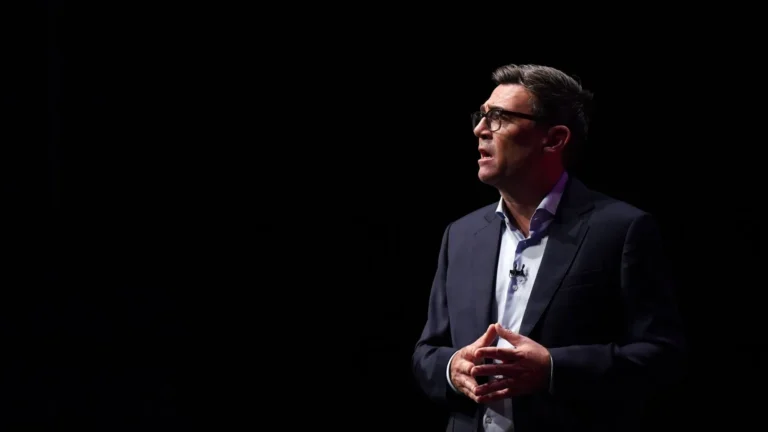
This week Andy Burnham faced similar challenges and both comments would have felt appropriate for his speech. But he chose a different approach. He focused on the politics. It felt more like an early outline of Labour’s next manifesto than a speech confronting today’s economic and fiscal challenges. But what are we to make of the central aspect: abolishing the triple lock and replacing it with a new approach to pensions, to help pay for social care?
It makes little sense to suggest that an uncertain stream of savings can finance a large and potentially ever-rising spending commitment
Moving from a triple lock makes sense, as it has largely achieved its original purpose. But it would be nonsense to think that the changes proposed to the triple lock can pay for social care. They can’t. Like the NHS, it will require taxes to help fund it. Not only that, but the savings from the triple lock are small when compared with potential gains that might be found elsewhere in £1.4 trillion of public spending.
The wider fiscal context matters. Welfare spending is expected by the OBR to rise from around £315 billion in 2024/25 to £407 billion by 2030/31. Within this, pensioner spending will rise from £151bn to £196bn, while health and disability benefits will increase from £77bn to £110bn. The markets have focused on welfare spending because its relentless upward trend is seen as symptomatic of an inability to control public spending.
The triple lock was announced in 2010 and introduced from 2011/12. It links increases in the state pension to the highest of earnings growth, inflation or 2.5%.
The IFS estimates that the state pension is around 12% higher than it would have been had it simply risen in line with average earnings. Its weakness is the ratchet effect. If inflation jumps and earnings subsequently catch up, pensions can rise first with inflation and then again with earnings.
But that ratchet was not necessarily a bad thing, given the low level of the pension. Although the triple lock has achieved much of its original purpose, the UK state pension is still not particularly generous by international standards, although such comparisons are complicated by private pensions, tax relief and other benefits.
There is now a reasonable case for replacing it with something more predictable. Burnham’s proposal kicks in from 2030. Pensions would rise by at least inflation or 2.5% each year, with a longer-term earnings link intended to prevent pensioners falling permanently behind wages.
The crucial issue is the cost. The OBR estimates that since its inception, the triple lock has added £15.5bn a year compared with uprating by earnings and £22.9bn compared with inflation. But those figures are easily misunderstood. That extra spending is already embedded in the level of the pension. Ending the triple lock in 2030 will not produce such a saving.
The IFS estimates that on present forecasts the triple lock will add only around £600 million a year to state pension spending by 2029/30 compared with earnings uprating. The savings under the new plan are still small to begin with, but become larger over time. According to the Government its new plans will save £15bn per year by 2039/40, or about £11bn per year in today’s terms.
This highlights the fundamental mismatch between the two policies. The savings from reforming the triple lock are variable because they depend on what happens to wages and inflation and, in the near term, they are relatively small. Social-care costs, by contrast, are likely to be sizeable and potentially open-ended, driven by demographics, demand and the generosity of the system. It therefore makes little sense to suggest that an uncertain stream of savings can finance a large and potentially ever-rising spending commitment. Ultimately, that commitment will require taxes.
In England alone local authorities spent £29.4bn on adult social care in 2024/25, including £23.6bn on long-term care. The Health Foundation estimates that a comprehensive universal system covering the costs of everyone currently receiving adult social care could require an additional £18.5bn a year by 2035/36. Even that may understate the eventual bill because it does not include all the additional demand from people whose care needs are currently unmet.
In 2011 the Dilnot Commission highlighted the catastrophic and essentially uninsurable costs that could arise from social care and proposed sharing the risk between individuals and the state.
There is also a distinction between the rhetoric and what is proposed. Burnham talks of a National Care Service founded on the same principles as the NHS and free at the point of use. But the commitment is to free personal care for older people. Bed and board in residential care will not be free and existing means-tested arrangements will remain. As Dilnot pointed out, free personal care does not remove the risk of large accommodation costs or fully protect homes and savings from being used to pay.
Free at the point of use does not mean free. The cost is borne elsewhere, principally by the taxpayer. And if the price to the user is zero, demand has to be managed through eligibility or other forms of rationing.
But the debate should not simply be about funding an ever-rising bill. Attention too should be on how AI and technology can improve productivity and care. Benefiting from the greater regulatory freedom that comes from being outside the EU, the UK has established itself as one of the leading countries in AI, albeit some distance behind the US and China. The opportunity is to translate that strength into productive and better public services. Social care should be near the top of the list. Best international practice, as seen in Japan’s Society 5.0 approach, shows how technology can be part of the solution to the needs of an ageing population.
Ensuring that future pensions are indexed and linked to earnings makes sense. But potential triple-lock savings are uncertain and bounded, while social-care costs are potentially large and open-ended.

The King of the North has spoken. In an emotive speech, Andy Burnham yesterday set out his vision for Britain. The Prime Minister pledged to put Britain ‘on a new path’, and cursed Margaret Thatcher and the 1980s for killing ‘working-class aspiration’. What lies down this new path? A route back to the decade that […]
Among the eye-catching announcements from the Labour Party Conference in Liverpool is a proposal to allow councils to seize privately owned homes. Matthew Pennycook, the Housing Minister, tweets: ‘It’s not a silver bullet, but bringing more empty homes back into use can help solve the housing crisis. Today, we’re announcing strengthened powers for councils to […]
On September 29, 1976, Britain’s Chancellor of the Exchequer, Denis Healey, announced his intention to apply to the International Monetary Fund (IMF) for a $3.9 billion loan, the largest ever requested. Britain, The Economist announced, was ‘bust’. This was a national humiliation, the crux of a decade of economic turmoil. Britain before 1979 was not […]