There’s nothing special about the NHS
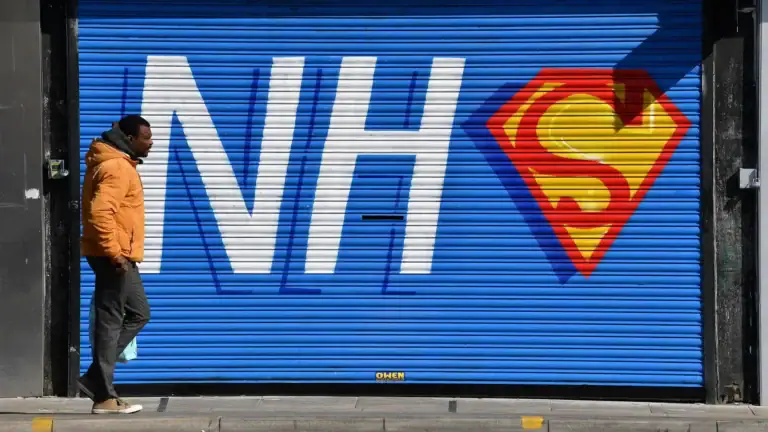
Photo: PAUL ELLIS/AFP via Getty Images
A report from Healthwatch England has found a dramatic increase in the number of people in Britain using private healthcare. It says:
In 2023, 9% of those we polled had accessed private healthcare in the last year. By 2025, this figure nearly doubled to 16%. The use of private dental care increased from 22% to 32% over the same period.
That’s a dramatic increase. But it’s not a surprise. The British have become used to being asked to pay ever more in tax for the NHS. Yet when they really need it, there is a waiting list. So they pay twice. Having already paid tax for the supposed entitlement to ‘free’ treatment, they pay a second time to actually get the treatment they need.
The report highlights the experience of Chloe Leckie, 51, from Buckinghamshire. She was first referred for an emergency hysterectomy following a severe episode of sepsis in 2023.
However, the hospital declined to carry out the operation, describing it as too complex. Chloe was then referred to the Oxford endometriosis clinic, where she was told she would need physiotherapy before surgery could go ahead. Nearly two years later, she is still waiting. ‘I have been left disabled by the lack of treatment,’ Chloe said. So she went private, an option she says was only possible because her husband’s employer had recently expanded his health insurance to include pre-existing conditions.
When I was growing up, the NHS was often described as ‘the envy of the world’. Yet the rest of the world never felt quite envious enough to copy it. Even in Britain, the claim is heard less often. The suggestion was put forward that in the UK, the poor are cared for when they fall ill. While the arrangement abroad, so the claim went, was that they were left to die, with only the rich being able to afford hospital treatment. That was always a pretty insulting parody. Were all those social democratic governments on the continent really so heartless?
Now the truth is more widely understood. There are plenty of different healthcare models among advanced western countries. But they typically combine a guaranteed universal healthcare coverage with most hospitals being privately owned. That has delivered better health outcomes for the poor as well as the rich. For example, survival rates from cancer, for the poor as well as the rich, are higher in France, Germany, Spain or Italy than the UK.
The gap is widening even while we groan under the weight of a heavier tax burden. Last November, a King’s Fund study concluded:
In 2023, life expectancy in the UK (79 years in males and 82.9 years in females) was lower than in almost all comparable countries for males, and the lowest for females. Male life expectancy was more than two years lower than in several peers. Female life expectancy was not just lowest but as much as four years lower than in Japan and Spain. And the difference in life expectancy between the UK and most comparable countries widened between 2019 and 2023.
Given all this evidence, the puzzle is why anyone should continue to argue that private healthcare is immoral. The Prime Minister is one of them. During a TV debate that took place during the last general election, Keir Starmer was asked if he ‘had a loved one on a long waiting list for surgery, would you, if you felt that that was the only way forward, use private healthcare?’
He replied: ‘No.’
That was an (uncharacteristically) straight answer. But a pretty extraordinary one. Even though he could clearly afford to help a ‘loved one’ avoid a painful delay at the hands of the NHS, he would refuse to do so. An odd moral choice, especially as it means the rest of us have to wait that little bit longer as a result. Going private is not ‘queue jumping’, it is getting out of the queue.
He could have dodged the question by saying he would ensure the NHS worked so well that such a scenario would be inconceivable. That is certainly a long way off. The Healthwatch report said:
According to our latest polling, only a minority of the public are confident in being able to get timely access to non-urgent operations, diagnostic tests or scans or hospital outpatient appointments, although figures have improved since 2023.
The delay in getting the treatment needed has economic consequences. The report found long waits often force people to reduce work hours or leave their jobs altogether.
And there is little sign that things are improving in the health service, even as more cash is poured in. Last year, the number of patients admitted to hospital who had to wait more than 12 hours for a bed increased by 7% year-on-year. In 2024-25, written complaints about NHS care also rose 6% to reach a new high. But this may just be the tip of the iceberg. Healthwatch found ‘24% of people had experienced poor care in the previous 12 months, but just one in ten of this group (9%) made a formal complaint.
I suspect that the sentimental attachment to the NHS will only diminish. The younger generation is not noted for their patience.
Healthwatch’s report is strong on identifying the symptoms but weak on diagnosis. It laments the ‘two-tier’ healthcare system, where some can afford to go private and others can’t. Yet rather than embracing the example of other countries where private health care allows timely and high-quality treatment for all, it favours continuing with the failed status quo. The conclusion that ‘the NHS should also provide more information to patients while they wait’ is no use. We all know the system is broken. Also, we know that pouring more money into it does not deliver results.
In so many ways, we live in a fantastic country. We have so many things to be proud of. The NHS is not one of them. It is time to have the humility to accept that other countries have a better approach.

Picture the scene. A new Labour leader delivering his first speech as Prime Minister to the party conference, two years after a general election victory. The fiscal backdrop is poor, financial markets are not convinced by the credibility of UK economic policy and there is a deep divide between what his MPs want and what […]
The King of the North has spoken. In an emotive speech, Andy Burnham yesterday set out his vision for Britain. The Prime Minister pledged to put Britain ‘on a new path’, and cursed Margaret Thatcher and the 1980s for killing ‘working-class aspiration’. What lies down this new path? A route back to the decade that […]

It reads like a horror story. A tiny baby projectile vomiting for four feet. Sinister rashes moving across newborn skin. A shifty nurse hovering over the cot of an infant with blood around his mouth. The looming threat in these sentences: ‘Mother D could see her daughter looked better and so went back to bed. […]