The second staircase rule is pricing out a generation
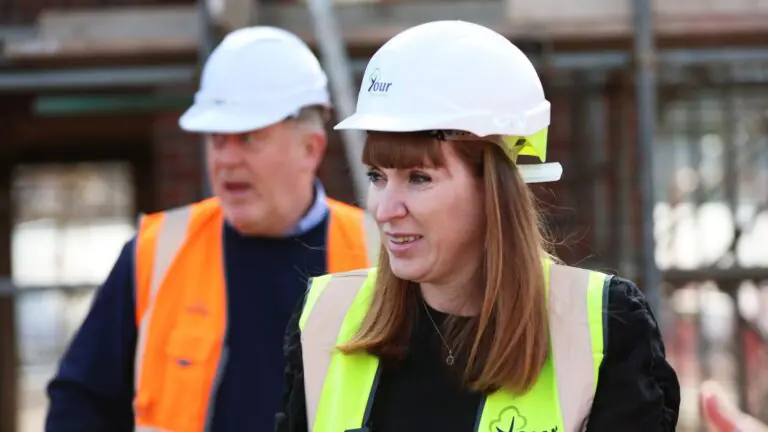
Cameron Smith/Getty Images
I’m 23. Like many of my friends, I endured the British education system all the way to university: GCSEs, A levels and then an undergraduate degree. Now, with little opportunity to progress in the small town we grew up in, those same friends are now looking to move to a city for work.
For some, it’s London. For others, it’s Leeds, York, Manchester or Edinburgh. But while the city changes, the obstacle doesn’t. None of them can afford to live anywhere near the jobs they want. Instead, because it is so expensive in the cities, they stay in their childhood bedrooms – and an ever-increasing pool of graduates are left to compete in the small, local job market. A few find employment; many do not, or find roles unrelated to their degree.
This isn’t how it used to work. The cities young Britons can’t reach today were built by men and women who did. When Britain industrialised, people could afford to move near the factories. Britain urbanised because workers left their farms and villages for the cities, and were better off for it.
Italy and Austria have some of Europe’s lowest fire death rates, yet they don’t mandate a dual staircase until the building is above 80 metres
Today, high rents and house prices in our most productive places erode the benefit of moving – in some cases entirely. Surging demand, combined with a scarce supply of housing for young Britons, now mean that some are forced to dedicate half of their income towards rent just to get on the jobs ladder.
One ready-made solution for the Government is to make gentle densification easier for developers. Following the tragedy of the Grenfell Tower disaster, the Government changed the rules around staircases. Previously, Westminster had never set a height limit for single staircase residential buildings. From this September, however, every new residential building of 18 metres or more will need a second.
This is far stricter than many European countries. France’s height limit is 50 metres, while Finland’s is 52. Germany, Ireland and Singapore all allow a single staircase up to 60 metres. Italy and Austria have some of the lowest fire death rates, yet they don’t mandate a dual staircase until the building is above 80 and 90 metres.
The Government should bring our rules into line with other countries, relaxing the limit on a single staircase up to 50 metres. The Grenfell Tower disaster rightly occupies a distinct and sensitive part of the national psyche; this rule would still force developers to build towers like Grenfell with a second staircase and strong emergency safety measures, such as automatic sprinklers, a maximum escape route travel distance and a minimum escape route width.
Importantly though, bringing us into line with the European standard could start to put jobs back within reach for Britain’s lost generation. By reducing saleable floor space by 7% and adding £22,500 to the cost of every flat, the current rules deter developers from constructing taller buildings, or even building at all on smaller sites – leaving many young Britons unable to afford flats near the entry-level jobs they want. By changing the limit to 50 metres, developers will be able to build more flats for young Britons in the places they want to live and work.
And this matters to young people across the country on a personal level that they feel every day. Having your own place and pursuing your dream job matters. It gives people purpose, independence, and the chance to build a life on their own terms – personal growth. It allows them to grow in confidence and meet new people, rather than staying stuck in their teenage years. And it allows them to pursue careers that they simply could not if they were confined by a small, local jobs market.
The Government does not need to wait to make an impact. Changing the single staircase limit will not solve Britain’s housing crisis alone – many other policies will be required to fix it. However, this is a change that Angela Rayner, as the Secretary of State for Housing, Communities, and Local Government, could make immediately: she already has the power to publish a revised Approved Document B that permits a single, enclosed, protected escape staircase in residential buildings up to 50 metres.
I turn 24 later this year. Many of the people I grew up alongside will still be sleeping in the same bedrooms they slept in as seven-year-olds. What that costs can’t be measured in mere pounds and pence. It is another year of their twenties stuck waiting for life to become affordable, for homes to become available and for many key moments of adult life to start.
Britain must not waste the potential of a generation. It’s time to take the radical action required to allow young Britons to move close to the jobs they want. Relaxing the second staircase rule will not save Britain’s lost generation on its own, or fix the housing crisis. It would remove one needless barrier to opportunity. If the Government is serious about growth, if it is set on helping young British people, it should start by helping them to leave home.
Britain’s spending and tax choices now fall to John Healey. My expectation? Higher spending, higher taxes and meaningless tweaks to welfare reform. Tuesday’s decision to cut VAT from domestic electricity bills could save the average household around £45 a year. Fine as far as it goes. But it will do nothing to boost productivity, stimulate […]

Almost lost between this week’s national mourning (in England anyway) over the World Cup, and the endless Westminster fantasy-football speculation about who’s going to be in or out of Andy Burnham’s first cabinet, was an oh-so-British announcement about Dartmoor ponies. The endangered breed had been put in further peril by Natural England’s plans to protect […]

Below is a speech incoming Prime Minister Andy Burnham could give – one that would unite the country around a shared vision of prosperity. Prosperity for All My fellow citizens, Today, as I stand before you as your Prime Minister, I want to cut through the political noise and give you the unvarnished truth about […]