The real story of the 1926 General Strike
NCJ/NCJ Archive/Mirrorpix via Getty Images
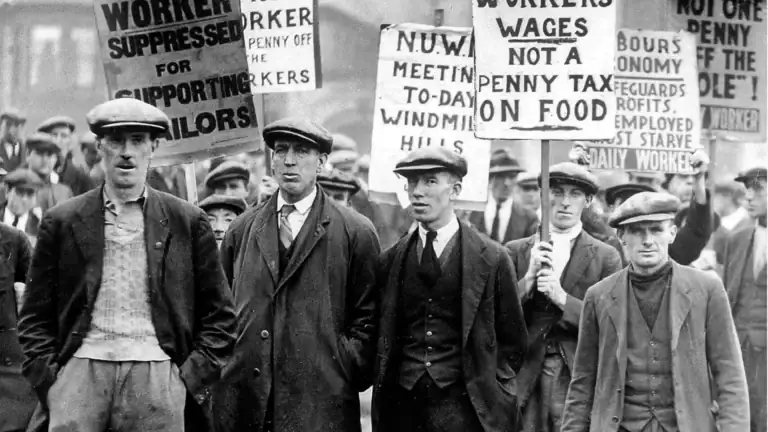
At midnight on May 4, 1926, the General Strike began. In Blackburn, William Woodruff’s family ‘sat in silence in our kitchen, holding their breath, waiting for the revolution to begin’. Instead, Britain’s trade unions suffered total defeat.
These unions had been growing in power before World War I, but this coincided with a relative weakening of the country’s unionised industries, such as mining. Britain was the first country in the world to industrialise, and coal fuelled that. This meant, however, that, by 1914, British mines were the oldest in the world with the deepest shafts, thinnest seams and highest costs. Production peaked at 292 million tons in 1913 and employment at 1.2 million in 1921.
The Miners Federation of Great Britain’s (MFGB) leaders understood this and demanded government ownership of the mines, reasoning that taxpayers’ pockets were deeper than the owners’. The government took control of several industries, including mining, during the war, but found that getting into the management of industries was easier than getting out. In 1919, a committee recommended that ‘the principle of State ownership of the coal mines be accepted,’ but this went nowhere with a Conservative-dominated coalition and ‘decontrol’ came in 1921. The Trade Union Congress (TUC) and Labour Party launched a campaign named ‘The Mines for the Nation’.
Wartime demand masked these pressures, but peace revealed the truth. In 1924, cheaper German coal returned to the market with the end of the Franco-Belgian occupation of the Ruhr, while Britain was returning to the gold standard at an overvalued rate, making exports more expensive. Demand for British coal collapsed, and profits of £59m in 1923–24 turned into losses of £2.1m in the first half of 1925.
The owners demanded wage reductions of up to 10% and an increase of the working day from seven to eight hours. The MFGB rejected this. A.J. Cook, who Fred Bramley, General Secretary of the TUC, described as ‘a raving, tearing Communist,’ had become general secretary in 1924; he had coined the slogan ‘Not a penny off pay, not a minute on the day’.
The MFGB appealed to the General Council of the TUC and on July 25, 1925, the Railwaymen and Transport Workers agreed to stop transporting coal. Conservative Prime Minister Stanley Baldwin rejected calls to nationalise the mines, arguing that ‘the businessman takes risks: the official dare not… Business could never therefore show the margin of profit that it shows under private enterprise,’ but on July 31 he granted a subsidy for one year and formed a Royal Commission to draw up plans for the industry’s future.
The unions celebrated what they called ‘Red Friday,’ one general secretary predicting that it ‘will open the way to a victorious working-class offensive’ while the Daily Mail mourned ‘a victory for violence’. Others realised that hostilities had only been postponed. ‘[W]e have no need to glorify about a victory,’ MFGB president Herbert Smith said, ‘it is only an armistice’. The question posed by Home Secretary William Joynson-Hicks remained: ‘Is England and Parliament to be ruled by a Cabinet or by a handful of trade union leaders?’
When the commission reported in March 1926, it came out against longer hours but for wage cuts. The owners were eventually won over but the MFGB rejected the report. The owners announced termination of all agreements effective May 1. The subsidy expired on April 30, having cost £23m rather than the forecast £10m. The mines closed that afternoon. The government and General Council negotiated for two days but talks collapsed on the night of 2–3 May. The ‘General Strike’ began the next day, and large swathes of the country ground to a halt.
From its start, the General Council was eager to end the strike. With no miners’ leader on the Negotiating Committee, it quickly accepted an offer based on the commission’s report. Twice, on May 10 and 11, the TUC urged the miners to accept, its president, Arthur Pugh, warning that they would be defeated by ‘a process of attrition’. The miners rejected the offer, but the Negotiating Committee recommended it to the General Council anyway. The TUC, feeling absolved of its obligations to the MFGB, called the general strike off on May 12, leaving the miners to fend for themselves. Those the owners would rehire would drift back to work, defeated and embittered, over the coming months.
The unions finally got their way in 1947, and the mines were nationalised. Britain’s trade unions were, once again, in the ascendant. But, once again, they were being squeezed by economic pressures even at this moment of triumph. This would eventually lead the miners to another strike and a final defeat.

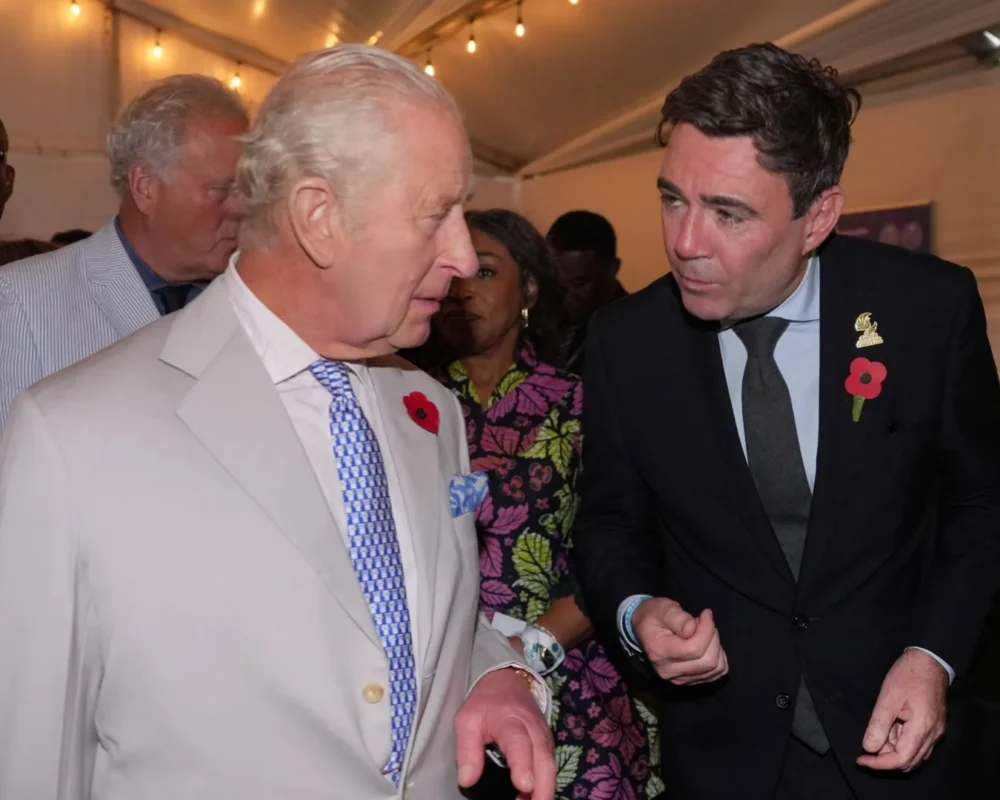
The Commonwealth is an anachronism in the 21st century – an imperial hangover that shows no signs of abatement but is instead getting worse. As King Charles addressed his subjects in Antigua and Barbuda ahead of this week’s Commonwealth Heads of Government meeting (CHOGM), our Prime Minister was throwing out statements about possible apologies and […]
The next assault upon economic logic to arrive in the bookshops is coming from Isabella Weber. The Guardian is already drooling over ‘Anti-Fascist Economics: In Defence of Affordability, Dignity and Democracy’ which means, obviously, that all proper-thinking residents of north London will be doing so as soon as they can. Weber is an economics professor […]
There are many phrases of Adam Smith that are well worth echoing today, and one of the most significant is this: ‘The end of all production is consumption.’ It is not to create jobs. The people who talk of new industries creating many new jobs are putting the cart before the horse. The aim of […]