Norman Tebbit: the greatest prime minister we never had
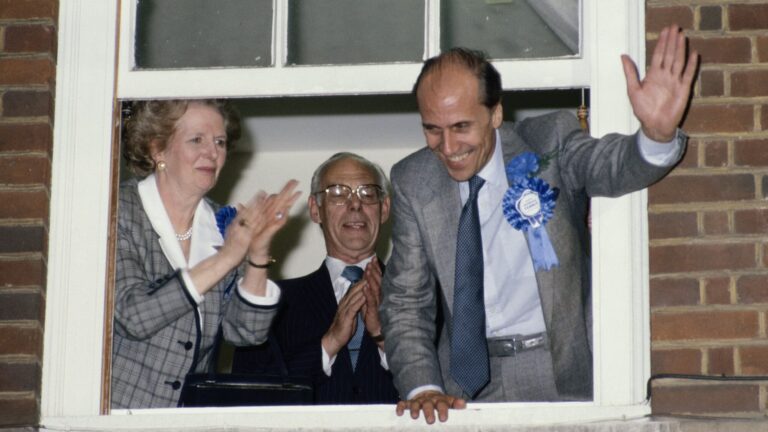
Photo: Fox Photos/Hulton Archive/Getty Images
Norman Tebbit, one of the greatest prime ministers we never had, has died at the age of 94.
An MP from 1970 until 1992, for many people, Norman Tebbit will be remembered – for good or ill – as the hardman of the Thatcher regime. As Margaret Thatcher’s Secretary of State for Employment and then Secretary of State for Trade and Industry in the early 1980s, he played a decisive role in crushing the power of the trade unions. As Chairman of the Conservative Party from 1985 until the aftermath of the 1987 general election, he helped to consolidate the first phase of the Thatcher Revolution and usher in the second. And in later years, from the red benches and the pages of The Telegraph, he was one of the most inveterate and outspoken Eurosceptics and keepers of the Thatcherite flame.
Along the way, he was immortalised on the satirical current affairs programme ‘Spitting Image’. Portrayed as a grim-faced, leather-clad bovver boy, puppet Tebbit would stamp, pummel and terrorise cabinet ministers into line, on one occasion feeding the hand of a recalcitrant Chancellor Nigel Lawson into a food blender.
Yet while Tebbit’s reputation as a political bruiser is not undeserved, there was far more to the man than just that. He was not seen as a public intellectual in his own day, when erudite colossi like Sir Keith Joseph, Roy Jenkins, Enoch Powell and Tony Benn still bestrode the political stage. But just watch any interview or speech Tebbit gave in the 1970s or 80s and you will be struck by how articulate, logical and grounded in first principles his arguments were. You don’t get that very much on the frontbench these days.
Like many of the other greats of that era, he also had a hinterland. Much of this came to the fore after he retired from frontline politics. He wrote a memoir, ‘Upwardly Mobile’, and an appraisal of the Thatcher era, ‘Unfinished Business’ – but also a cookbook, ‘The Game Cook’ (The Guardian review of which includes one of my favourite depictions of Tebbit ever) and a touching children’s book, ‘Ben’s Story’, about a disabled boy and his magic talking Labrador, Ben.
Born in 1931, Tebbit was slightly too young to have served in the war, but spent the early 1950s flying Meteor and Vampire jets for the RAF, narrowly escaping with his life from a crash in 1954, fracturing two vertebrae in the process of getting out from the burning wreck. He spent much of the next two decades as a navigator and pilot for British Overseas Airways Corporation, flying long-haul to Africa and Asia.
A couple of years ago, I was lucky enough to visit Tebbit for afternoon tea at his house in Bury St Edmunds. One of the things I asked him was about the low quality of many politicians today and what they lacked. His answer was travel. In his view, his wide experience of different places and cultures had allowed him to think beyond the typical parochialism of British politics – a cosmopolitanism which might surprise those given to caricaturing Tebbit as an antediluvian racist.
The other notable thing about Tebbit which belied his hardman reputation was his personal kindness and courtesy, which I was lucky enough to experience first-hand. A few years ago, before meeting the great man himself, I wrote for CapX about how Tebbit had influenced my own political development, a personal tribute upon his retirement from the House of Lords. Like many centre-right millennials, his Telegraph blog played a formative role in my political coming of age in the late 2000s, and I always found it delightful how he would take the time to engage with commentators, cutting through the histrionics with calm courtesy.
For older generations who lived through the turbulence of the 1970s and 80s, Tebbit is more usually associated with catchphrases such as ‘on yer bike’. Responding to the suggestion that rioting was the natural reaction to unemployment, he said: ‘I grew up in the ’30s with an unemployed father. He didn’t riot. He got on his bike and looked for work, and he kept looking till he found it’. And thus a reputation was made.
The other phrase commonly associated with Tebbit is of course ‘the cricket test’, after a remark he made in 1990: ‘A large proportion of Britain’s Asian population fail to pass the cricket test. Which side do they cheer for? It’s an interesting test. Are you still harking back to where you came from or where you are?’ He has received a lot of criticism over the years for this. But many would now concede that Tebbit had a point about immigration and integration. Indeed, Tebbit’s remark would not look out of place in a Keir Starmer speech about Britain becoming an ‘island of strangers’.
Perhaps all this unpleasantness – and much more – could have been avoided, had Tebbit stood to succeed Thatcher in 1990. What a glorious decade the 1990s could have been under Prime Minister Tebbit. No Maastricht – and hence no EU and no Brexit down the line. The era of mass migration would have been at least postponed, if not foreclosed. Public sector reform would have continued apace. Everyone would have had the right to a fair trial in the shadow of the noose. And perhaps ‘Old England’ would have endured a little longer. Alas, for what might have been.
Of course, the reason Tebbit did not stand for the leadership was his great love for his wife, Margaret Tebbit (who predeceased him in 2020). She had been left wheelchair-bound and in need of round-the-clock care by the 1984 Brighton Hotel bombing. Tebbit gave it all up for her, first stepping down from the position of Party Chairman in 1987, and then as an MP in 1992. He understandably never forgave the IRA for what they had done to her – and had tried to do to the prime minister he had served so loyally – and remained a bitter opponent of the Good Friday Agreement to the last.
That, in a way, sums Tebbit up. A deeply passionate and principled man of iron conviction, whose adherence to what he believed in allowed his opponents to traduce him as callous, cruel and bigoted – but who was kindness and courtesy personified, and who was motivated by love of country, freedom and family. A titan of British politics has fallen – but he will not be forgotten.

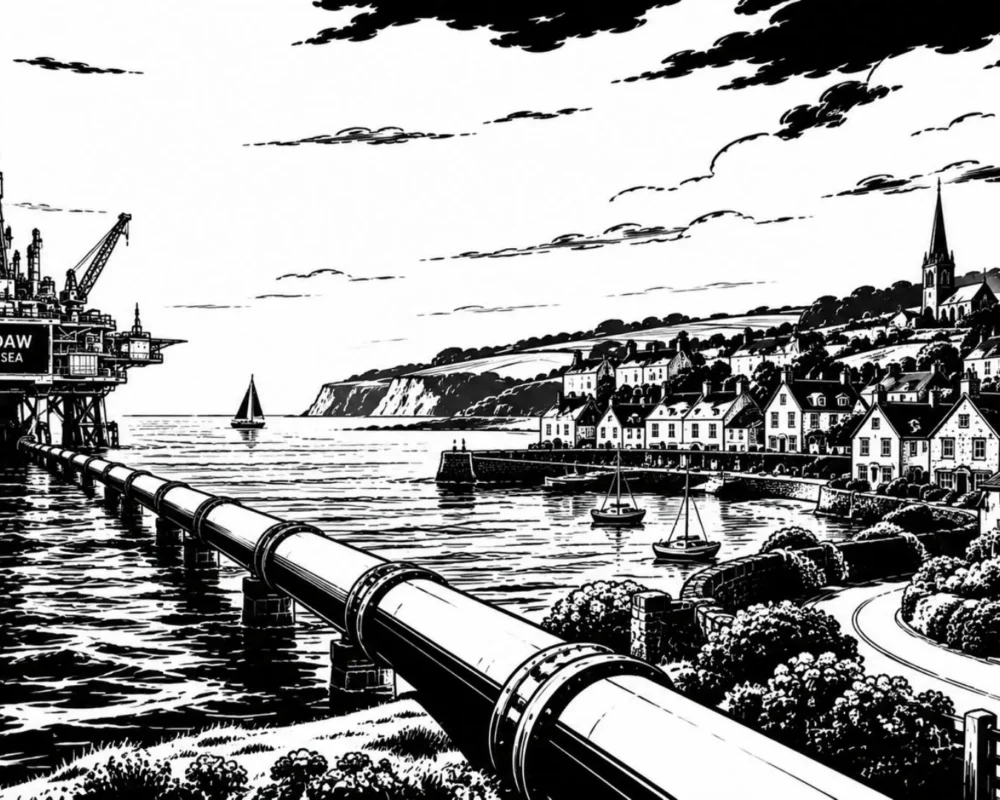
The Government has finally bowed to common sense and given the green light to the Jackdaw gas field in the North Sea. It’s the sensible move and a good start, although a decision on Rosebank is not yet forthcoming. Given the resistance both projects have faced, it’s worth setting out why Jackdaw’s approval is good […]
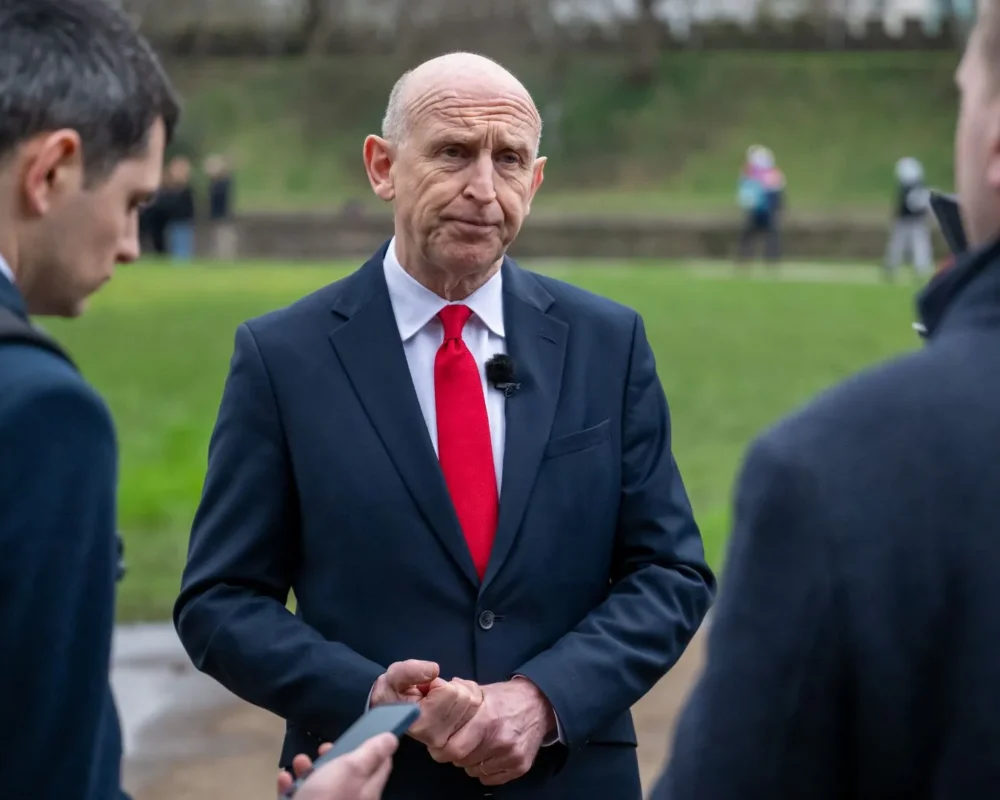
When John Healey sits down next Wednesday, the press gallery will focus hard on his headroom against the fiscal rules. In March the OBR put this at £23.6 billion against the main rule, which requires day-to-day spending to be covered by revenue by 2029/30. A recent Reuters poll of economists suggests it has since shrunk […]

The lifeblood of the economy. The backbone of Britain. When it comes to small businesses, it’s easy to lapse into cliché. But that’s because they really, really matter. The overwhelming majority of businesses in Britain are small businesses. They employ more than 13 million people. And it’s almost impossible to exaggerate how tough things are […]