Labour fail the defence test
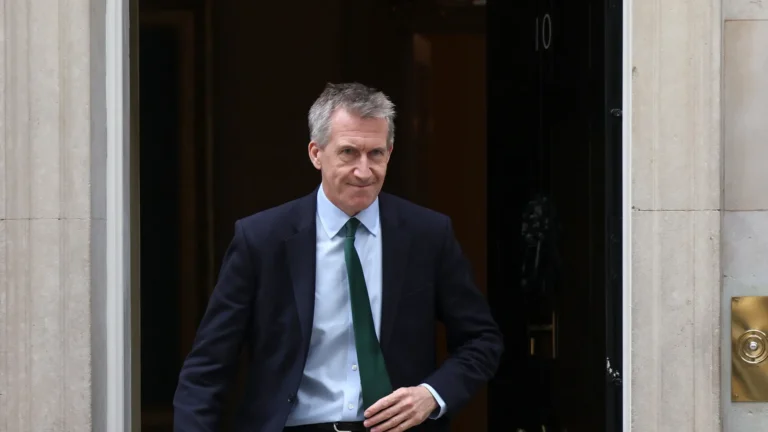
Dan Jarvis is the new Defence Secretary. Toby Shepheard / AFP via Getty Images
When John Healey resigned as Defence Secretary last week, there was widespread praise for his principled stand. The financial settlement contained in the final draft of the Defence Investment Plan, believed to offer the Ministry of Defence an additional £10 billion or so over the next four years, was not even close to the resources the Armed Forces need. In his letter of resignation, Healey told the Prime Minister so and said that he could not honestly remain in office to oversee an inadequate settlement.
To replace him, Keir Starmer chose Dan Jarvis, previously Minister of State for Security at the Home Office. This too was widely welcomed: Jarvis, a former major in the Parachute Regiment who was decorated for service in Afghanistan, is respected as a serious, thoughtful and straightforward individual. Elected to the House of Commons in 2011, he was initially touted as a future party leader, but instead chose to stand for Mayor of the Sheffield City Region (later renamed South Yorkshire) and balanced his Westminster seat with the role of city boss from 2018-22.
Amid all the political excitement, however, which also included the resignation of the Armed Forces Minister, Alistair Carns, now looking for all the world like a man who has bought into the vastly ambitious notion that he could be Prime Minister, it is easy to forget that the fundamentals of the Ministry of Defence’s situation have not changed. The Defence Investment Plan, crawling towards publication nine months later than it was first promised, has not been significantly altered, and there is no additional rise in defence expenditure in prospect.
To imagine Dan Jarvis’s arrival will make Rachel Reeves suddenly yield is for the birds
Jarvis may have a degree of freedom in moving money around within the existing envelope, reprioritising projects or cancelling commitments made under Healey. As Secretary of State, he should have that flexibility rather than being bound by his predecessor’s decisions, though already there is a faint whiff of painting Healey as unrealistically wedded to some spending programmes or unwilling to face sacred cows. Jarvis’s allies should not pursue that kind of petty smear.
None of this affects the bigger picture, which is that the Defence Investment Plan is almost incredibly inadequate. The Ministry of Defence is believed to have a shortfall between commitments and resources of £28bn between now and 2030. However it is allocated or reallocated, the £10bn on offer does not come close to addressing that.
The inevitable consequence of that simple arithmetic is that, at a time when we are told that Russia presents a greater threat to our national security than ever, and the world is perilously unstable, the United Kingdom will be forced to scale back its commitments, cancelling or delaying procurement programmes, reducing its global footprint and shrinking its capabilities. With a NATO-wide target of spending 5% of GDP on defence and security by 2035, the UK is currently achieving about half of that, and a parsimonious DIP makes a later increase after 2030 a steeper curve and a more improbable prospect.
Much is being made of the strength of Jarvis’s position: Starmer cannot sack him, his allies say, nor can he afford for him to resign. But the Ministry of Defence and 10 Downing Street have clearly lost a months-long battle against HM Treasury for higher expenditure, and Jarvis has no magic wand. To imagine his arrival will make the Chancellor of the Exchequer, Rachel Reeves, suddenly yield and make available additional billions of pounds is for the birds.
It is tempting to see the Prime Minister as being under irresistible pressure to ensure more money for defence, but it is a blinkered view: he is also under huge pressure not to cut welfare, to increase health and infrastructure spending, to preserve the Government’s drive for sustainable energy and to revert to higher spending on international development. Prime ministers are always under pressure from every side, and the key to success in the role is managing those pressures successfully and rationally.
The draft of the Defence Investment Plan which Healey saw last week and which prompted his resignation demonstrates that Starmer has already decided not to yield to pressure to spend significantly more on defence. Even if the proposed £10bn were to be increased by half, it would be inadequate and would undermine national security and global defence policy.
Labour have been put to the test, and failed, ducking the hard decisions and potential unpopularity which would flow from putting the UK on a trajectory towards readiness for conflict. Jarvis may have greater freedom than his predecessor to reprioritise the deckchairs, but the identity of the ship remains the same, and the iceberg continues to loom ahead in his path.

When the news came through late last week that Keir Starmer had dropped the Diego Garcia Bill from the King’s Speech – meaning it will not be in the next legislative session – many asked if this is really the end of the road for the dreadful deal. The twists and turns of the Chagos […]

This short story is a product of the Creative Futures Research Project, a partnership between Coventry University and the Defence Science and Technology Laboratory, the MoD’s research arm at Porton Down. The aim of Creative Futures is to explore how emerging technologies might impact society and geopolitics. Discussions between science fiction writers and defence experts […]

‘The Bomber Will Always Get Through.’ With this blunt warning in 1932, eight years before the Blitz, Prime Minister Stanley Baldwin revealed a harsh truth: nothing was safe in the era of aerial warfare. Almost a century later, we are faced with an equally formidable threat in the form of cheap and scalable drones. This […]