The Gaslight War
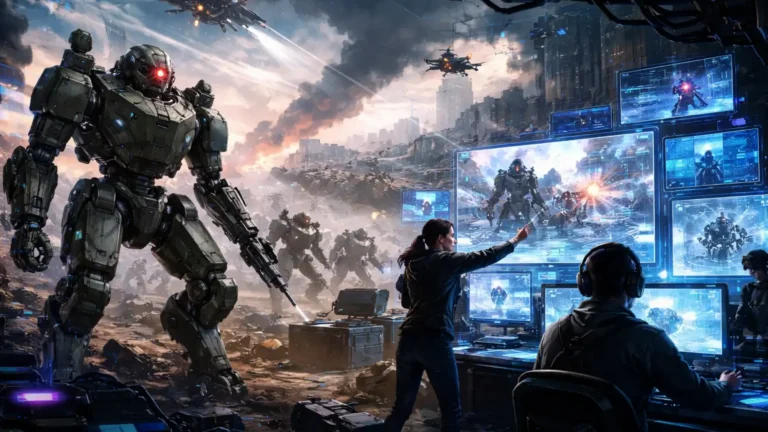
This short story is a product of the Creative Futures Research Project, a partnership between Coventry University and the Defence Science and Technology Laboratory, the MoD’s research arm at Porton Down. The aim of Creative Futures is to explore how emerging technologies might impact society and geopolitics. Discussions between science fiction writers and defence experts help to build a projection of what the future might look like – and what living in that future might be like.
***
(From ‘Fighting Yesterday’s Wars, an overview of the last interstate conflicts of the twenty-first century’ by Elami al-Sofia, 2091, Magian Academic Presentations)
Although that was the name that grabbed later imaginations, some historians would call it ‘The Accountants’ War’ based on the proportion of gross national product expended by both state actors in their attempts to control the contested region. Overall expenditure by either side went far beyond any intended sum, with the combatant states throwing unprecedented quantities of munitions, resources and, especially, Autonomous Battlefield Units (ABUs) into the fray on the basis of the unique ground conditions, and the perception these created.
The conflict was not the first to rely heavily on ABU resources, but previous conflicts (the Continental United States Succession Crisis, the Ethiopian Watershed War and the North Sea Fish Stocks War especially) had sensitised most state governments regarding public response to significant human casualties in war. Even those states with an authoritarian control over media and public protest had discovered that their people were unwilling to have their sons and daughters simply ‘sent into the meat grinder’ (Kim Lin Lau, ‘Protest and Policy’, 2069). In addition, there was a widespread perception before the Gaslight War that a small but highly-trained human command staff guiding a large force of ABUs would always be superior to and more economical than a large conventional human force. The increased maintenance and individual fighting unit cost was considered a reasonable price to pay to avoid issues of morale, fatigue and human error. So it was that both sides in the war relied heavily on unmanned air, ground and artillery elements in attempting to take control of the region.
A word on the region itself. The rare earth element deposits that both sides were hoping to take control of – including some of the largest remaining global sources of lithium – were already being exploited by local interests working alongside independent foreign investment under the old UN Land Partnership Initiative, which had lapsed by the time of the war. The introduction of this technological investment, combined with the relatively low cost of living and emergent nature of the local economy, resulted in there being a large, mostly younger-demographic population of technically skilled but affordable labour. Hence the region had become, by the time of the war, a significant hotspot of outsourced virtual labour and local industry. Virtual entertainment, programming and media were all major exports from the region, and this would go on to be a key feature of this unique conflict. From the beginning, both states were facing a potential three-sided conflict where the locals, whilst in no way able to go head-to-head with either claimant, were a potential thorn in the side of both.
At the time, the war was widely regarded as the most-recorded conflict in human history. Whilst both sides were naturally circumspect about the precise strategic and tactical narrative of the war, there was also an aspect of accountability where the military of both sides had to justify the colossal expense of every day of conflict to the wider government, the government to the public body of the state, and the state to the rest of the world. In what was uncharitably described by one commentor as a ‘Pissing contest of epic proportions’ (Seamus Lindsay, ‘Dispatches from the Virtual War Front’, 2073), both sides attempted to demonstrate the ‘shock and awe’ of their advance, and every single ABU was, of course, its own recording device. Hence, through both official and unofficial channels, footage of the conflict and its devastating effects on the region were widely circulated, sometimes even while the pertinent engagement was still ongoing. The average media consumer in regions not directly invested in the conflict is believed to have seen more of the war, on a day-to-day basis and even while the individual engagements were still raging, than in any prior conflict. A variety of conflicting side-cultures arose which have in themselves been the basis for considerable study. Individual Battlefield Units achieved a curious kind of celebrity status, with dedicated virtual followings seeking to obtain further recordings of their exploits. Other groups called for the denouncement of specific Units for alleged war crimes without reference to any human actors. More than ever before, the sense of the war having a ‘complex, almost soap-operatic narrative’ (Ombasi, ‘Talking A Good Fight’, 2077) was very real even before the revelations that brought about its end.
The course of the war, as revealed in this almost embarrassing wealth of evidence, is ‘a remarkable narrative of unstoppable force and immovable object’ (Tokay, ‘War in the Public Eye’, 2081). Both state actors deployed thousands of individual ABUs to seize, hold and, in some cases, effectively sterilise ground, meeting equal and opposite resistance from the automated units of the other side. The actual local forces, such as they were, seemed to have been effectively vanquished in the early days of the war, but they continued to make an impact in later footage despite what were perceived to be crippling early losses. A number of these local defenders had previously been semi-celebrity figures within the independent technology sector, including e-sports players, influencers and media content creators. Such individuals can be seen sporadically throughout the ABU footage in moments of defiance, some with placards and flags and others engaging in more conventional military resistance. Several of these figures maintained a ‘war diary’ for the rest of the world, telling a story of valiant resistance towards the forces of both states, often presented as heroic and tragic, and occasionally comedic. Ylsa Stelesky’s ‘interview’ with a damaged ABU, where the damaged machine is reprogrammed to state that it seeks sanctuary and doesn’t want to fight, retains cult status even to this day, and was the single most-watched recording on WhatTube in 2072 (Stelesky, ‘Why Can’t We Be Friends’, 2072). And, as it turned out, was a curious foreshadowing of what was to come.
The individual ABUs – drones, autonomous soldiers, vehicles, artillery and even missiles – represented, as noted, a vast investment from the state actors involved. A rapid victory was anticipated by both sides and, when this was not forthcoming. both sides became caught in a sunk cost fallacy of throwing further resources into the conflict. Internal pressure from their own populations, and the awareness of the eyes of the world watching them to an unprecedented degree, made backing out of the expensive conflict extremely difficult for either side. It is worth noting that, even with all the time’s advances in mass production and substitute components, the price tag for an individual low-end ABU ‘soldier’ was at least 10 million dollars in the economy of the time. Larger and more capable units cost twenty times as much, and even the individual munitions that were being deployed into the war zone represented a significant investment. By the third month of intense fighting, both sides were having to shore up their domestic position against a ruinous economic downturn that could only have been reversed by winning the war. Neither side understood that, by that point, the war could not be won.
Throughout this period, the ongoing resistance of the local population was much noted, simultaneously celebrated and the source of vocal frustration amongst the higher echelons of the engaged states. The discontinuity between the apparent fighting spirit of the populace and the evident devastation inflicted on their communities by the ABUs of both sides was remarkable.
Ironically, the first indication of the true course of the war came not from the senior military staff, and certainly not from the political forces driving them on, but from some of their least regarded human personnel, specifically those tasked with overseeing the routine maintenance of returning ABUs. The fact that a significant number of ABUs did not return was considered acceptable losses, and built into the battleplans of both sides. Those that did return required an intensive repair and testing regime that was primarily handled by other autonomous systems but overseen by human engineers. Over time a handful of these engineers began raising queries regarding the condition of the returned units. However, given the nature of these reports, some time elapsed before anyone in the higher echelons took them seriously. Who, after all, was going to take time away from the fighting of the war to investigate why their automated troops were in too good a shape? Nonetheless, the maintenance records of the time tell a fascinating story as one human specialist after another began to report that the units were simply too combat ready after each tour. The recorded footage from each unit matched the missing ammunition, the recorded losses of each engagement matched those units that did not return. Veteran units were being recorded as ‘combat ready’ by the repair systems far more quickly than anticipated, however. Whilst this was regarded by some as a ‘triumph of our superior technology’ (Gen. Olwitz, public statement, 2072), a current of concern was growing amongst the human support staff on the ground.
At the same time, and after both sides had poured so much war materiel into the conflict, rumours began to circulate about some of the recorded ABU footage available to the world at large – both that released officially, and the ‘bootleg’ recordings in wide circulation. A variety of groups began to raise issues concerning the recordings, identifying moments of apparent repetition, or where the supposed locations being devastated in the fighting did not seem to correspond to known landmarks on the ground. Given a residual secrecy about specific tactical objectives, and a widespread public fatigue towards perceived ‘conspiracy theories’, these topics of conversation failed to gain traction for several months.
In the words of Jan Suskwo of ‘Hilarious Combat Failures’, one of the channels that continued to broadcast content from within the embattled zone, “It was my beard, that did it. I am up one morning, it’s very scratchy, I think I will shave, and then I’m broadcasting later, bare chin. Only there I am, in one drone’s cameras, waving the flag, shooting the guns, but there I still have the beard” (Suskwo, ‘My Own Hilarious Combat Failures, Special Compilation Edition’, 2073).
The tide of apparent inconsistencies in the war footage, including ABU battlefield footage, artillery records and satellite imagery, grew over the final three months of the conflict, from underground conspiracy levels to the point where mainstream media outlets from corporations and states not involved in the war were openly asking questions. Sarahjohn Rasmus, one of the most prominent commentators of the day, would later say, ‘At the time I think we all expected something truly grotesque to be revealed, when the tide of the war receded. Given the brutality of a lot of the imagery we had been seeing, we were on the edges of our seats waiting for the revelation that the ABUs had gone rogue and massacred everyone. Or that it had been the orders of one side or another, to just cleanse the whole area. It was a minerals war, after all. A neutral human presence on-site was only ever going to be an inconvenience to whichever side won’ (Rasmus, ‘Wars Fought By Nobody’, 2078). Such fears eventually triggered a multi-agency drive for humanitarian intervention and investigation which, backed by an embargo of both active states, brought about a cessation in the hostilities. At the time this was expressed as only a temporary ceasefire between two states still very committed to the fight, each having invested so heavily in the possibility of victory that withdrawal from the conflict was viewed as insupportable. A separate study of the personal investment of senior figures in both states and the degree to which individual pride, reputation and fear of internal rivals drove such irrational investment in the war is well-covered by Ilona Casey’s seminal ‘One Man’s War, toxic strong-man politics of the twenty-first Century’ (2083) which is highly recommended reading.
The game was up, however, when the humanitarian mission arrived in the war zone, consisting as it did of a majority human presence. What they discovered shocked the world. To modern watchers, shorn of the context of the time, it is impossible to grasp just how these mundane scenes of unscarred countryside and intact buildings should be in any way remarkable, but the world had been saturated with images of their devastation in graphic detail for months. The Gaslight War, as it would come to be known, had not claimed a single casualty, levelled a building, obliterated a village or, indeed, happened in any real sense.
The true war had been one of espionage and cyber-action, fought immediately before the ostensible commencement of hostilities. The exact details are contested, given the range of independent figures amongst the local population and their frequent propensity for exaggeration, fabrication and self-promotion. However, the inarguable truth is that the autonomous systems of both sides were compromised from the start by the technical expertise of the local population, who had been very much at the cutting edge of technical media for years before the war. Whilst exploiting security vulnerabilities in the ABU systems – many of which had been contributed to by individuals from the area or their peers elsewhere – they had also utilised a generative AI program to tell a narrative of the war via the medium of deepfaked video and audio footage. With each offensive the ABUs would be sent to war, quietly unload the precise amount of ammunition, battery charge and other resources that they had been scripted to deploy, and broadcast all that famous footage of a furious war between robot forces, with a human population caught in between. Those units scripted as surviving the content would then return to base for later redeployment. The sophistication of the generative engine was such that the whole world watched the blow-by-blow unfolding of a conflict that was entirely fictional, and yet remained consistent and believable for several months before the system began to lose track of its own continuity and errors started to creep in. The personal intervention of various local personalities who wished to have their faces seen on the front lines also contributed to the growing feeling that the veracity of the images was suspect. However, until the humanitarian mission’s arrival, the sheer scale of the deception remained entirely unguessed-at.
Needless to say, both state actors immediately pressed for a resumption of hostilities after they had reinforced the cyber-security of their remaining forces. At this point the local ‘tech-commune’ that represented the majority of the local leading figures revealed what had happened to all the ABUs that had ostensibly been destroyed during the fighting. These now constituted a standing army ready to defend the territory against all comers. Figures from the time suggest this loose coalition of media figures, engineers and local leaders briefly controlled the fourth most-valuable military force in the world, and certainly one that outmatched the reserves of either of the two aggressors laying claim to the area. Whilst several more months would elapse before either state conceded their territorial ambitions, this final revelation represented the effective end of the ‘War That Never Happened’ (Song, ‘What I Didn’t Do In The War’, 2084).
Whilst the Gaslight War perhaps marks a high-water mark of optimism concerning the future of human warfare, representing a genuine ‘triumph of the underdog,’ the lessons it would teach to the future were less positive. The same technology that could create a fake war where there was none could also be used to conceal a very real war, and future conflicts would present the paradoxical problem of an unprecedented amount of evidence arising out of any engagement, absolutely none of which could be trusted. The role of human observers in war, often at great personal risk, has never been more important. Even with that intervention, the moment words are committed to any medium less personal than a direct physical conversation, the spectre of falsified evidence will always rear its head. Who, in the end, can we trust?
This is an extract from ‘Creative Futures: Speculative Short Stories from a Unique Science & Technology Collaboration’, published by Flame Tree Publishing.
© Coventry University, 2025, reprinted by permission.


The Victorian economist William Stanley Jevons was clearly a worrier. When, in 1863, the Tyneside arms-maker Sir William Armstrong calculated that Britain’s coal would run out in 212 years, Jevons checked the sums. Armstrong had assumed the country’s appetite for coal grew by the same tonnage every year. But it actually grew by the same […]

If you spend enough time in politics you learn to spot a familiar mistake dressed up as a novel dilemma. In the 1980s, Xerox forbade the American programmer Richard Stallman from so much as fixing a glitch in his own printer, on the grounds that the code inside it was proprietary. It was this small, […]

This week, Nimby Watch is in Axminster, because where else would you go to talk about the technologies of the future? Alright then, where are we off to this time? In this edition of Nimby Watch, we’re focusing in on Axminster, where – Oh, I love that we’re finally doing something different! I’m a huge […]