The Price Mechanism
Why Labour are a bigger threat to jobs than AI

10 September 2026
Betty Laura Zapata / POOL / AFP via Getty Images
The Victorian economist William Stanley Jevons was clearly a worrier. When, in 1863, the Tyneside arms-maker Sir William Armstrong calculated that Britain’s coal would run out in 212 years, Jevons checked the sums. Armstrong had assumed the country’s appetite for coal grew by the same tonnage every year. But it actually grew by the same percentage. At that rate, the coal would run short, Jevons feared, within a century. In 1865 he published ‘The Coal Question’ to say so.
John Stuart Mill, an MP as well as a philosopher, raised this stark issue in the House of Commons and proposed, as a precaution, paying down the national debt (imagine such a novel idea being proposed today).
The only thing more power-hungry than AI is, of course, leftist politicians themselves
Jevons’s name survives for a phenomenon he noticed whilst studying this use of coal. James Watt’s brilliant and revolutionary steam engine burned far less coal than the Newcomen engine that had preceded it. But because this huge increase in efficiency was so enormous, rather than using less coal, Britain burned far more of it because the scale of efficiency improvements increased the usefulness of the machine by so much.
‘It is wholly a confusion of ideas,’ Jevons wrote, ‘to suppose that the economical use of fuel is equivalent to a diminished consumption. The very contrary is the truth.’ This became known as the Jevons Paradox. Now, swap coal for AI compute and you can start to understand the modern AI economy.
When a piece of work can be done much more cheaply and quickly, the incentives are there to do much more work. Hence The Economist’s count last week of a million American jobs created by AI against 200,000 layoffs blamed on it.
All the doomsters and gloomsters who predicted mass job losses have, in the USA at least, been disproven. The Nobel economist Wassily Leontief predicted in 1983 that computers would see humans go the way of the horse after the tractor.
It is true that ‘computer’ was a job title before it was a machine. The knocker-upper, rattling a wooden pole against bedroom windows for a few pence a week, was still at work in the industrial north in the early 1970s. The lamplighter, the switchboard girl and the whole typing pool went the same way.
Of course some jobs have been lost to AI, and more will, but people seem determined to forget the principles of Schumpeterian creative destruction that have held sway for so long.
An exception, for the moment at least, as has so often recently been the case, is Britain. Jobs here have gone without the boom. Youth unemployment is 16.2%, up from 14.3% a year ago, and the euphemistically titled NEETs, young people not in education, employment, or training, passed a million this spring for the first time since 2013.
But no frontier lab did that. Terrible left-wing policies did. First, the former Chancellor Rachel Reeves raised employer National Insurance to 15% and cut the point at which employers start paying NICs on an employee’s earnings. This has been branded by critics as a £25 billion jobs tax.
Second, she cut rates relief for shops and pubs. And the result? The hospitality sector alone shed 89,000 jobs in the 10 months after Reeves’s first Budget. As we are still some way off robots pouring pints or waiting on tables, these job losses are squarely the fault of Labour. Then came the Employment Rights Act, which gives employees more rights from day one and will make every hire harder to undo from January.
I don’t need to explain the other macro causes of the economic weakness that is further exacerbating Britain’s job losses to a CapX audience, like the tax burden or industrial electricity prices that are the highest in the developed world. Suffice to say that the only thing more power-hungry than AI is, of course, leftist politicians themselves.
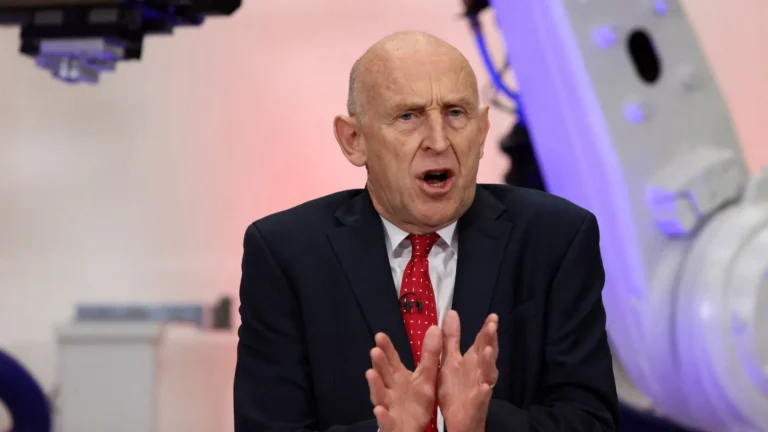
The way in which their damaging economic interventions beget more damaging interventions would seem familiar to a worrier like Jevons and his famous paradox. The big question is whether the new Chancellor, John Healey, can break the cycle, or whether he too will claim more power to meddle and cost Britain even more jobs. If so, let’s pray that one of those job losses will be his own.


Britain is looking for the effects of artificial intelligence in all the obvious places: redundancies, vacancies and unemployment numbers. So far, there is little evidence of dramatic change in overall headcount. The Office for National Statistics reports that most British businesses using AI have not changed the size of their workforce, even as AI adoption […]

Sam Altman, CEO of OpenAI, and Dario Amodei, CEO of Anthropic, have called for increased regulation of AI to slow down the pace of development. They warn in apocalyptic terms of the dangers their own technology poses. After Jacob Coxon, a researcher, resigned from Anthropic, stating that he could no longer justify working on AI […]
If you spend enough time in politics you learn to spot a familiar mistake dressed up as a novel dilemma. In the 1980s, Xerox forbade the American programmer Richard Stallman from so much as fixing a glitch in his own printer, on the grounds that the code inside it was proprietary. It was this small, […]