Reform need to refocus on Britain’s tax burden
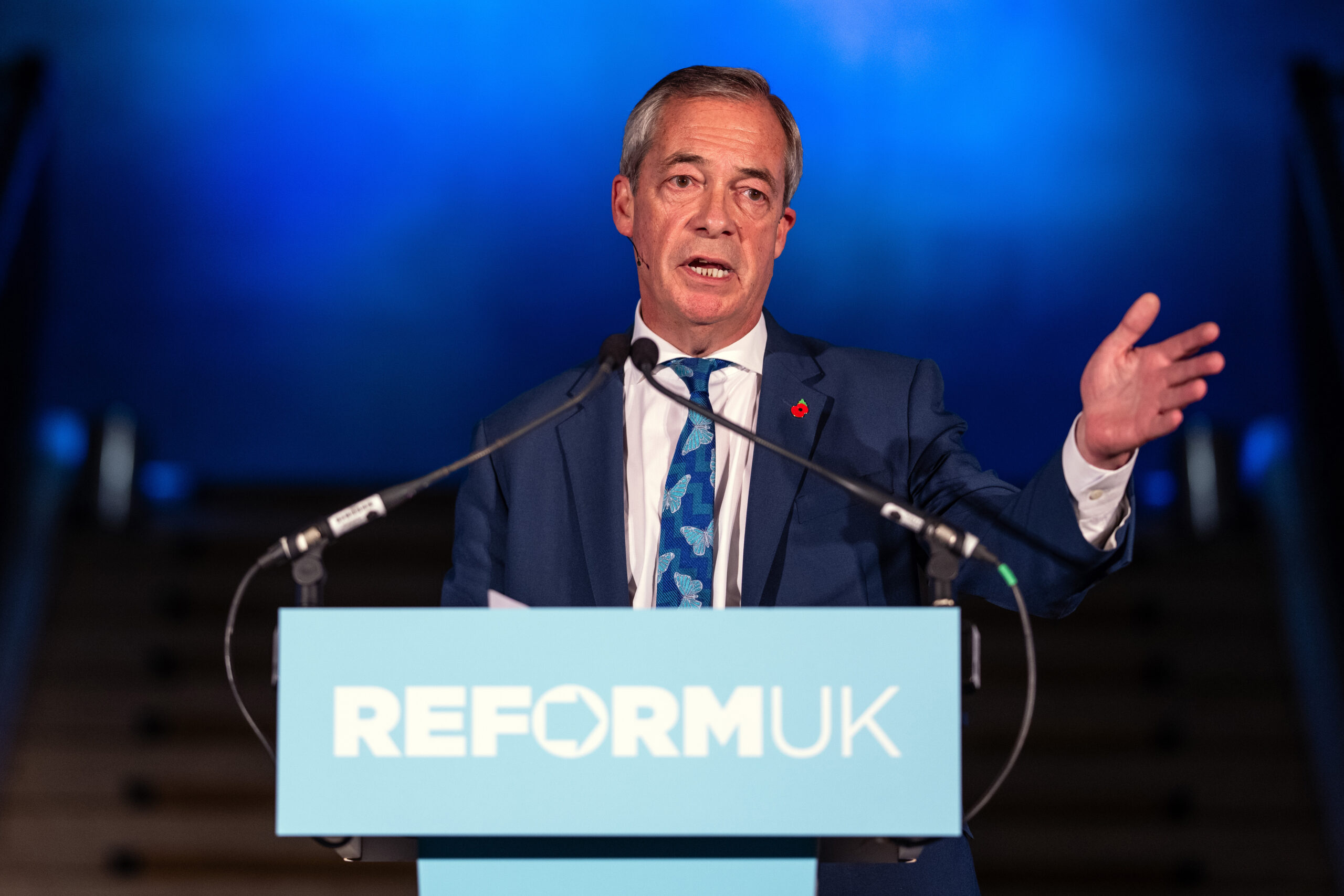
Photo: Carl Court/Getty Images
Tackling the national debt, encouraging wealth creation, cracking down on welfare, deregulating the city and wider economy, backing business and bringing down spending. Despite concerns that Reform UK were tacking to the Left on the economy, pro-growth, free market, Thatcherite instincts were in abundance throughout Nigel Farage’s speech today.
In almost the final line of his speech, Farage told us ‘we want to cut taxes, of course we do. But we understand that substantial tax cuts, given the dire state of debt and our finances, are not realistic at this current moment in time’.
On one front, he’s not wrong. The national debt stands at around 100% of GDP and is growing by almost £5,000 per second. Debt interest is well over £100 billion per year, a level where the social contract between the government and its citizens is not just fraying, but disintegrating. No longer are we paying taxes for excellent police, a high quality health service, defence worthy of the name or any of the other areas where taxpayers would like money to be spent. With the finances where they are, it’s right that spending is not just an afterthought but instead is front and centre of any agenda.
But just as the debt and debt interest represent a vicious circle, so does tax. Rachel Reeves raised taxes by £40bn last year, in a budget which she anticipated would be a one-off, allowing her to raise the revenue to meet the Government’s spending commitments. Not so. She, and I’m afraid much of the policymaking establishment, paid too little attention to the dynamic impacts of taxation. The fact that increasing capital gains tax means delayed investments, or delayed sales. The fact that tobacco duty is now self-evidently well beyond the peak of the Laffer curve. The fact that the jobs tax would cripple businesses.
As a result, she hasn’t just failed to solve the problem, but things have become even worse. What was originally a £22bn black hole could now be as much as £40bn. That’s leading to a truly disastrous set of policies being considered. There’s the income tax rise, which would be politically unpalatable and hugely painful given the cost of living crisis. But there’s also the potential for an exit tax, reductions to the annual tax-free cash ISA limit, further increases to capital gains tax, mansion taxes, a levy on limited liability partnerships and so on.
We are stuck. We continuously say we cannot cut taxes because of the fiscal situation. Yet if we don’t cut taxes, we forgo an enormously powerful tool to boost growth. Without significantly increasing growth, our fiscal situation will not improve.
So Reform do need to think creatively about this. They need to break out of the mould of predominantly static analysis of the impacts of taxation, which looks only at the revenue lost, not the revenue gained from an economic boost. There are a number of extremely obvious changes – both cuts and simple freezes. Abolishing stamp duty on property and shares, abolishing the effective marginal 60p rate, cutting corporation tax and increasing the 40p threshold should all be on the cards. Even abolishing inheritance tax, which distorts economic decision making, would likely generate significant enough dynamic impacts to mitigate lost revenues.
Inevitably, spending also has to be a key part of the equation. And while Farage’s speech was a little light on detail, he and Reform have signalled in recent days that they are not interested in tinkering. Honing in on public sector pensions represents a serious approach to cutting spending. The average public sector worker retires on a pension at around 70-75% of their final salary, compared to 20% in the private sector. The total unfunded liabilities for these pensions is now in the trillions, with the annual cost now close to £60bn and rising fast.
Farage has always thrived when he’s pushed back against the prevailing orthodoxy and tried to break the stagnant mentality of the Westminster bubble. On tax, he has to do the same. The average household will pay almost £1.3 million in tax in their lifetime. Tax cuts delayed are very often tax cuts denied.

Ron DeSantis chose his moment with care. The night before the US midterms, the outgoing Governor of Florida appeared on a sports podcast. On election eve, DeSantis admitted that the Iran war had been ‘a big, big drag’ on Republicans, that the party had been ‘gaslighting’ voters by blaming Joe Biden for the price of […]
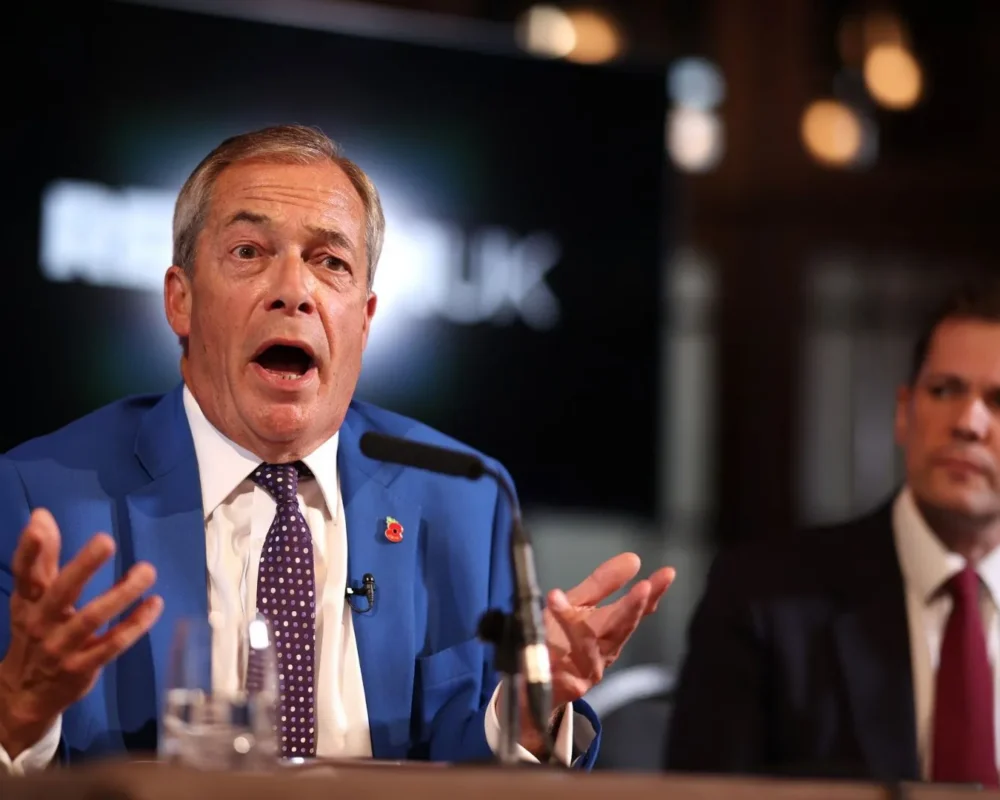
I’ll declare an interest. I sit on Reform UK’s Board and I’ve known Nigel Farage for a quarter of a century. So when Kemi Badenoch tells the country that Reform are ‘another left-wing party’, that we and Labour are arguing for ‘the same things, nationalisation, the two-child benefit cap’, that Farage is Jeremy Corbyn wrapped […]
You could almost hear the revolutionary vitriol dripping onto the Labour benches during Monday night’s Lords debate on political donations, following the announcement of Reform’s £72 million bonanza from two crypto billionaires with UK voting rights but recent residence abroad. ‘An undermining of democracy and rampant Americanisation’, one peeress spat out. A case of ‘the […]


