North Sea oil is being killed by uncertainty
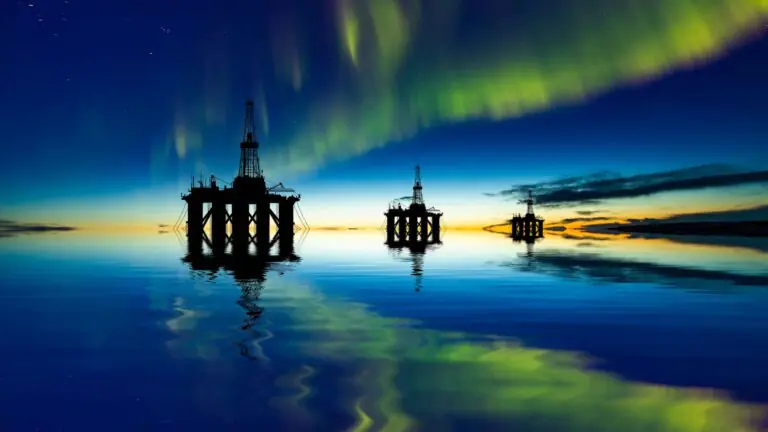
North Sea oil should be all over by now. Back in the 1970s, it was predicted to run dry by the year 2000. Instead, production maxed out at the turn of the millennium and it’s still going today. While the sector is now in decline, billions in value still remain. But ideology will kill the sector off long before geology does. In the rush to cut emissions, energy costs and security have fallen by the wayside.
After the Dutch discovered the Groningen field in 1959, exploration commenced in the North Sea. Britain’s first discovery was West Sole gas in 1965. But things really took off when the Norwegians struck oil at Ekofisk in 1969. The following year, BP hit the giant Forties field and Aberdeen became a boom town.
North Sea revenues kicked in during the early eighties. Had it not been for these, the Thatcher-era economic transformation might never have happened. And following the miners’ strike and Chernobyl, the ‘dash for gas’ of the 1990s met Britain’s requirements for a generation. But it hasn’t all been plain sailing. The fortunes of the sector have risen and fallen with global oil prices. And the 1988 Piper Alpha tragedy (167 deaths) remains the world’s worst offshore oil disaster.
Today, the UK Continental Shelf is defined as an ‘ultra-mature’ production basin. National self-sufficiency ended in 2005 and current output is barely a third of the millennial peak. Iconic fields are either already in the decommissioning phase (Brent) or soon will be (Forties). Multinationals have exited or have trimmed their portfolios. Trump declared the North Sea a ‘treasure chest’ on his recent UK visit; in reality, new production will merely slow the current decline. But while Aberdeen won’t see another boom, exploiting undeveloped discoveries generates tax revenues, creates jobs and reduces import dependence.
As oil & gas tails off, the UK North Sea nevertheless remains a busy energy sector. British waters are already home to many giant windfarms with Dogger Bank set to become the world’s largest with its 3.6GW capacity (but only on a windy day). The next step will be floating turbines, leveraging technology from the oil sector. And with UK electricity demand set to soar (from Teslas to data centres), new subsea cables are bringing in more power from the continent. Since 2019, five new interconnectors have been added, with more recently approved. Useful – but also vulnerable, given recent attacks on European subsea infrastructure.
Drilling in stormy waters brings no end of technical challenges. But politicians present even bigger headaches. Successive chancellors have endlessly meddled with taxation in response to global events and oil price movements. Gordon Brown launched the 10% Supplementary Charge and George Osborne ramped it up to 32%. By 2011, most UK fields were paying a 62% marginal rate; older fields (also subject to the historic Petroleum Revenue Tax) paid out at 81%. But by 2015, oil was below $40 a barrel and tax rates went unchanged for years. Contracts were cancelled and redundancies followed. Worst of all, industry lost its appetite for exploratory drilling, the lifeblood of any production basin.
Post Ukraine, North Sea profits spiked again and the Conservatives rushed in the Energy Profits Levy (EPL). Intended only as a temporary measure, incoming Labour chancellor Rachel Reeves retained and raised the EPL, creating a 78% total rate. Combined with Miliband’s drilling ban, the results have been predictable. Jobs are now being lost a rate of a thousand a month. Onshore, refineries are going to the wall. And other energy-intensive industries (steel, cement) are either no longer economic or are hanging on by a thread.
The 2025 Budget was billed as make-or-break for North Sea oil. But the industry just got more uncertainty.
The EPL stays for now and will definitely be replaced by 2030. It might go sooner but that depends on what oil prices do. And its replacement will be yet another windfall tax, the new Oil and Gas Price Mechanism, to be levied on revenues once the barrel price exceeds $90.
Fresh exploration remains banned, but limited drilling will be permitted via new Transitional Energy Certificates (TEC). These cover ‘acreage which is part of, or adjacent to (linked by a tieback), an existing field’: does this unlock minor potential in existing fields and in nearby untapped ‘small pools’? Or, as Greens fear, does this create the loophole required to facilitate stalled mega-opportunities, such as Rosebank? Another clause (activity ‘necessary for a managed, prosperous and orderly transition’) might also be open to wide interpretation. More opportunities for lawyers than engineers.
The current crop of politicians seem determined to kill the sector off for good. Even the SNP (former slogan: ‘It’s Scotland’s Oil’) disowned hydrocarbons to appease their Green partners. Meanwhile, the exploration ban leaves Britain increasingly dependent on imports. And that’s a gap being plugged by energy-intensive liquefied shipments – of fracked gas from Trump’s America. Possibly not the outcome environmentalists were hoping for.
Looking For Growth has launched the Emergency Energy Bill – a ready-made piece of legislation that the Government should pass tomorrow. But it won’t. Labour won’t take the radical action necessary to get bills down unless we force them to. This Government, just like many of its predecessors over the last thirty years, has prioritised […]
Three C-17 Globemasters. Eight shipping containers. The first nuclear reactor in history to be moved by air. While it feels like the opening of one of those special-forces slop series on Amazon that I count as one of my guiltiest pleasures, this is the very real Operation Windlord. The operation, conducted by the US Air […]
At its peak, Britain was known as the workshop of the world. Sheffield produced high-quality steel, Manchester still had a strong textiles sector and the West Midlands was world-renowned for its cars. Glasgow, Sunderland and Newcastle were shipbuilding hubs, Stoke-on-Trent produced ceramics. Cities around Britain provided steady employment for skilled tradespeople, keeping communities together and […]